Germany’s automotive sector just gained a formal partner in national cyber defence. On 16 November 2026 the Automotive Information Sharing and Analysis Center (Auto‑ISAC) and the Federal Office for Information Security (BSI) signed a Memorandum of Understanding to share threat intelligence, analyse trends and run joint exercises — an agreement announced again during escar Europe in Bonn on 27 November 2026. For drivers, buyers, dealers and workshop teams in Germany and Austria this is not abstract policy: it changes who gets warned, how fast vulnerabilities are mapped, and how automotive suppliers and service networks respond to attacks on software and AI‑enabled functions.
What the agreement covers
The MoU defines four practical cooperation areas: two‑way exchange of information on threats and incidents; joint analysis of threat trends; alignment on regulation (including NIS‑2, the EU Cyber Resilience Act and UNECE WP.29); and coordinated exercises to improve industry‑authority incident response. The press summary underlines the reasoning: cars receive over‑the‑air updates, send operating data back to manufacturers and increasingly use AI for partially automated driving — all of which expands the attack surface.
The agreement was framed as a response to real risk. “Cyberattacks targeting vehicles, manufacturing facilities or supply chains can have far‑reaching consequences,” said Nevena Rupp, Head of the Directorate General Digitisation and Identities at the BSI. Stephen Roberts, Chair of Auto‑ISAC’s Board, called cybersecurity “a shared responsibility,” while Faye Francy, Auto‑ISAC Executive Director, said the pact was “an opportunity to build trusted relationships, turn information into action, and strengthen resilience across borders.” Those remarks were recorded in the event release.
What this means for the market
Faster, formalised information sharing matters across the automotive value chain. OEM security teams and Tier‑1 suppliers that participate in Auto‑ISAC should see quicker notification of exploitable vulnerabilities and coordinated intelligence about active campaigns; that reduces the window from detection to mitigation. For workshops and dealers, better upstream coordination can mean earlier, clearer guidance on recall priorities and safer handling of OTA updates and diagnostics — important as workshop tools increasingly interact with safety‑critical ECUs. For fleet operators and buyers, the pact promises more transparent, joint risk analysis from industry and regulator — a selling point as software and AI features become purchase differentiators. These practical benefits were central to the MoU’s framing at escar.
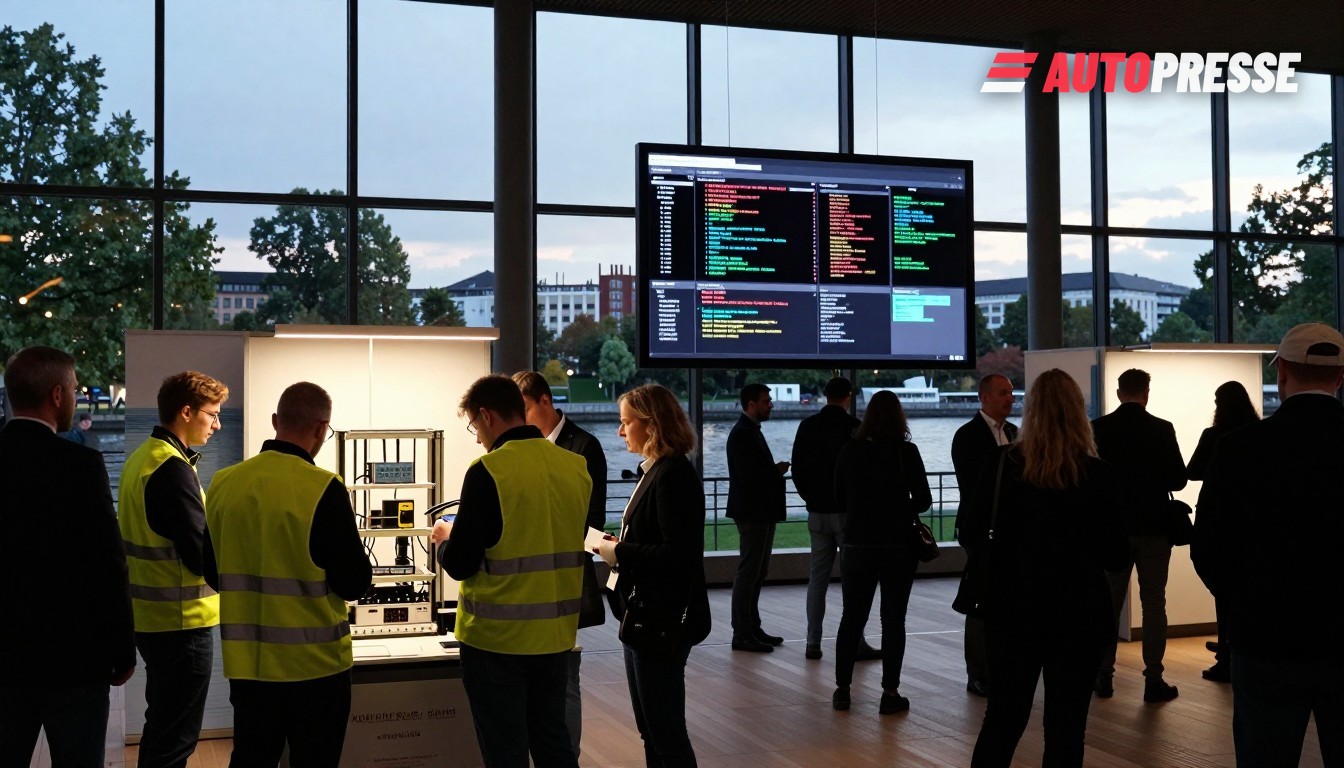
escar Europe itself showcased how academic and vendor research is already tackling AI in vehicle systems: the conference programme included sessions on LLM trustworthiness, AI‑driven ECU security lifecycles and supply‑chain risk — signals that the industry is shifting from isolated fixes to systemic, data‑driven defence. That shift is precisely what the Auto‑ISAC/BSI MoU aims to make routine rather than exceptional.
For managers in Germany and Austria the takeaway is operational: build the processes to consume shared intelligence, update incident playbooks to reflect joint exercises, and treat AI‑related attack patterns as part of regular patching and supplier oversight. The MoU does not remove the work, but it aligns public‑ and private‑sector capabilities so those tasks happen faster and more coherently.
Finally, this is also a call to equip the broader service network — independent workshops, dealer IT and parts suppliers — with the tools and training to act on intelligence. When the BSI and Auto‑ISAC exercise a coordinated response, the downstream effect will be measured by how quickly a local workshop can apply a firmware fix, block a compromised charging point, or isolate an infected fleet vehicle from corporate systems.
B2B-Fahrzeugmarkt für Händler auf WorldTrader24 →
Sources: Auto‑ISAC and BSI press summary (auto.pr‑gateway), escar Europe programme (escar.info)