Germany and France’s October agreement to steer EU car policy towards “Made‑in‑Europe” procurement and to soften some 2035 combustion‑engine rules has shifted the political debate — yet many German and Austrian suppliers say the promise has not yet translated into cash or orders. For drivers, dealers and workshop employees the deal signals long‑term protection for European plants, but for medium‑sized suppliers the immediate problem remains low investment and production disruption.
Policy promise, cautious industry response
On 16 October 2026 Berlin and Paris published a joint declaration that links future emissions rules to stronger incentives for European production and procurement, arguing the change will help “ensure that the cars of the future are produced in Europe.” The declaration frames EU negotiations on the Industrial Accelerator Act and the so‑called Automotive Package.
But a fresh VDA survey of automotive SMEs, carried out 16 October–3 November 2026, shows the structural problems remain: only 6% of responding suppliers reported they were increasing investments in Germany — the highest share recorded in the VDA’s series but still very low — and the association warns of a deep “location crisis” for the supplier Mittelstand. VDA President Hildegard Müller demanded a flexible, technology‑neutral Automotive Package to safeguard jobs and growth.
Production realities: sentiment up, output fragile
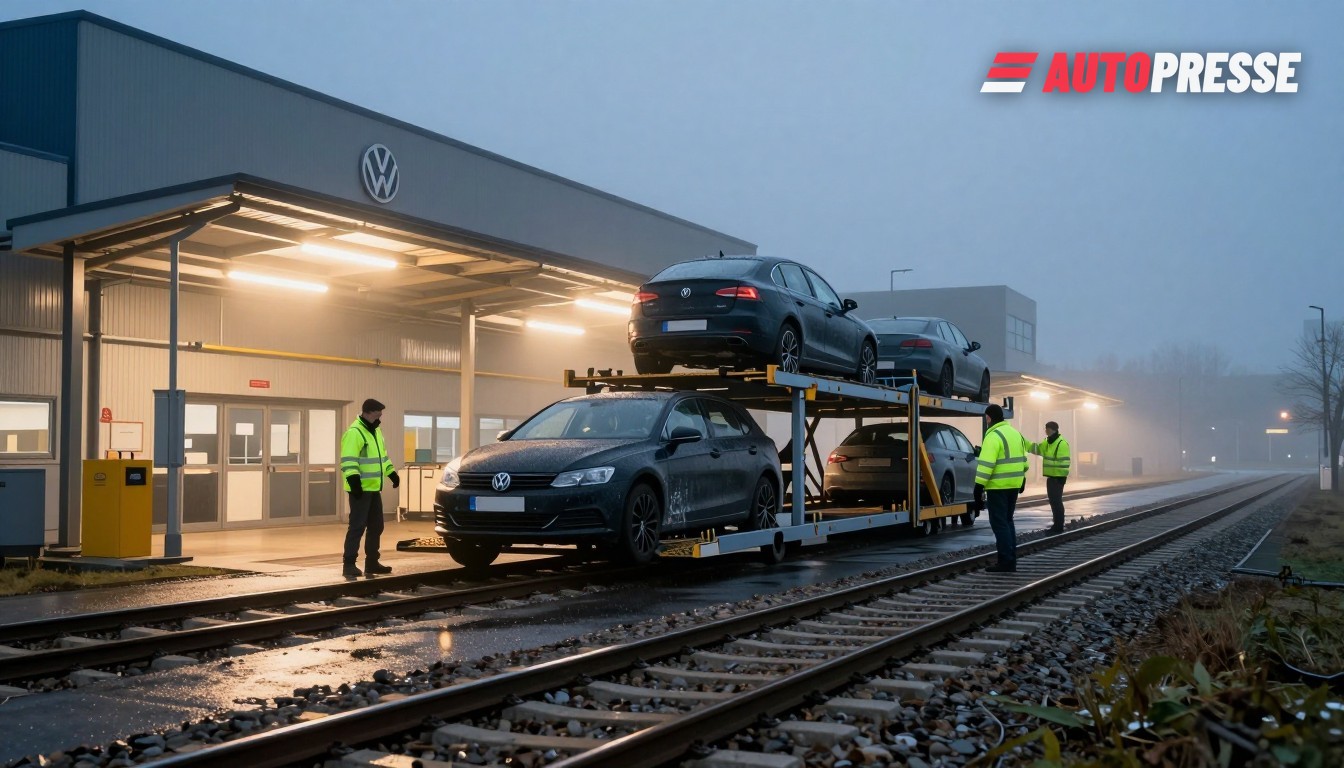
Business sentiment in the German automotive sector did improve in October, according to the ifo Institute, a shift observers link in part to the Franco‑German political signal. But that optimism coexists with concrete production interruptions: the Federal Ministry for Economic Affairs’ monthly economic note cites temporary plant shutdowns and special‑factor effects that have weighed on factory output this autumn. Analysts warn the recovery is uneven and fragile.
Commerzbank research likewise finds the manufacturing turnaround has not yet taken hold: monthly production gains in September and August were driven by transitory effects and late plant holidays, and a “lasting turnaround” in car output is still missing. The bank highlights how single‑site stoppages can ripple through Tier‑1 and Tier‑2 suppliers, squeezing margins and forcing capacity adjustments.
What this means for the market
The Franco‑German pact gives politicians cover to press for European value creation; for firms it is a framework, not an immediate cheque. Practical consequences for Germany and Austria in the coming months include: continued pressure on medium‑sized suppliers to justify new capex (the VDA survey shows investment restraint); heightened sensitivity to single‑plant stoppages that can delay parts flows (Commerzbank, BMWK); and a political window to steer EU support measures toward local content — but only if Brussels turns the joint declarations into concrete, timely incentives.
For Austria, the immediate opportunity is to position suppliers and heavy‑industry input (steel, heat, specialty components) as reliable European partners when Brussels and national governments design support packages. But Austrian firms will face the same reality as German SMEs: policy signals help, investment choices and uninterrupted production will determine who wins the supply chain rebuild.
WorldTrader24 B2B vehicle marketplace for dealers →
Sources: German Chancellery (Bundeskanzleramt), VDA, ifo Institute, Federal Ministry for Economic Affairs (BMWK), Commerzbank Research