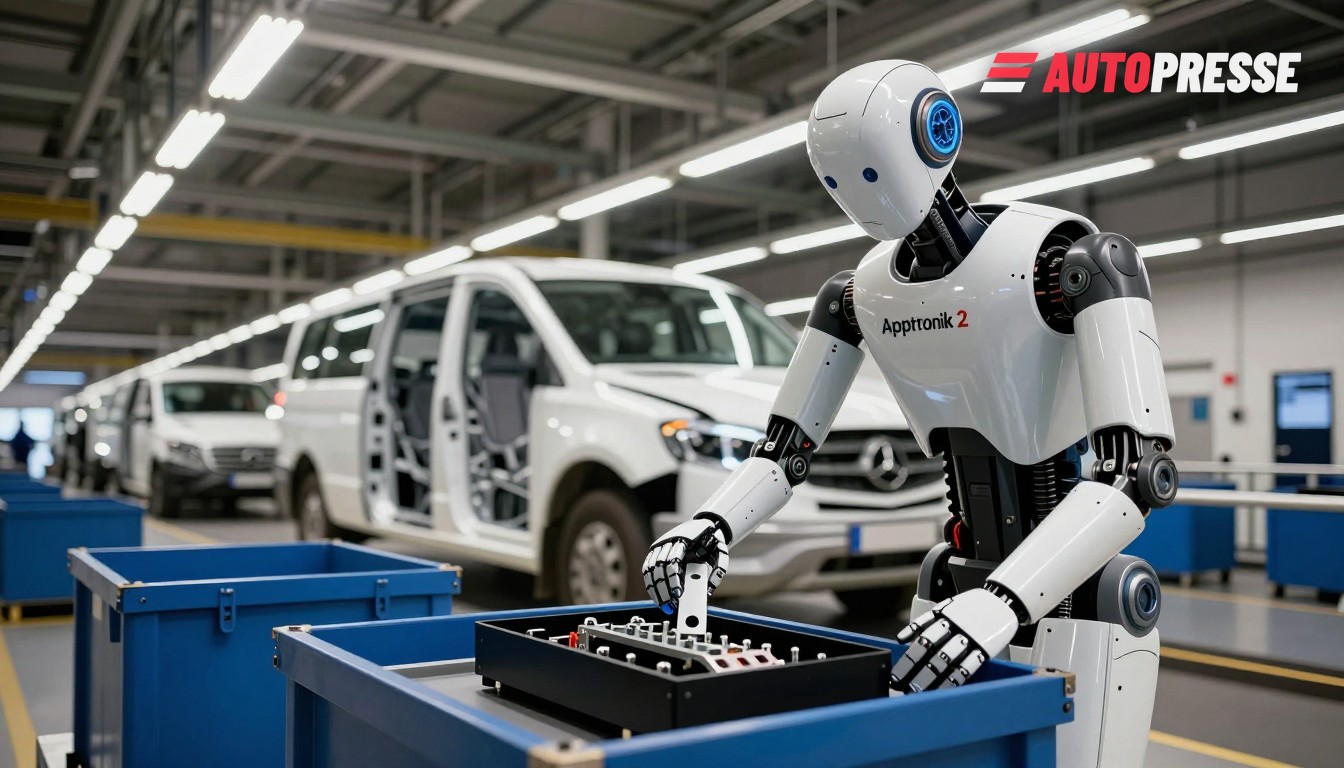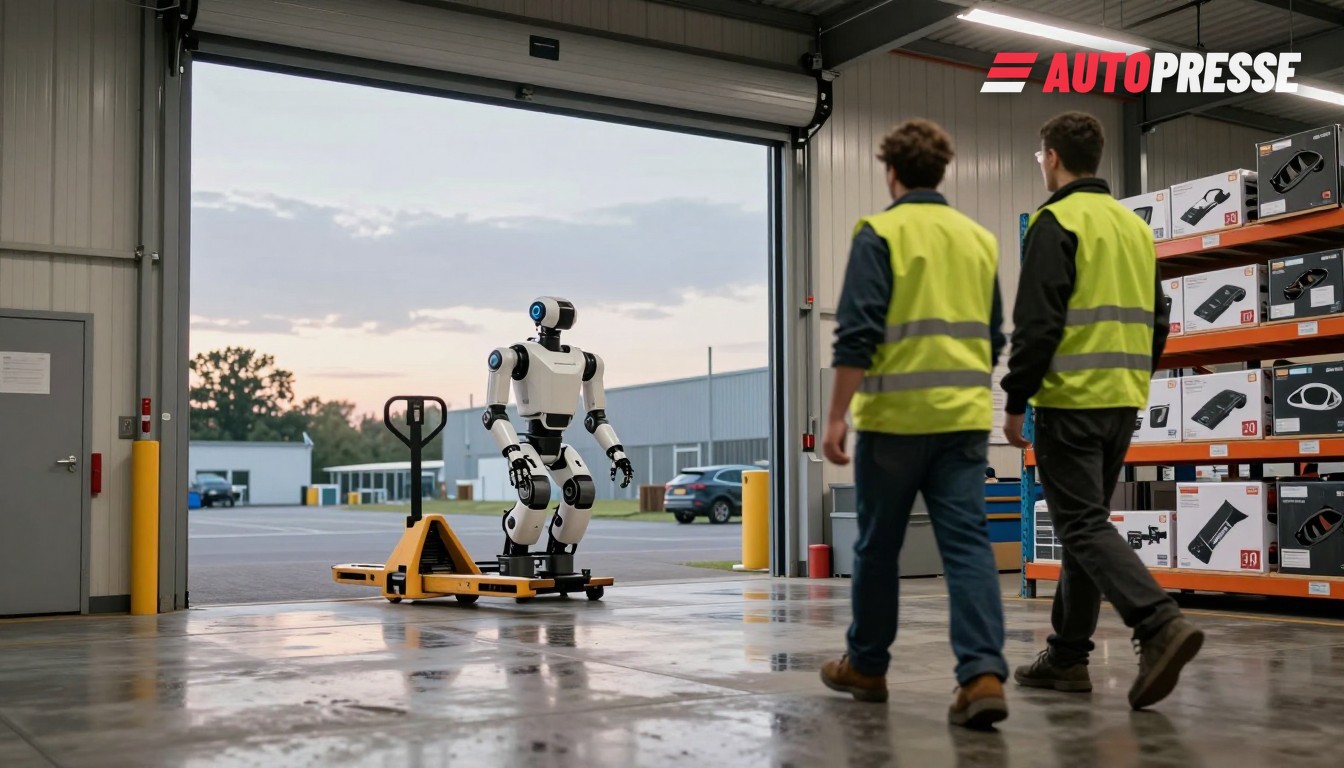
A concrete, production‑stage move in industrial AI arrived this week when logistics specialist Bleckmann confirmed it has bought two humanoid robots and will deploy them into selected European distribution centres for training and gradual operational use. The company dated the announcement 24 November 2026 and says the machines will be delivered to sites across Europe within weeks.
What Bleckmann announced
The Eindhoven‑based press release (24 Nov 2026) describes the purchase as the start of a phased roll‑in: the humanoids will be trained on repetitive, physically demanding tasks and will work alongside human teams while Bleckmann gathers data to refine future generations. Management explicitely framed the robots as assistants rather than replacements and said the first months will focus on learning and safe integration.
Bleckmann explained the robots use multimodal sensors — LiDAR, cameras and 3D‑SLAM — plus on‑board AI to navigate corridors, avoid obstacles and translate spoken commands into physical actions. The company said the project will collect training data to speed later deployments. As Bleckmann put it: “In the coming months we will use the robots to gather valuable training data, that then will be used to train the next generation and type of robots.”
Why carmakers, suppliers and dealers should watch
Although Bleckmann’s release does not single out automotive customers, vehicle manufacturers, Tier‑1 suppliers and dealer groups rely heavily on third‑party logistics for parts imports, aftersales spares and vehicle transport. Any step that accelerates humanoid‑led picking, sequencing or loading in European DCs will alter lead times, inventory practices and the skills dealers and workshops need to manage parts flows. Local trade press coverage of the announcement emphasised the same point: operators expect humanoids to relieve repetitive tasks while human staff focus on complex operations and maintenance.
What this means for the market
First, suppliers and OEM inbound logistics should expect a two‑speed effect: pilots and high‑value flows will be automated first, then broader rollouts will follow as training data and integration routines mature. Second, workshops and dealers will feel the change indirectly through faster, more consistent parts availability — but they will also face new requirements for documentation, digital traceability and handling of robot‑picked consignments. Third, local labour markets will need targeted re‑skilling: integrators, robot technicians and data engineers to run and supervise humanoid fleets will be in greater demand in Germany and Austria’s automotive regions. These consequences follow from Bleckmann’s stated aim to learn from early deployments and to use that data to accelerate future robot generations.
Operationally, the announcement underlines a broader trend we report across German and Austrian supply chains: physical AI is moving out of the lab and into everyday logistics. For dealers and service networks this is not an abstract future — it will change how spare parts are stocked, delivered and reconciled with workshop bookings over the next two to five years.
Short‑term risks are practical: integration costs, safe‑working rules, certification and insurance questions need local answers before humanoids become routine in automotive DCs. Longer term the technology promises steadier inbound parts flows and fewer repetitive injuries on packing lines — concrete benefits for suppliers and aftersales networks across Germany and Austria.
Solutions such as autonomous multi‑agent systems, voice and phone agents, and market‑scanning tools can help dealers and suppliers capture the operational gains from this hardware wave. By automating routine customer contact, booking and stock‑scanning tasks, tools like those offered by DaVinci AI (davinci‑ai.ai) free staff to manage the technical and logistical changes that follow humanoid and robotics rollouts — reducing admin friction while improving parts availability and customer responsiveness.
WorldTrader24 B2B vehicle marketplace for dealers →
Sources: Bleckmann, Transport Online