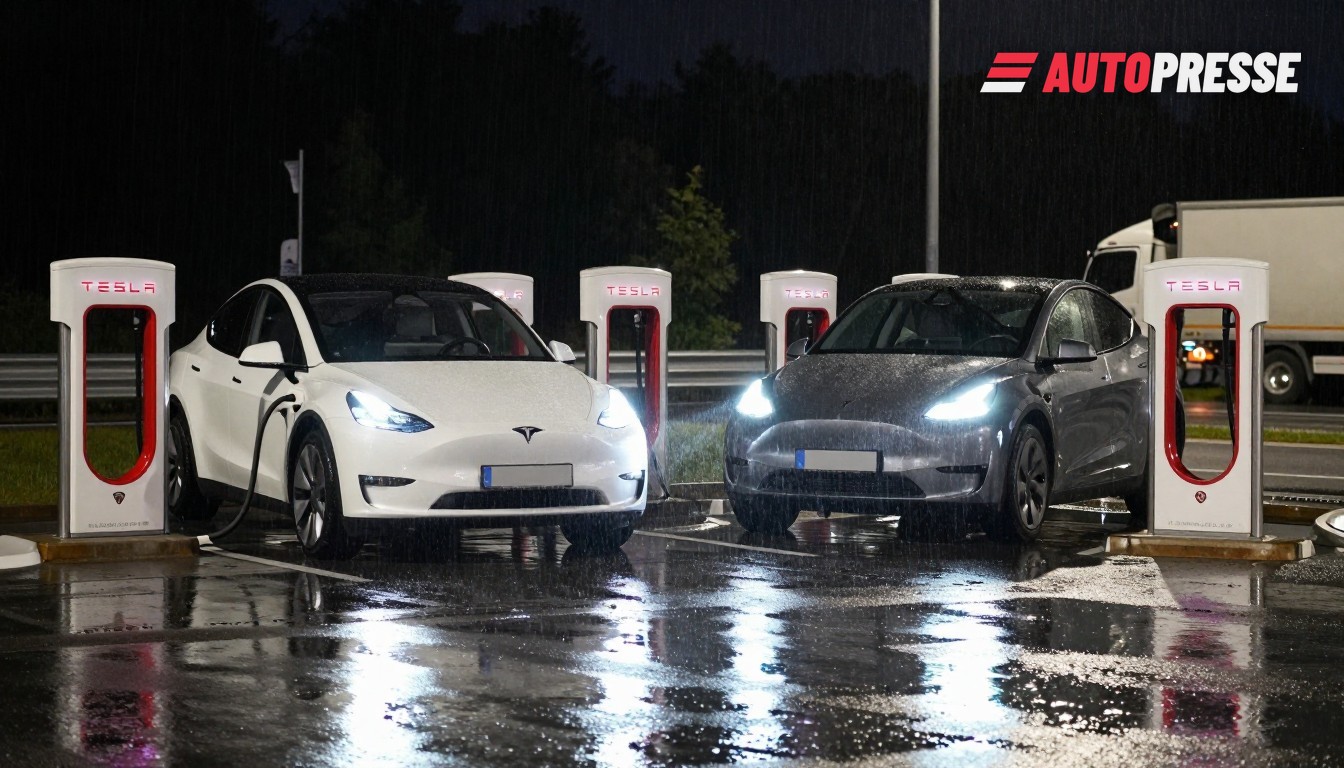
Tesla’s latest vehicle firmware, 2026.44.1, began rolling out on November 17, 2026 and immediately changed how drivers in Germany and Austria can see the automotive supercharger market — in other words, the fast‑charging network that underpins EV travel and dealer confidence. The update groups chargers together on the in‑car map, adds more third‑party fast chargers in Europe and is already on dozens of European cars (25 of the first 100 updated vehicles were in Germany, two in Austria).
What changed in the charger map
The headline feature called “Charger Network View” clusters charger pins at normal zoom levels so the display shows network density on long routes instead of overlapping icons; Tesla started sending the build to cars on November 17 and the map change was called out in the release notes. The update also reports more third‑party fast chargers on the map in supported European markets — a direct signal that Tesla’s Supercharger footprint will be presented alongside other operators when drivers plan trips.
For planners and technicians the change matters: Tesla’s own pressings show the Supercharger network reached about 85,000 stalls at over 9,000 sites in early October 2026, so a readable coverage view turns that raw scale into usable route planning for German and Austrian journeys. At the same time firmware analysis of 2026.44.1 reveals in‑code hooks for price change alerts, smarter charging modes and refined battery pre‑conditioning — features that would directly influence how drivers choose Supercharger stops versus IONITY or national networks.
How drivers, dealers and operators react
Drivers in Germany and Austria will see immediate benefits on cross‑border and long‑distance trips: clustered pins make gaps and dense corridors obvious at a glance, while the appearance of compatible third‑party fast chargers fills routing holes where Superchargers are sparse. Dealers and fleets can use the clearer coverage map when advising buyers about usability on routes such as Munich–Vienna or along the A‑9, and workshop schedulers gain a better sense of likely charging stop locations for customer vehicles.
What this means for the market
At a market level, the update is a reminder that software and data presentation now shape the competitive dynamics of the automotive supercharger market just as much as hardware. Network operators — from Tesla to IONITY and national providers — compete not only on peak kilowatt output and location count but on discoverability and integration into vehicle systems. If price‑alert code found in the update becomes active, dynamic pricing visibility could shift demand between networks on any given day. For Germany and Austria — where charging density and interoperability remain top buyer concerns — clearer in‑car coverage and third‑party inclusion lower one friction point for would‑be EV buyers and may nudge more multi‑brand drivers to use public high‑power chargers.
The rollout also underlines a second trend: the supercharger market is now a hybrid of physical expansion (more stalls and higher‑power V4 sites) and software‑led customer experience. Policymakers, charging operators and automakers in Germany and Austria will need to coordinate on site reliability, pricing transparency and ad‑hoc payment flows if drivers are to trust third‑party pins shown inside cars.
Electric vehicles listings on WorldTrader24 →
Sources: TeslaMagz, TeslAnt