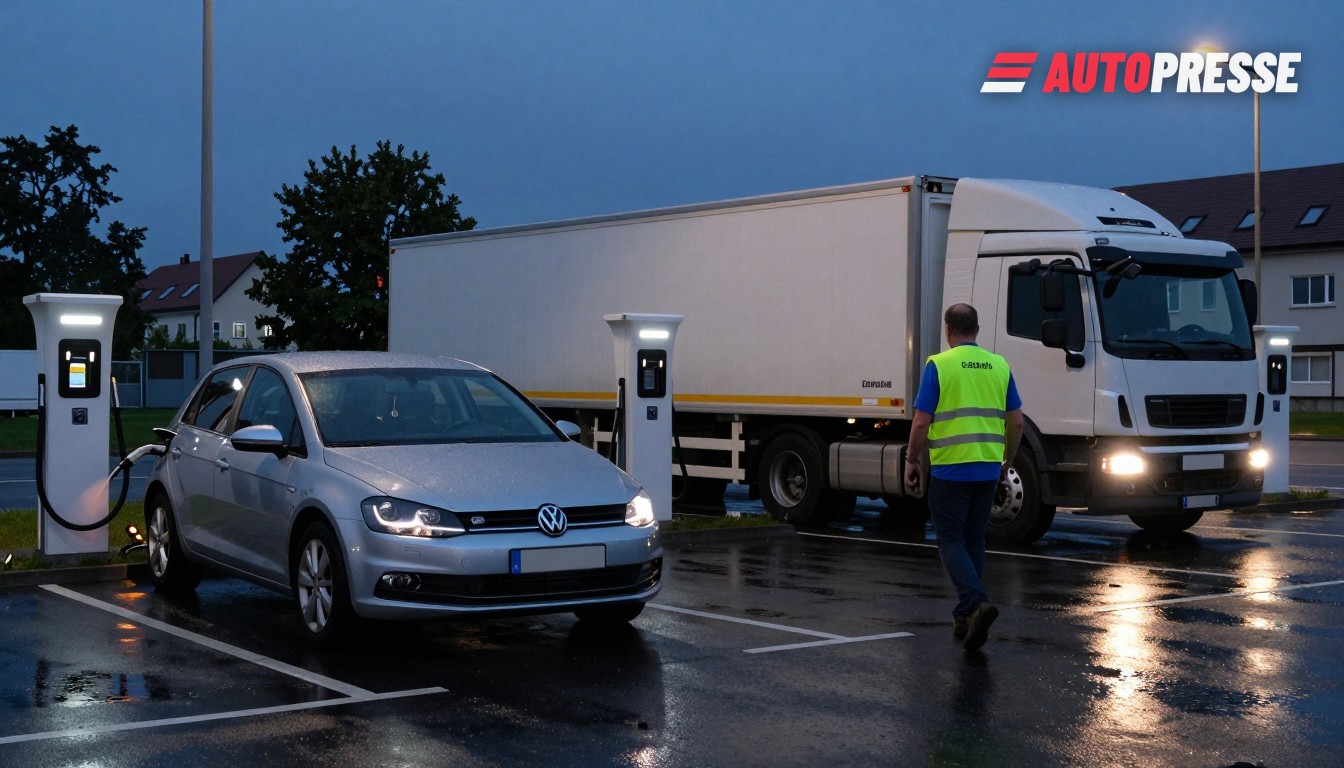
Drivers in Germany and Austria searching for information about “auto charges” are increasingly asking the same question: how much will it cost to fill an EV on the road? New price data and a string of recent charger openings give a clearer answer — and a mixed one for buyers, fleets and dealers juggling running costs.
Price snapshot: Germany’s November median
A fresh survey of public fast‑charging prices shows the median price for ad‑hoc fast charging in Germany in November 2026 is €0.59 per kilowatt‑hour (kWh). The index tracked 13,734 fast chargers and reports that half of the measured locations are cheaper than €0.59/kWh, while a tenth sit below €0.44/kWh and another tenth above €0.62/kWh. These figures are the best available nationwide snapshot for drivers weighing the cost of a charging stop against fuel or home charging.
Not every charge point follows that median. Small municipal and utility projects are still offering noticeably lower ad‑hoc rates: a newly opened two‑point public charger in the Rhineland village of Singhofen is being offered at €0.45/kWh through the Süwag2GO Charge app, according to the municipality’s report of the inauguration on 24 November 2026. That illustrates the wide local variation drivers encounter.
Austria: more high‑power sites arrive
Across the border, Austria’s charging landscape is being augmented by new high‑power installations aimed at fast long‑distance trips and brand‑neutral access. Operators have installed C7/XCharge high‑power points in Vienna‑Liesing capable of up to 480 kW per station, and local pilots of BYD Flash Charger technology have been demonstrated at Austrian dealer sites this month — signalling that faster, higher‑capacity options are arriving in Austrian public networks. Those rollouts change the value proposition for drivers who need rapid top‑ups on motorways or for fleets on tight schedules.
What this means for the market
For private buyers, the €0.59/kWh median means ad‑hoc public fast charging still often costs more than typical home charging tariffs and can make long‑distance running costs higher than many expect. For fleets and dealers, the spread of prices matters: contracts, depot charging and access to high‑power public hubs will determine operating costs and residual‑value conversations at resale.
Infrastructure operators and municipalities can use the price spread as a lever: lower, predictable local tariffs — like the €0.45/kWh example in Singhofen — make EV ownership more attractive in smaller towns, while the arrival of 480 kW+ hardware in Vienna and planned megawatt‑class hubs for trucks and freight raise the ceiling for rapid replenishment on main routes. Investors and policymakers should therefore track both national price indices and local tariff experiments when assessing the real cost of electric mobility for German and Austrian drivers.
Electric vehicle listings on WorldTrader24 →
Sources: Kargit (Charging Price Index), Süwag/Singhofen inauguration report, electricWOW (Austria high‑power rollouts)