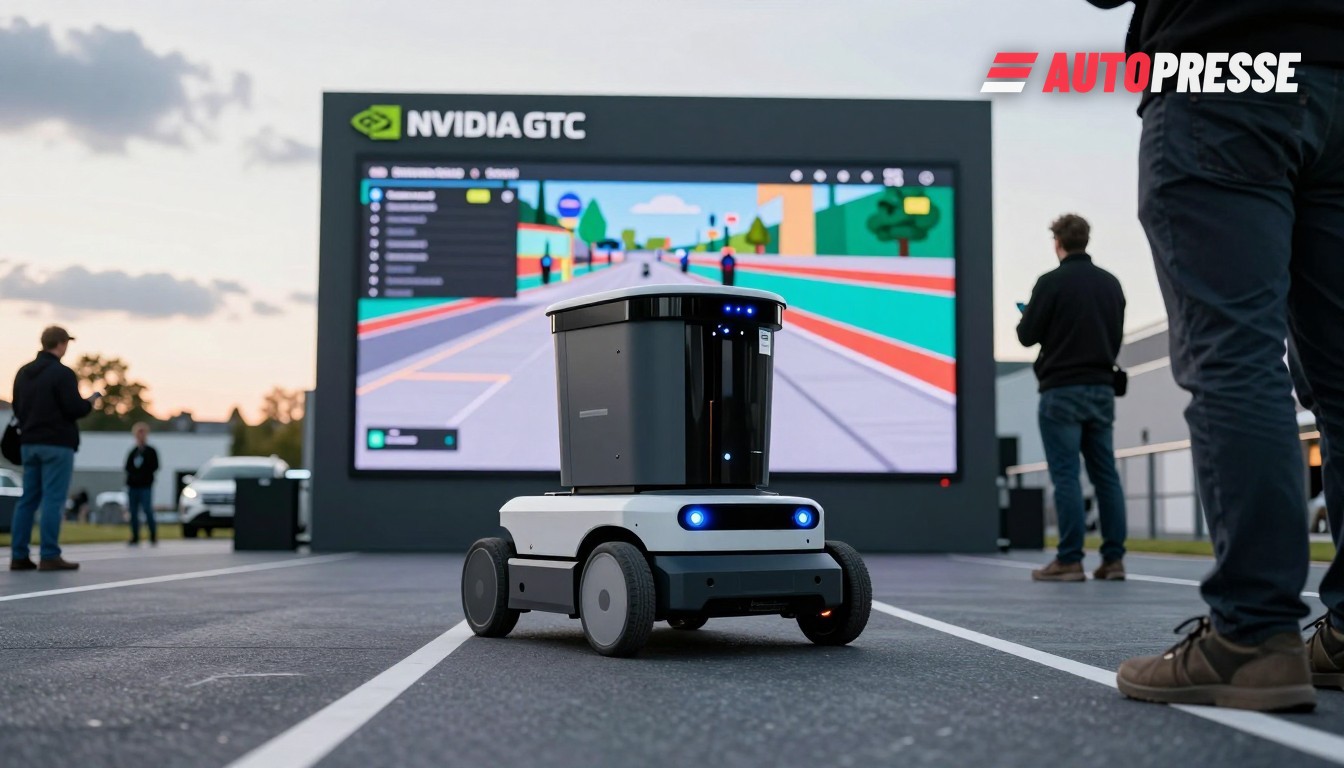
German and Austrian manufacturers, dealers and workshop operators hunting for a way to shorten approval waits will find a clear answer: tüv süd is pitching a fast‑track route to accelerate certification timelines by using digital twins and simulation. The concept — presented at NVIDIA GTC Berlin and developed with Accenture — aims to shift parts of safety assessment into virtual validation, cutting the time to bring automated production or warehouse systems online.
What was announced
The joint concept, called the Physical AI Safety Suite, uses NVIDIA simulation tools, digital twins and AI agents to prepare certification evidence for autonomous mobile robots (AMRs) and other physical AI systems. tüv süd says the approach could reduce commissioning time — the period between installation and certified operation — by up to 30% compared with conventional, largely manual assessment processes. The demonstration and accompanying statements were published and reported after the NVIDIA GTC Berlin sessions.
How the fast‑track works
Rather than eliminating on‑site inspection, the suite creates a structured, simulation‑based evidence package in three layers: (1) virtual checks of facility layout and clearances, (2) fleet‑level behaviour and interactions, and (3) detailed virtual tests of individual robots under site‑specific conditions. That virtual dossier is intended to speed the later physical verification and reduce rework caused by late discovery of safety issues. Automation teams can therefore resolve problems earlier in engineering, which shortens the overall certification timeline.
What this means for the market
For German and Austrian manufacturers and logistics operators the immediate implication is practical: projects that previously stalled for weeks on safety validation may be faster to schedule and cheaper to commission if TÜV evidence can be prepared in simulation first. For dealers, integrators and system builders the change promises a tighter project pipeline and fewer surprise costs from late safety fixes. TÜV SÜD emphasises it keeps legal responsibility for the independent assessment, describing the future as a hybrid model where virtual and physical evidence reinforce one another.
Policy and standards remain decisive. The Physical AI Safety Suite is built to map to existing industry standards such as ISO 3691‑4 for driverless industrial trucks, but TÜV SÜD and partners also note that standards and regulator expectations will need to evolve to recognise simulation‑based evidence in certification packages. That means adopters in Germany and Austria should expect close co‑operation with notified bodies during early projects.
The presentation at NVIDIA GTC is a concept and demonstration of method rather than a finished, globally deployed service; however, the combination of TÜV expertise, Accenture systems integration and NVIDIA simulation tooling points to a credible path to faster, repeatable certification processes for physical AI in industry.
B2B vehicle marketplace for dealers on WorldTrader24 →
Sources: Automation NEXT, Manufacturing Digital