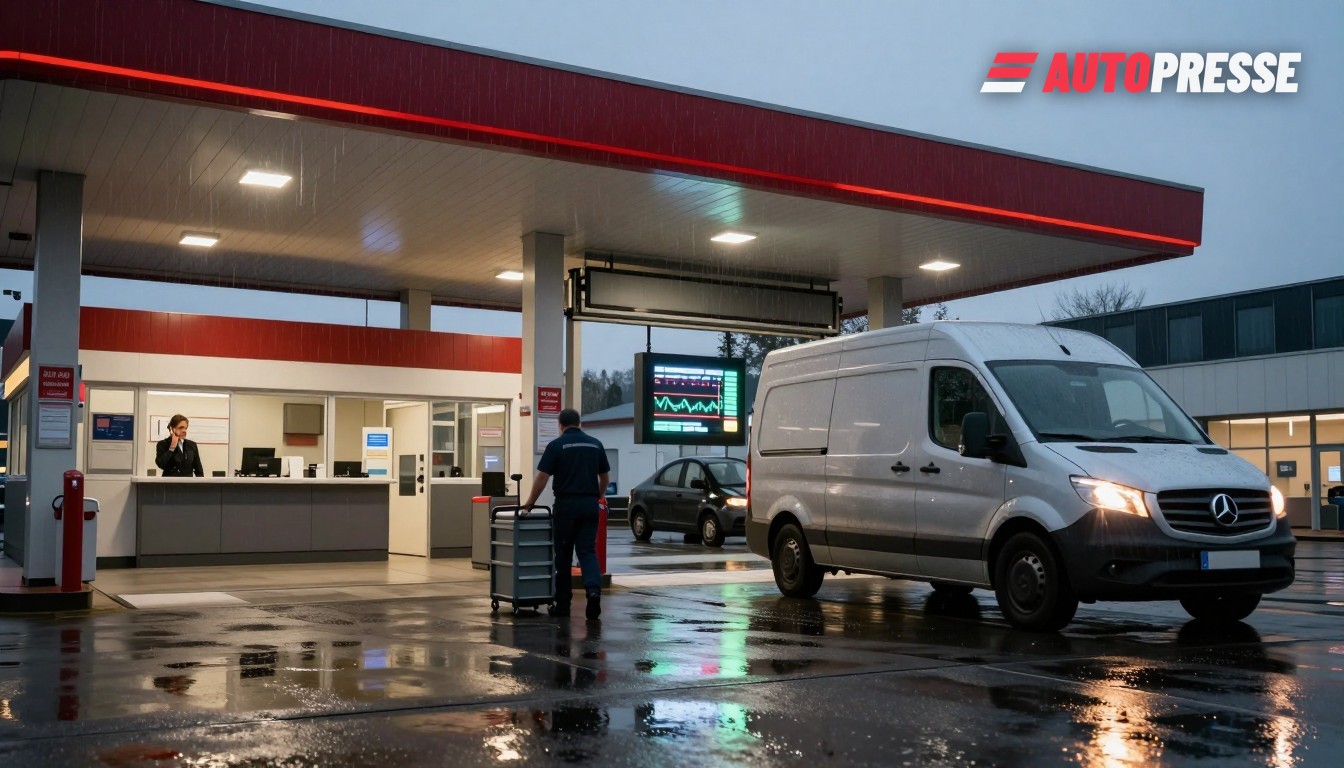
Sponsored content: Dealers and workshops in Germany are seeing AI move from conference panels to their phone lines and bays. At the AUTOHAUS KI Convention in Mainz (4–5 Nov 2026) industry leaders presented live cases showing AI embedded into dealer workflows — not as demos but as measurable automations that reduce time‑to‑first‑contact and lift booking rates for service departments.
That practical turn matters because it matches new legal reality: transparency obligations under the EU AI Act came into force and must be respected by deployers of interactive AI systems. At the same time vendors report a string of pilots converting to production-ready voice, chat and multi‑agent systems — and multilingual phone handling is now technically feasible across European markets.
What this means for dealers, workshops and manufacturers
Two immediate pressures converge on German and Austrian showrooms. First, customers expect fast, 24/7 contact: industry case studies presented in Mainz show more than half of leads arrive outside office hours, and AI-driven first replies can arrive within minutes — transforming buyer expectations and conversion dynamics. Second, the AI Act requires transparency and documented design choices for interactive systems, making compliance features an operational must, not an add‑on. Dealers that ignore either risk slower response times or regulatory friction; those that combine speed with compliant disclosure win measurable advantages.
Three practical use cases — realistic, implementable
1) AI phone and voice agents for inbound calls and bookings. A modern voice agent answers out‑of‑hours calls, qualifies the request, checks live workshop availability and either books the slot in the DMS or escalates to a human according to pre‑defined rules. Recent vendor pilots in Germany showed voice agents taking a significant share of routine bookings in weeks, freeing reception staff for complex tasks. These systems must announce they are AI at call start and log interactions to meet Article 50 transparency requirements.
2) Multilingual call handling and real‑time translation. As dealer networks serve increasingly diverse customer bases, real‑time translation on voice calls removes a frequent friction point. Large European operators report agents capable of answering in dozens of languages and transcribing or translating conversations where consent and data rules allow — a capability that can be applied to cross‑border importer hotlines and multicultural urban catchments. Integrated correctly, this reduces missed opportunities and shortens lead‑response times across regions.
3) Multi‑agent assistants with persistent memory on the workshop floor. Linked to the DMS and parts systems, a persistent‑memory assistant can pull vehicle history, flag repeat issues, surface OEM labour guides and log photos or short inspection videos straight into a job card. That reduces rework and speeds diagnostics — while the same agent framework can produce marketing images or short videos of traded vehicles for inventory listings, cutting agency costs and accelerating remarketing. These are exactly the product areas DaVinci AI says its platform addresses: autonomous multi‑agent systems, AI phone and voice agents, dealer‑stock analytics across Europe, AI image/video production and assistants with persistent memory. (Company information provided by DaVinci AI.)
From an implementation perspective the checklist is straightforward: define a narrow first use case (inbound bookings, reminders or technician assistance), confirm DMS and CRM integration points, codify human hand‑off rules and embed the AI‑disclosure greeting. Pilot fast, measure conversion and occupancy KPIs, then scale across sites with repeatable integration and governance templates.
What this means for the market
For dealers and workshops the near‑term win is capacity and conversion: fewer missed calls, faster confirmations and better‑filled bays without hiring more reception staff. For manufacturers and importers, network‑level AI deployments deliver consistent customer journeys, standardized booking flows and fleet insights that reveal regional service trends or stock imbalances. Vendors who combine interoperability with auditable compliance controls will see faster uptake than isolated point solutions.
DaVinci AI builds solutions focused on those exact problems: autonomous multi‑agent systems for dealers, importers and manufacturers; AI phone and voice agents that take calls, qualify leads and book appointments; market scanning and dealer‑stock analytics across European markets; AI image and video production for vehicle marketing; and AI assistants with persistent memory. If your group is ready to turn one of these use cases into a pilot, talk to DaVinci AI about a discovery call to map data flows, compliance needs and quick wins.
WorldTrader24 B2B vehicle marketplace for dealers and wholesalers →
Sources: AUTOHAUS, AutoPresse, European Commission (digital‑strategy), AI Act Service Desk, The Next Web
DaVinci AI · davinci-ai.ai