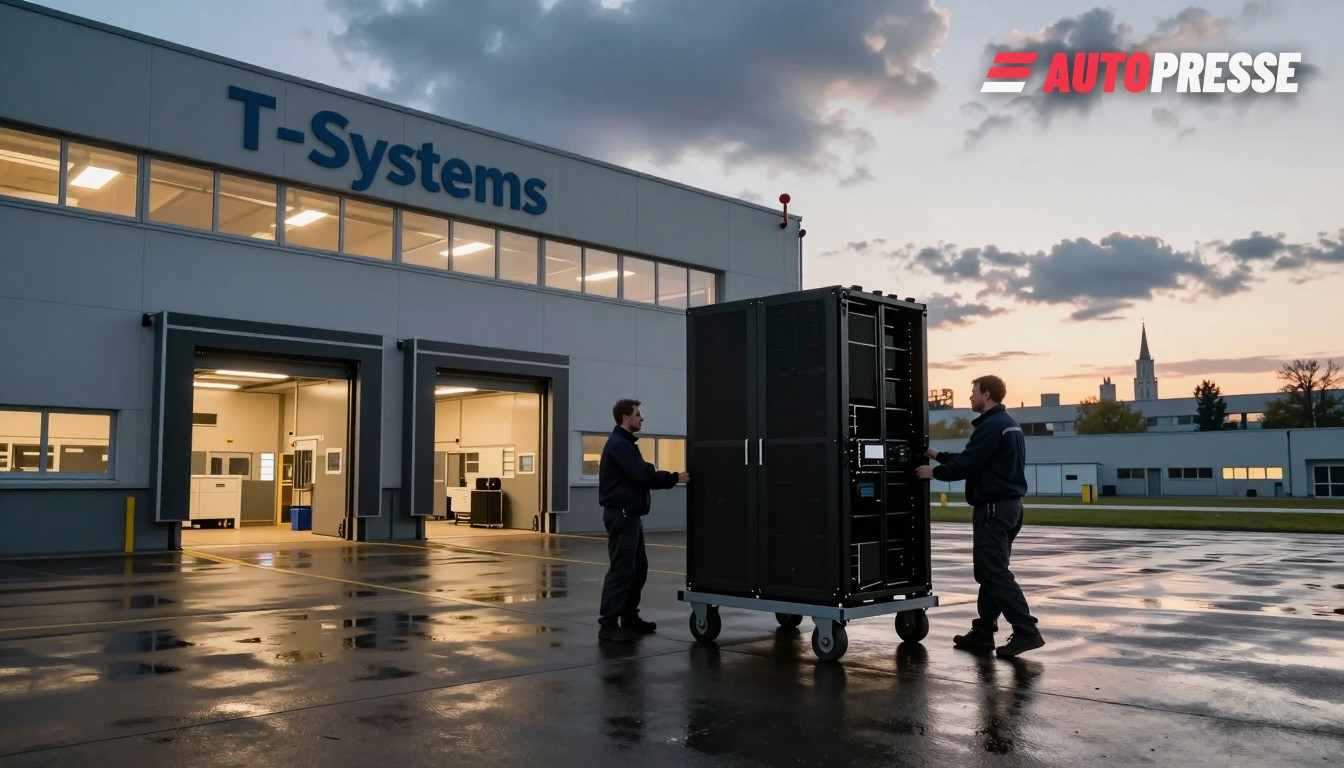
Germany’s emerging AI‑chip maker Sparxity — the TU Dresden spin‑out formerly known as SpiNNcloud — has closed a Series A round that brings the company’s total financing to about $90 million and signed a Letter of Intent (LoI) with T‑Systems (Deutsche Telekom) to integrate its “sparse‑native” hardware with the operator’s AI factory in Munich. The deal, announced at Germany’s Digital Summit on 3 November and followed by Sparxity’s Series A announcement on 10 November 2026, positions a German start‑up at the centre of Europe’s push for sovereign, energy‑efficient AI infrastructure.
What Sparxity raised and who backed it
Sparxity said the Series A brings cumulative funding to roughly $90m; the company did not disclose the exact size of the new round. Investors named in company disclosures and reporting include ICM HPQC Fund (round lead), Lockheed Martin Ventures, GlobalFoundries, GS Futures, Cloudberry Ventures and the European Innovation Council (EIC) Fund. The start‑up, which rebranded from SpiNNcloud in October 2026, builds chips and full‑stack systems that aim to run AI inference more efficiently by exploiting dynamic sparsity in models.
Deutsche Telekom LoI: test, integrate, deploy
On 3 November T‑Systems and Sparxity signed a Letter of Intent at the federal Digital Summit that commits the partners to work on technical integration and validation of Sparxity hardware in Telekom data centres. T‑Systems said Sparxity’s current hardware will be used first to develop integration approaches; a first deployment of next‑generation chips is targeted for 2028. Deutsche Telekom quoted T‑Systems CEO Ferri Abolhassan and said Federal Digital Minister Karsten Wildberger attended the signing.
What this means for the market
Inference: Automotive OEMs and suppliers in Germany and Austria are among the likely beneficiaries if the Telekom–Sparxity collaboration scales. Modern cars — from software‑defined vehicle platforms to in‑car assistants and ADAS stacks — increasingly need low‑latency, energy‑efficient AI compute both in the vehicle and across vendor clouds. A European, energy‑efficient AI compute stack hosted in local data centres would reduce dependence on non‑European hyperscalers for some high‑volume, latency‑sensitive workloads such as fleet analytics, over‑the‑air model updates and supplier quality‑control vision systems. This article’s analysis draws on Sparxity’s public claims about sparse‑native compute and the Telekom LoI to explain the likely relevance to automotive use cases in DE/AT.
For dealers, fleet managers and suppliers the immediate effect is indirect but practical: cheaper, more efficient inference at scale could cut the cloud cost of tasks such as video‑based quality inspection, predictive maintenance analytics and voice copilots used in franchise networks. For carmakers the attraction is twofold — local sovereignty and lower energy bills for vast inference workloads — if Sparxity delivers on performance and the Telekom integration becomes a binding supply contract. (This is an inference based on the companies’ announcements and wider industry needs.)
What to watch next: independent benchmarks of Sparxity’s claims on dynamic sparsity, whether Telekom converts the LoI into a firm procurement contract, and any pilot projects announced by German OEMs or Tier‑1 suppliers to run automotive AI workloads on the joint platform. Until independent test data and concrete purchase orders appear, performance and commercial scale remain company claims.
WorldTrader24 B2B vehicle marketplace for dealers →
Sources: Business Wire, Deutsche Telekom
Partner note: AutoPresse technology partner DaVinci AI develops AI solutions for the entire automotive industry – from market and dealer analytics to autonomous AI agents and image and video production.