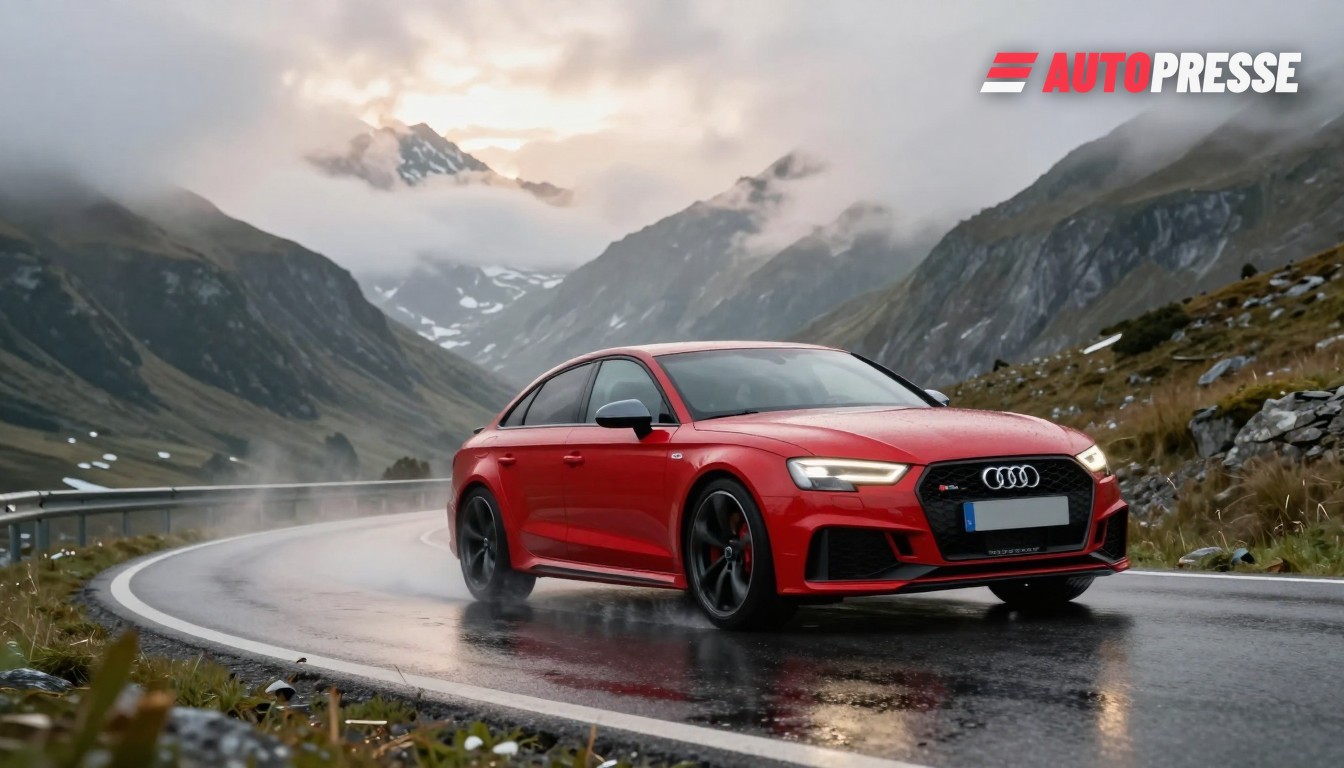
Audi buyers in Germany and Austria face a striking price gap on the RS3: the same Sportback and Limousine list notably higher in Austria because Austria’s Normverbrauchsabgabe (NoVA) is added at registration. That matters for private buyers, company‑car fleets and dealers handling cross‑border orders: the headline numbers change the economics of buying and registering an RS3 between Vienna and Munich.
Sticker prices and the €14k gap
On Audi’s German site the RS3 Sportback is shown from €68,500 (incl. 19% VAT) and the RS3 Limousine from €70,500 (incl. VAT).
Audi Austria’s official pricelist (dated 04.11.2026) gives the same RS3 Sportback a gross list price of €82,920 (price table shows net price €54,660 + NoVA + VAT) and the Limousine at €84,552 (net €55,960 + NoVA + VAT) — a delta of about €14,400 (Sportback) and ≈€14,050 (Limousine) versus the German “ab” prices. The Austrian PDFs explicitly show the NoVA share and list the final price “inkl. NoVA und MwSt.”.
Why Austria’s total is higher: the NoVA explained
Austria applies a one‑off Normverbrauchsabgabe (NoVA) on first registration or delivery of new passenger cars; it is calculated on the vehicle’s net list price and its WLTP CO₂ figure. NoVA is not part of the VAT tax base (i.e., VAT is calculated on the vehicle net price, excluding NoVA). The Austrian public tax guidance and Audi Austria explain the mechanism and recent adjustments. That single‑payment levy is why identical factory prices become substantially higher at the Austrian register.
Ordering, allocations and delivery timing
Audi warns that individual delivery times depend on specification and market allocations; dealers report RS‑model wait times can be months. Audi’s German customer FAQ stresses that lead times vary by engine and options, and dealer notices from Audi centres show RS models typically carry longer wait or allocation periods than mainstream A3 variants. If you want a specific spec, expect the dealer to quote an individual delivery window rather than a single Europe‑wide date.
Practical point for cross‑border buyers: a car bought in Germany and then first registered in Austria becomes liable for NoVA on import/first registration; exporters and brokers should compute NoVA and local registration paperwork in advance. Austria also allows certain pauschal reductions for temporary intra‑EU use under rules updated in 2026, but the NoVA obligation generally remains a purchase‑time cash item for private and company buyers.
What this means for the market
For private buyers the roughly €14k difference shifts the RS3 from an impulsive purchase to a considered buy: financing, insurance and company‑car tax effects change sharply once NoVA is added. Fleets and leasing houses will prefer placing orders in the market that minimises upfront taxes; some brokers and buyers factor cross‑border logistics or look for local stock to avoid extra paperwork. Annual running costs also diverge: Germany uses an annual Kfz‑Steuer based on hubraum and CO₂ that is paid year‑by‑year, while Austria’s one‑off NoVA is a front‑loaded cost — both regimes should be modelled by buyers. ADAC and federal guidance explain how the German yearly vehicle tax is calculated from CO₂ and displacement figures.
Audi RS models on WorldTrader24 →
Sources: Audi Deutschland, Audi Österreich pricelist (04.11.2026), USP/Republic of Austria (NoVA), ADAC.