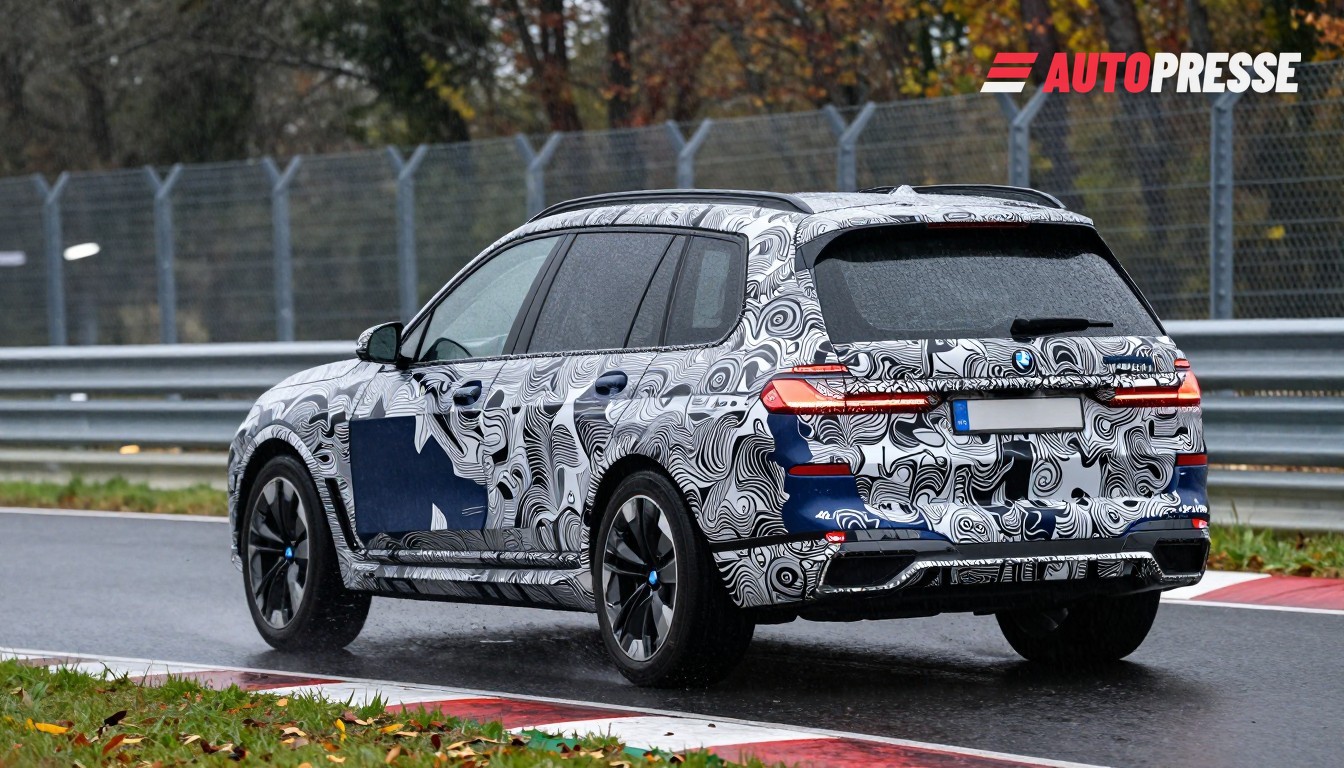
A heavily camouflaged BMW iX7 prototype was photographed completing laps at the Nürburgring on Oct. 20, 2026 — a development milestone that signals BMW’s large three‑row electric SUV is moving into final validation. For drivers, fleets and dealers across Germany and Austria the sighting matters: the iX7 is positioned to compete with the Mercedes EQS SUV and Cadillac Escalade IQ in a premium family‑ SUV segment that German and Austrian buyers favour for long trips and corporate fleets.
What we saw at the Nürburgring
Spy photographers captured the prototype on public sections of the Nordschleife and adjoining roads, running alongside a new X7 M60 development car — a pairing BMW uses to validate both its combustion and electric systems under the same schedule. The photos show a large, three‑row body with split headlights and a new stacked taillight signature; BMW continues to use an updated CLAR architecture for the X7/iX7 rather than the Neue Klasse EV platform.
Technical details remain unofficial, but observers note BMW may fit the iX7 with a very large battery — reports suggest capacities could exceed 144 kWh if BMW borrows the iX5 60 xDrive’s pack architecture — and engineers are clearly running chassis‑durability and cooling tests at the Ring rather than only dynamic lap programmes. BMW is expected to debut the model in 2027 with production following into 2028 in the same global assembly footprint that handles large X‑series SUVs.
What this means for the market
Late‑stage testing at Germany’s Nürburgring underlines BMW’s intent to launch a full‑size three‑row EV in markets that still prize premium SUVs — important for German and Austrian leasing fleets, high‑end dealers and corporate buyers who often specify large‑capacity models. If the iX7 adopts a >144 kWh pack, as reported, it could extend range and charging strategies for long‑distance travellers between Munich, Salzburg and beyond, but it would also press demand on high‑capacity battery supply and fast‑charging infrastructure.
For dealers, a three‑row iX7 would widen margins compared with smaller BEVs but requires training in high‑voltage systems and inventory planning for large‑battery repairs and software updates. Fleet managers in Germany and Austria should watch powertrain and range figures closely — both for total cost of ownership and for public charging compatibility across Autobahn corridors.
Electric vehicle listings on WorldTrader24 →
Sources: CarScoops, BMWBLOG, Autoblog, RoadTorque