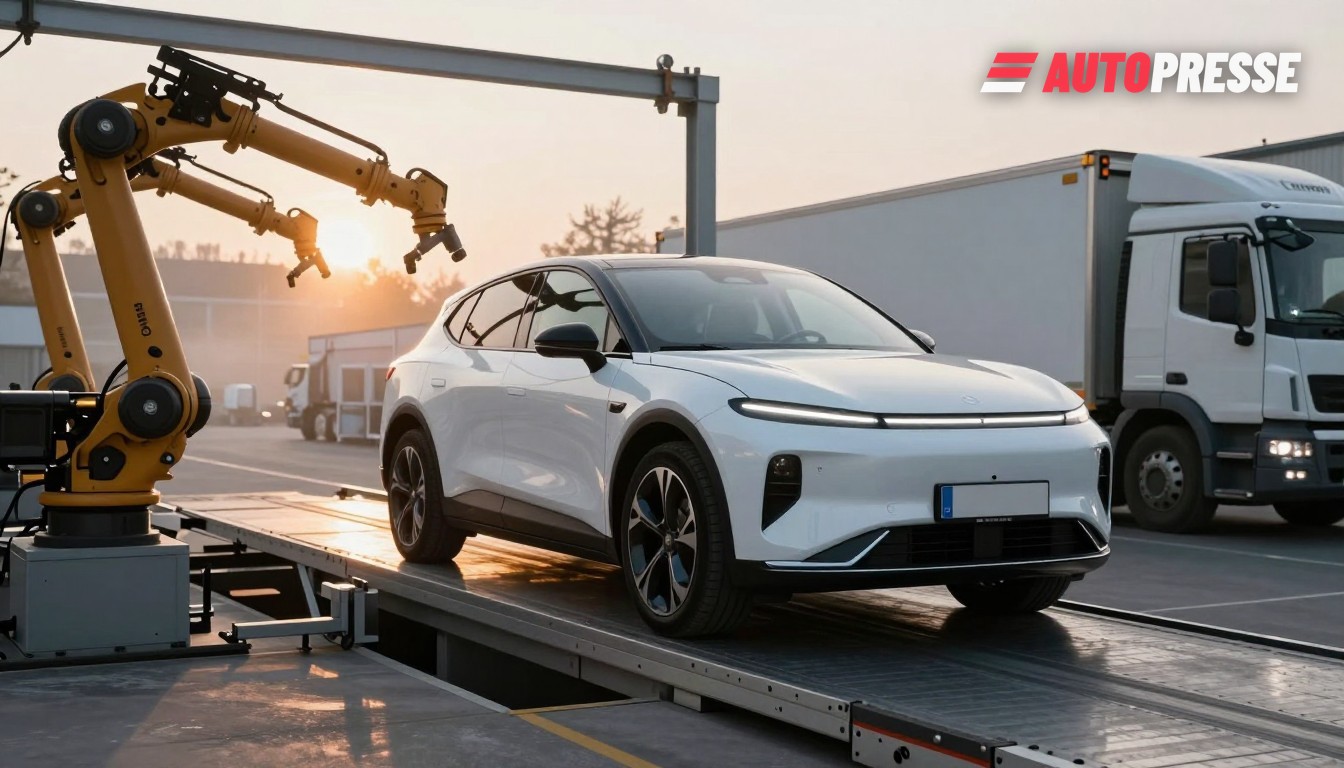
The quiet of Magna Steyr’s Graz plant masks a major shift for suppliers across Austria and southern Germany. As Chinese brands move from imports to local assembly and pilot production in Europe, Tier‑1 and mid‑tier parts firms are winning new orders — and scrambling to meet standards, batteries and logistics demands that come with European production. (Sources: MarkLines; Investing.com; DerStandard)
Contract manufacturing becomes a supplier magnet
Magna's Graz operations already assemble models for Chinese OEMs: MarkLines and other industry trackers list XPeng models (G6, G9) and pilot runs of the P7+ being produced or piloted at Graz in 2025–2026, and company comments at investor conferences confirm contract‑manufacturing work for XPeng and GAC. That on‑shore production gives local suppliers — plastics and interiors, wiring and thermal systems, logistics partners and testing houses — direct access to volumes that previously flowed to Asia. (MarkLines; Investing.com)
The move is visible in market data: Chinese marques’ share of new‑car registrations in Austria rose from 4.4% in 2024 to 5.8% in 2025, and reached 7.9% in the first quarter of 2026, according to Austrian press reporting of national registration figures; more lineup entries and local assembly will push procurement closer to Graz and Bavarian supply clusters. (DerStandard)
Supply‑chain frictions: batteries, tariffs and standards
Local assembly eases transport costs but creates new supplier requirements. Chinese OEMs are actively seeking European battery and component suppliers to avoid duties and shorten lead times: industry reporting shows XPeng and others exploring local supply chains and battery sourcing in 2026. At the same time Brussels’ trade defence steps have put extra focus on local content to mitigate countervailing duties, raising the value of nearby suppliers that can meet EU technical and regulatory standards. (Herald Business; Stockopedia)
For suppliers that win business, the work includes accelerated homologation, tighter quality documentation and higher volumes of testing and certification. That is a near‑term bottleneck: workshops, test labs and certification bodies in Germany and Austria report longer queues as they process approvals for new models and variant parts tied to localized production. (Investing.com; MarkLines)
What this means for the market
Short term (next 12–24 months): expect bumpier capacity and pricing in plastics, wiring harnesses, thermal management and logistics around Graz and southern Germany as suppliers retool for European spec Chinese models. Buyers and dealers should prepare for model‑specific lead times and staged parts rollouts while homologation completes. (MarkLines; DerStandard)
Medium term (2–5 years): if Chinese OEMs continue to localize assembly in Austria and neighbouring Germany, a regional supplier cluster could form — offering scale to small and mid‑tier firms but also concentrating purchasing power. That will favour suppliers that invest in certification, battery compatibility and modular parts that serve multiple OEMs. (Investing.com; Herald Business)
For employees and workshops, local production brings jobs and service opportunities — but also raises the bar for training, standards compliance and aftersales processes tailored to Chinese EV architectures. (DerStandard)
Electric vehicle listings on WorldTrader24 →
Sources: MarkLines, Investing.com, DerStandard, Herald Business, Stockopedia