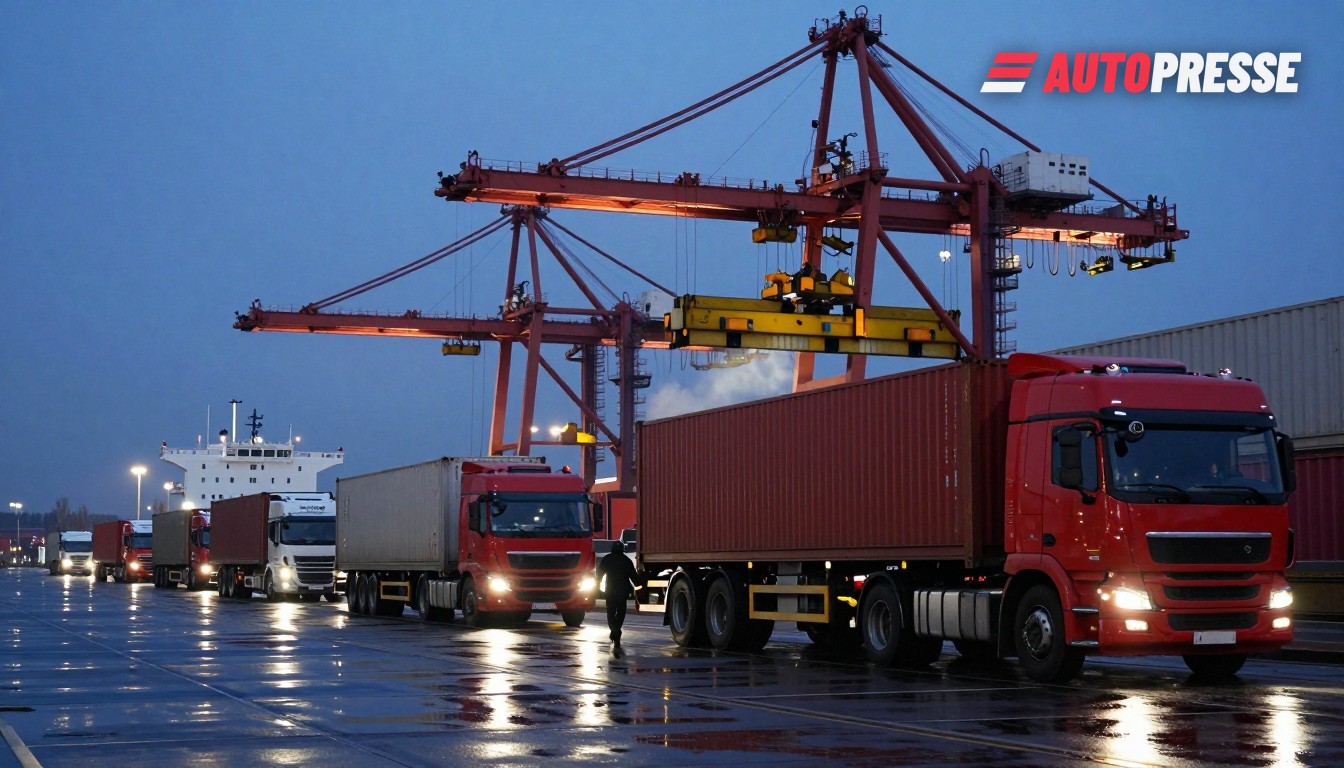
Germany and Austria are feeling the pressure from a tighter European road‑freight market that is already raising costs for OEMs, suppliers, dealers and independent workshops. Freight postings on marketplaces rose sharply in Q3 2026 — TIMOCOM reports increases of 7.6% in Germany and 11.6% in Austria year‑on‑year — even as truck capacity remains fragile. For vehicle logistics and parts chains that run just‑in‑time, the combination of higher spot and contract rates plus record diesel prices is a direct headache for margins and delivery windows.
Platform consolidation and productivity gains
Consolidation among digital forwarders is accelerating: Berlin‑based sennder on 21 October 2026 said it had completed the integration of C.H. Robinson’s European Surface Transportation unit, moved more than 150,000 shipments per month onto a single platform and expects about €1 billion of revenue in 2026 while reaching unadjusted IFRS EBITDA profitability on a monthly basis. The firm also reported a 45% year‑on‑year gain in operator productivity after the integration. Larger digital players are therefore scaling to offer more reliable capacity and automated matching — a potential stabiliser for automotive supply chains if the technology and networks hold.
Capacity squeeze, fuel shock and record indices
Europe‑wide benchmarks show road‑freight prices at historic highs. The IRU/Upply/Ti European Road Freight Rate Benchmark (Q3 2026, published November 2026) records contract and spot indices that remain elevated; domestic contract indices in Germany reached 164.92 (September 2026) — the highest among major markets in the report — underlining cost pressure on lanes that matter for German and Austrian industry. At the same time, diesel has risen markedly: EU diesel averages reached around €2.15 per litre in early October 2026, adding roughly 40% versus a year earlier and materially increasing per‑kilometre running costs. Those fuel and operating‑cost moves have not been fully reflected in contract prices in every corridor, squeezing hauliers’ margins and prompting insolvencies and exits among smaller carriers.
What this means for the market
For carmakers, suppliers and dealers the immediate effect is higher logistics costs that feed straight into total landed cost for vehicles and spare parts. Contract renewals negotiated now will need explicit fuel and toll clauses or face rapid erosion of margins if diesel and toll regimes remain volatile. Independent workshops and parts distributors face higher inbound prices and longer lead times for components; TIMOCOM warns that rising diesel and limited truck supply could drive further capacity loss if carriers cannot pass on costs. These pressures favour larger, digitally integrated forwarders that can offer network optimisation and automated re‑routing, but they also concentrate market power and risk for smaller local hauliers.
In short: record‑level freight indices (autumn 2026), a diesel shock and consolidation among digital forwarders are re‑shaping how vehicle and parts flows move across Germany and Austria — and dealers, parts buyers and logistics planners will need tighter contractual protections and active use of freight marketplaces to manage rising cost and availability risk.
B2B vehicle marketplace on WorldTrader24 →
Sources: TIMOCOM, IRU/Upply/Ti, sennder, Start2Load