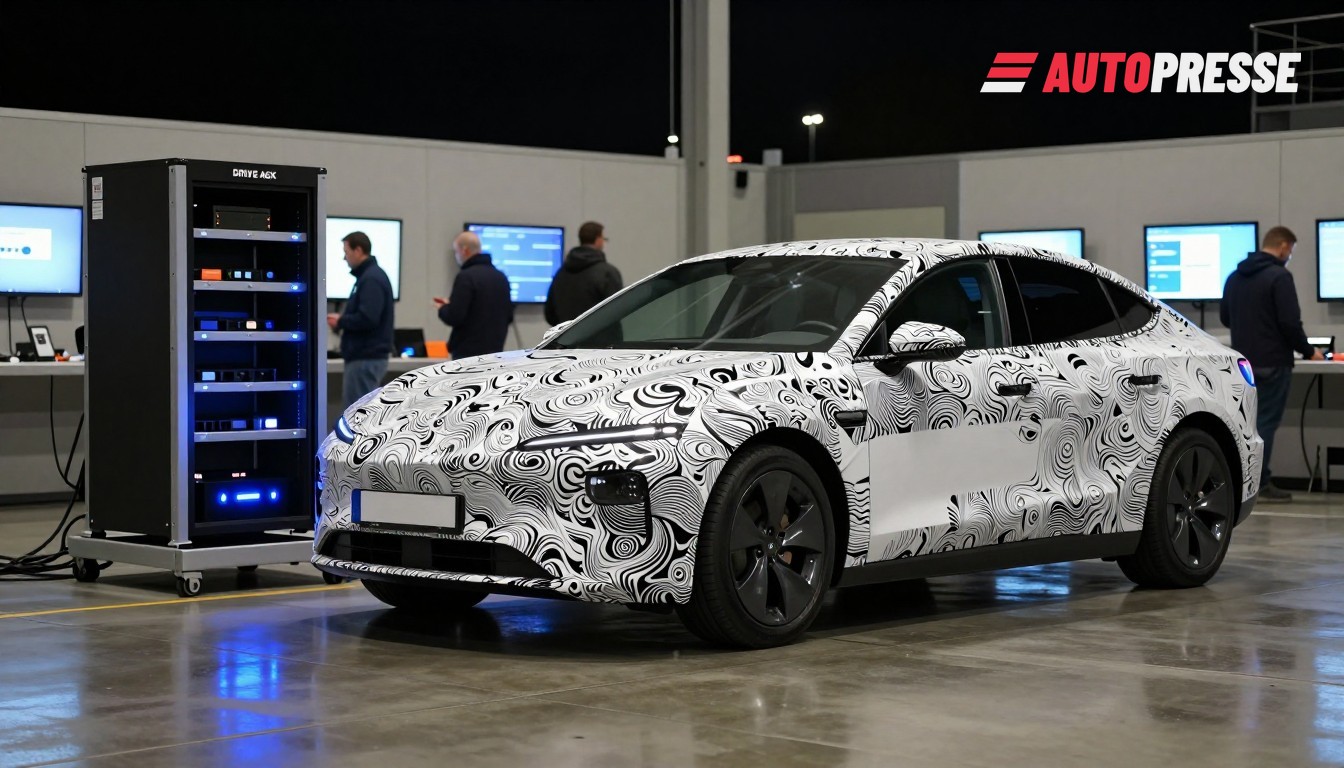
Nvidia’s surprise publication of Alpamayo 2 Edge on 10 November 2026 marks a concrete step for in‑vehicle reasoning AI that directly affects Germany’s car industry — from OEM development teams and Tier‑1s to test engineers and workshop software providers. The compact, 2‑billion‑parameter vision‑language‑action model is optimised to run inside the NVIDIA DRIVE AGX Thor vehicle computer, producing scene understanding and motion plans in real time. This matters to German drivers and fleets because it moves sophisticated decision‑making from remote data centres into the car, reducing latency and changing how safety evidence and validation must be produced.
What Nvidia announced
Nvidia published technical details and release material on 10 November 2026 showing Alpamayo 2 Edge is built on a Nemotron‑based reasoning backbone and paired with a diffusion action expert to generate trajectories and "Chain‑of‑Causation" reasoning only when needed. The company says the model is sized for onboard inference (≈2 billion parameters) and can run at roughly 10 Hz on DRIVE AGX Thor hardware; Nvidia also documents evaluation gains versus larger checkpoints in internal tests (for example a reported 13.6% reduction in minADE displacement error and a 46.1% drop in lateral prediction RMSE in certain zero‑shot tests).
German automakers are already in the frame
The announcement underlines existing European adoption signals: Nvidia has highlighted European mobility partners — specifically naming Mercedes‑Benz and Volkswagen (alongside mobility providers) in its Hyperion/Alpamayo roll‑out materials — as organisations using the Hyperion/Alpamayo stack to build and evaluate automated driving functions. That public naming links the technical release directly to Germany’s OEM development efforts and to suppliers who integrate Nvidia DRIVE platforms.
What this means for the market
For the German market, Alpamayo 2 Edge accelerates a shift already underway: more AV reasoning done in‑vehicle, less dependency on constant cloud inference, and a clearer route to predictable real‑time behaviour. For OEMs and Tier‑1s this shortens the engineering loop (onboard testing and validation), while workshops and vehicle‑software service providers must prepare for new diagnostic, update and safety‑case workflows that include on‑device models and traceable reasoning outputs. For dealers and remarketers the immediate effect is indirect but real: cars with richer onboard AI change repair diagnostics, software‑update cycles and the data used to certify ADAS performance.
Alpamayo 2 Edge was published to developer channels (weights and model artifacts are available via Nvidia/Hugging Face listings) and Nvidia provides recipes for quantisation and TensorRT‑based acceleration that matter for real vehicle integration and speed optimisation. That availability speeds trials in German labs and pilot fleets.
For dealers and service networks, AI tools from other parts of the ecosystem will become complementary: market‑scan agents, image and video generation for online listings, and voice agents that take customer calls reduce back‑office friction while OEMs and suppliers embed onboard reasoning for safety‑critical functions.
DaVinci AI’s product set — autonomous multi‑agent systems for dealers and importers, AI phone and voice agents that qualify leads and book appointments, and market‑scanning dealer‑stock analytics — fits this need neatly. By automating repetitive contact tasks, generating compliant marketing imagery and giving dealers persistent, context‑aware assistants, DaVinci AI helps dealerships and service groups absorb the software and workflow changes that fast onboard AI (like Alpamayo 2 Edge) will force across sales, service and marketing.
Mercedes Benz models and listings on WorldTrader24 →
Sources: NVIDIA Developer Blog, NVIDIA Newsroom