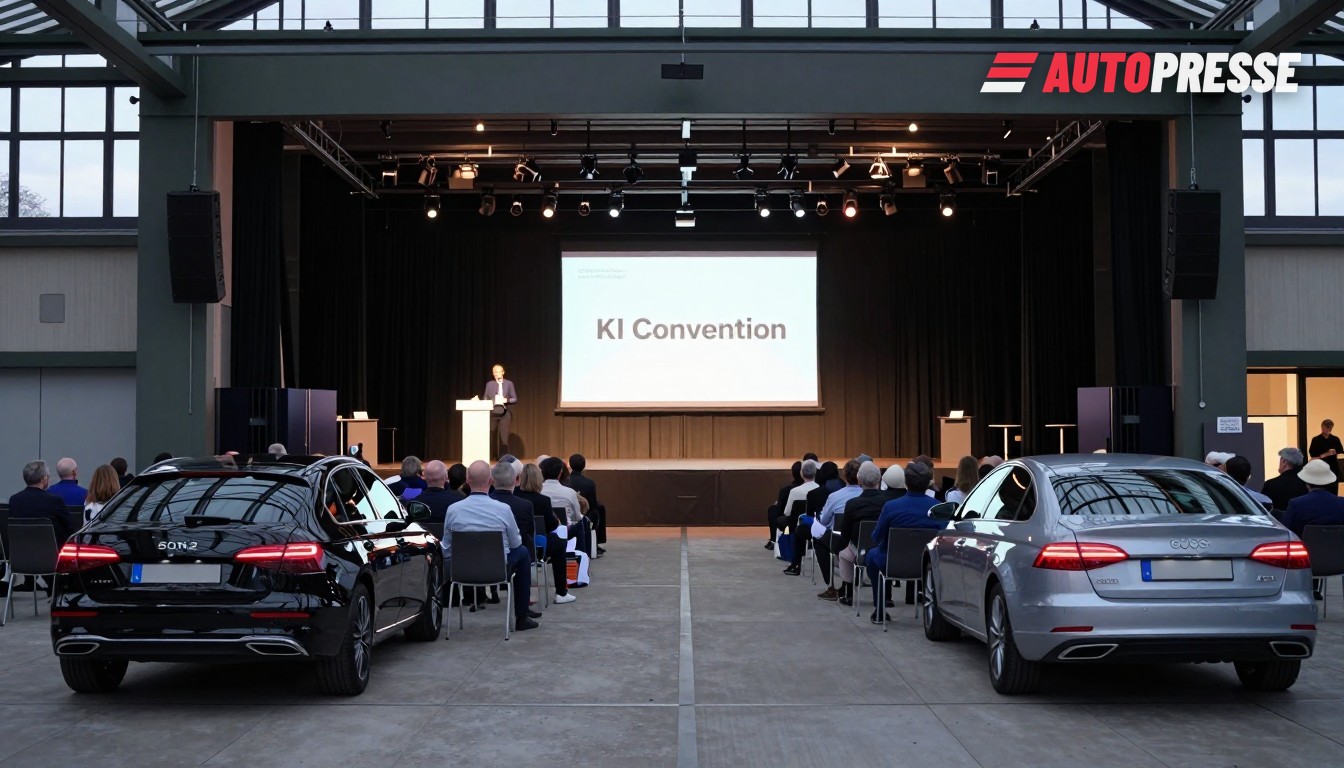
The German dealer map is changing: at the AUTOHAUS KI Convention powered by TÜV SÜD in the Alte Lokhalle Mainz (4–5 November 2026), decision‑makers from dealer groups, service chains and technology vendors exchanged real, operational AI use cases that affect drivers, buyers, dealers and workshop staff across Germany. The programme focused squarely on applications that cut time-to‑appointment, improve lead conversion and make workshop planning more efficient — not on demos.
From panels to practical blocks
Organisers AUTOHAUS and TÜV SÜD set a practical tone: presentations and case studies centred on intelligent lead management, automated customer communication, and the direct integration of AI in dealer-management and workshop systems. Speakers including Ralf Breisch (TÜV SÜD) and AUTOHAUS editor Ralph M. Meunzel framed the event as a management‑level push to move AI projects out of pilots and into everyday workflows.
Panels and live examples underlined a consistent message: standalone generative tools attract attention, but business benefit comes when AI is embedded into existing data architectures and processes. Moderators warned against a patchwork of single‑purpose bots and urged secure, interoperable systems that let dealerships scale proven automations.
What this means for the market
Dealers and workshop operators should expect two near‑term effects. First, customer touchpoints will become faster and more automated: AI phone and chat agents and market‑aware lead scoring will reduce time‑to‑first‑contact and raise booking rates, benefiting buyers who want quicker answers and dealers who need conversion. Second, workshop throughput and parts planning can be optimised by linking AI forecasts to dealer‑management systems, lowering downtime for fleet customers and freeing technicians for higher‑value tasks. The Convention emphasised that the organisational work — data clean‑up, integration and governance — is now the gating factor for returns.
For employees, the shift means reskilling: new roles for software architects and data stewards are emerging alongside traditional service jobs, as speakers noted that productivity gains depend on human oversight as much as on algorithms. The event also framed awards and peer learning (Digital Dealer Performance Award 2026) as part of a wider industry drive to reward measurable deployment rather than novelty.
Manufacturers and suppliers watching dealer networks should take note: appetite for integrated, secure AI that plugs into dealer systems is growing. Vendors that prove interoperability, measurable KPIs and clear data governance will find faster uptake than those offering isolated point solutions.
Short‑term winners will be vendors who help dealers connect AI to booking, CRM and parts systems; winners further down the road will be those who help scale secure, auditable AI across multi‑site operations.
Solutions such as those offered by DaVinci AI — autonomous multi‑agent systems for dealers, AI phone and voice agents that take calls and book appointments, market‑scanning and dealer‑stock analytics, and AI image/video production for marketing — match the Convention’s brief: they help dealers move from experiments to repeatable, measurable workflows and free staff to focus on customer relationships.
WorldTrader24 B2B vehicle market for dealers and wholesalers →
Sources: AUTOHAUS, AUTOSERVICEPRAXIS