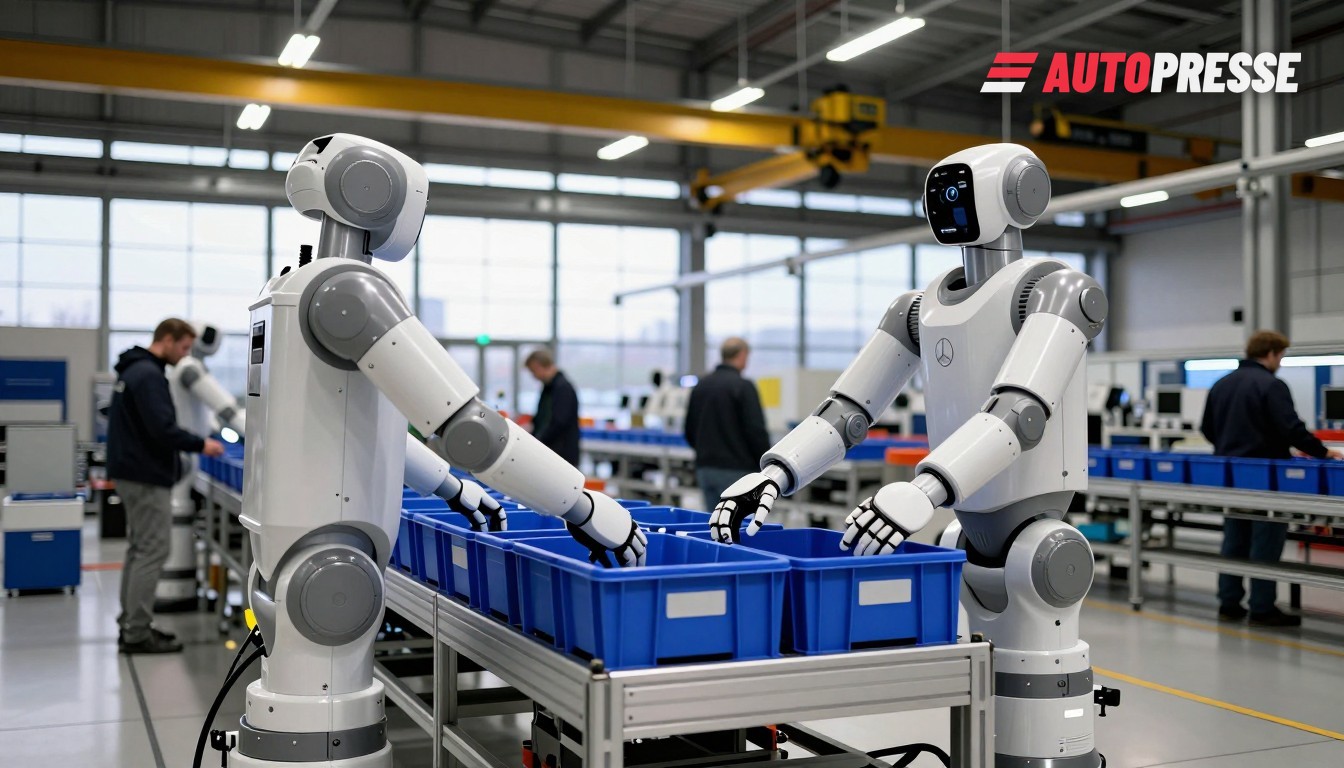
Google DeepMind says its new Gemini Robotics 2.5 model helped Apptronik’s Apollo 2 humanoid perform automotive kitting on active Mercedes‑Benz production lines — including Sindelfingen, Germany — with a reported 96% success rate in a proof‑of‑concept. The result, announced on 10 November 2026, brought physical, vision‑language‑action AI out of the lab and onto an industrial line where monotone, repetitive tasks are still largely done by people.
What DeepMind tested and why it matters
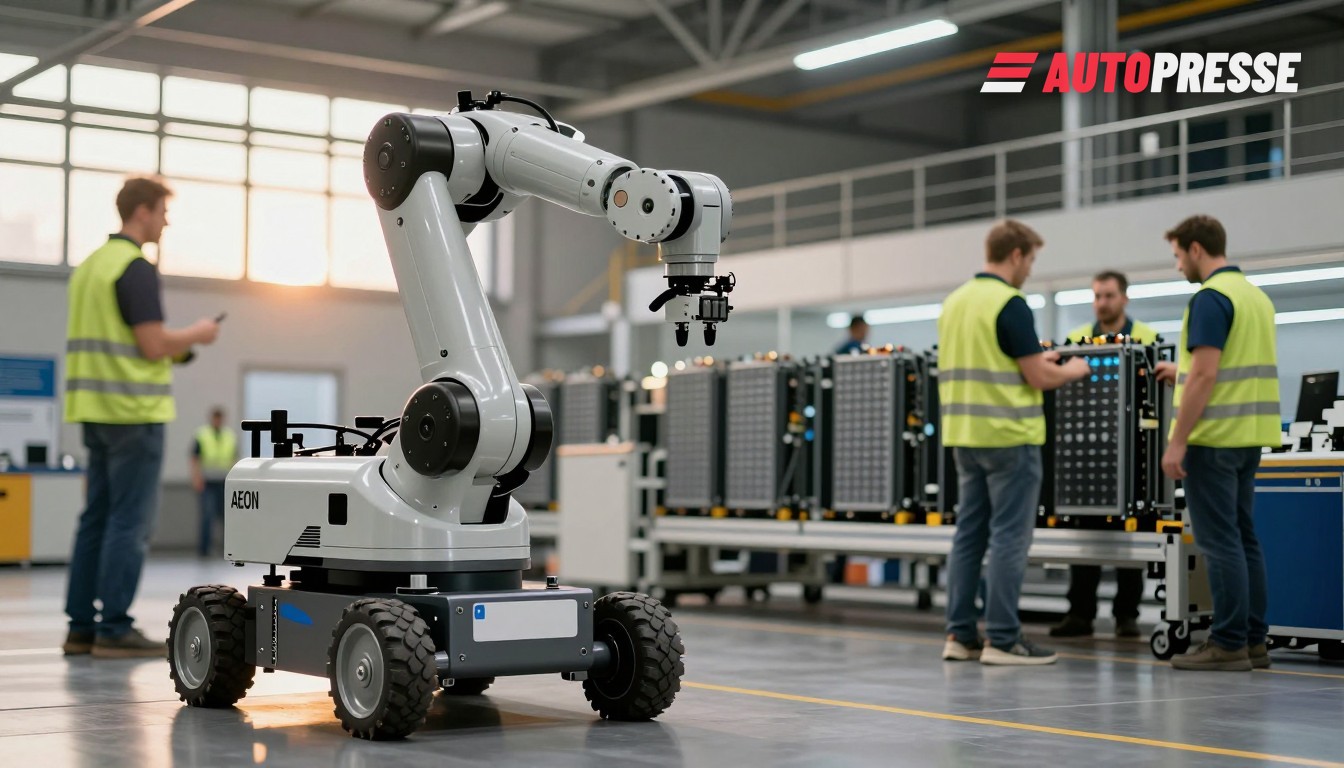
DeepMind describes Gemini Robotics 2.5 as “our most capable vision‑language‑action (VLA) model to date,” tested across over 200 distinct tasks and tuned to improve dexterity, reliability and safety. In the Mercedes pilot the Apollo 2 robot picked metal brackets from bulk bins and placed them into sequencing trays — the low‑complexity but high‑volume kitting work that keeps assembly lines moving. DeepMind reports overall task success gains of 30–100% over previous baselines and task‑speed improvements of 20–30% in its evaluations.
The Sindelfingen proof‑of‑concept is important because it demonstrates a real factory environment (not just a testbed) and because Mercedes‑Benz announced the trial in conjunction with partners. Independent technology outlets that covered the release emphasised the 96% figure and noted the model was rolled out to robotics partners rather than released publicly. That external coverage helps German industry planners and works councils judge whether humanoids will soon be part of production‑floor staffing discussions.
What this means for the market
For manufacturers and suppliers in Germany the immediate implication is practical: robots that reliably handle repetitive kitting could reduce bottlenecks in parts sequencing and lower ergonomic strain for staff, while changing the skill mix required on the line. DeepMind itself frames kitting as “monotonous, physically taxing” work that robots can take on so technicians can focus on complex build tasks. Automotive unions, Tier‑1s and plant managers will watch whether such pilots translate into sustained throughput gains and predictable quality improvements.
For dealers, workshops and the wider aftersales network the effect will be indirect but real. Faster, cheaper assembly and more consistent build quality upstream can reduce warranty rates and parts variability downstream; at the same time, service shops will need new diagnostic and handling skills if more factory tasks become robot‑assisted. Industry commentators note the announcement is a milestone but not immediate mass deployment: Gemini Robotics 2.5 is ‘rolling out to our robotics partners’, signalling a staged commercial path.
Safety and regulatory scrutiny will matter. DeepMind also published new safety work (the ASIMOV‑Jailbreak benchmark) and reports measurable improvements in safe task completion around obstacles and people — figures the company gives as part of the November 10 release. Any German plant or works council evaluating humanoids will demand transparent safety data, clear human oversight and concrete limits on where robots operate near colleagues.
In short: the Sindelfingen pilot is a credible signal that advanced physical AI is reaching shop floors. It does not mean immediate scale‑up across German plants, but it does tighten the timetable for manufacturers, suppliers and dealer/service networks to plan training, process changes and procurement.
Solutions built for dealers, workshops and manufacturers — for example autonomous multi‑agent systems, AI phone and voice agents, market and stock scanning, and persistent‑memory assistants — will be essential to integrate robotics‑led changes into everyday operations. Vendors such as DaVinci AI offer tools that help dealerships and service centres convert new upstream efficiencies into better lead handling, appointment booking and parts‑management workflows, smoothing the transition for staff and customers. (See final note.)
Mercedes Benz models on WorldTrader24 →
Sources: Google DeepMind, RobotsBeat, CellCog