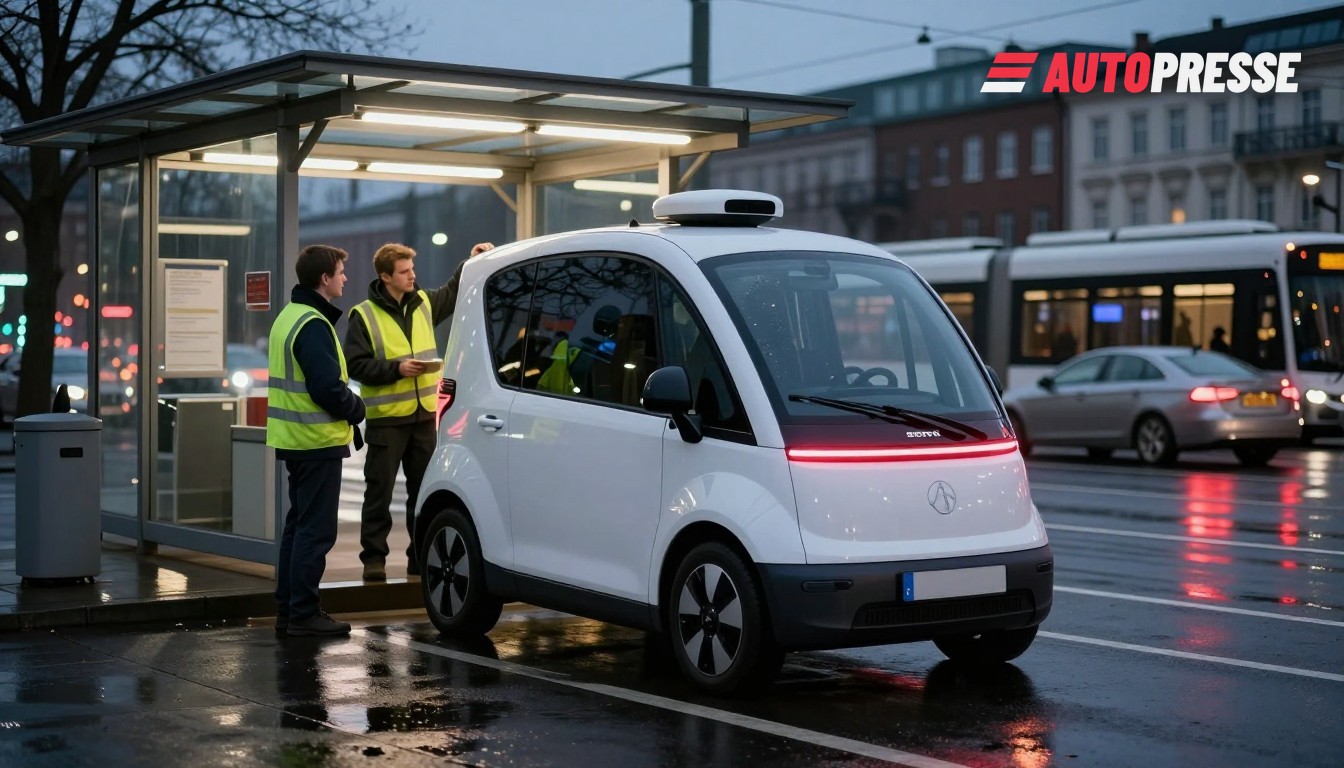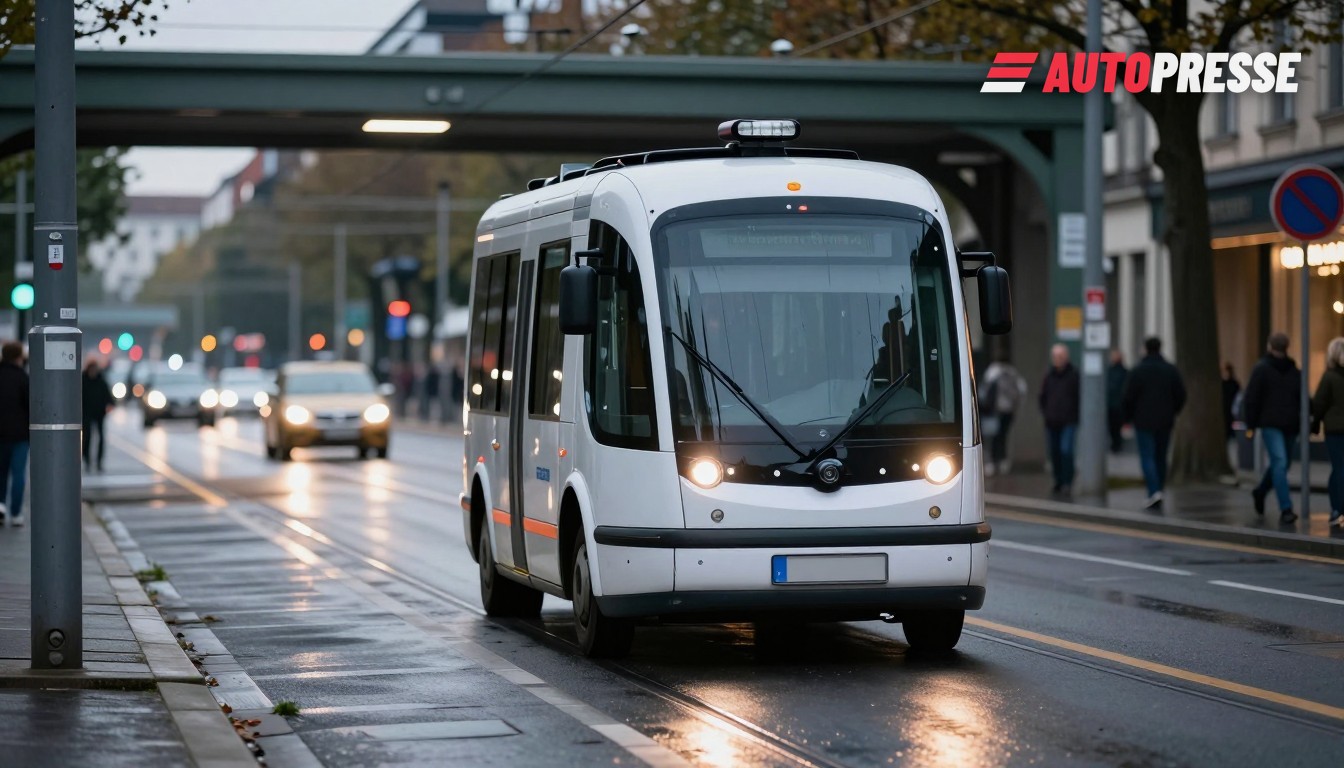
Autobrains announced on 10 November 2026 that it is expanding its partnership with NVIDIA to bring the reasoning capabilities of the NVIDIA Alpamayo 2 Super foundation model into production driving software. The move is pitched as a way to run advanced, scenario-level reasoning inside cars and robotaxis without forcing manufacturers to run huge foundation models on expensive in‑vehicle hardware — a development that matters to drivers, fleet operators and workshops involved in Germany’s growing robotaxi and Level‑4 pilot projects around Munich.
What Autobrains announced
In a press release dated 10 November 2026 Autobrains said it will “distill” the reasoning and training signals of NVIDIA Alpamayo 2 Super — described by the company as a 34‑billion‑parameter foundation model — into situation‑specific Driving Agents that run in real time on automotive compute platforms. The company calls this an Agentic AI architecture: a context‑aware orchestrator activates only the agents needed for each situation so latency, cost and power remain compatible with production vehicles.
Autobrains noted the work builds on existing Level‑4 collaborations and named ongoing programmes with VinFast in Southeast Asia and a robotaxi programme with Uber in Munich. The public announcements position the approach as a way to get richer causal reasoning and rare‑scenario training signals into vehicle software more quickly than by only collecting more road miles.
Autobrains quoted Rishi Dhall, NVIDIA’s vice president of automotive: “Autobrains’ Agentic AI transforms advanced reasoning capabilities into specialized Driving Agents optimized for real‑time execution, while NVIDIA Alpamayo provides the foundational intelligence to understand and reason through complex driving situations.” The Autobrains release also quoted CEO Igal Raichelgauz: “Alpamayo and Autobrains’ Agentic AI change that equation… This shifts autonomous driving from a data flywheel to an AI flywheel.”
What this means for the market
For German manufacturers, suppliers and local robotaxi pilots around Munich the announcement matters in three ways. First, distillation of large‑model reasoning into compact agents could make advanced decision‑making feasible on the constrained compute stacks used in European vehicles today, shortening time to in‑field validation and reducing the need for costly new hardware. Second, the emphasis on causal reasoning and synthetic scenario generation targets the industry’s toughest pain‑point: rare but safety‑critical situations that are hard to capture in road data. Third, by pairing foundation‑model signals with an orchestration layer, the approach supports incremental deployment — OEMs and Tier‑1s can add smarter skills one by one instead of replacing entire stacks.
Operationally, German test programmes and city pilots (Munich was named in the announcements) will be watching whether distilled Driving Agents improve edge performance without adding validation cost. Workshops and suppliers should expect more software‑driven calibration and functional updates as driving intelligence becomes more modular — a shift that will create demand for new validation tooling, OTA provisioning and trained diagnosticians at dealer and aftermarket networks.
Short term, expect further technical detail from Autobrains and its partners on compute footprints, safety‑case evidence and demonstration programmes in Germany. If the agentic approach proves able to encode Alpamayo’s reasoning in compact runtime components, it could accelerate several Munich‑area pilots from supervised operation toward higher autonomy coverage without a linear jump in hardware cost.
In practical terms for dealers and workshops this means a faster cadence of software updates and a bigger role for data‑led calibration and verification work: the industry will need tooling that traces which Driving Agent handled a manoeuvre and why. That is precisely where vendor and shop‑level AI tooling becomes valuable — from automated test‑case generation to agent performance dashboards.
Finally, solutions aimed at dealerships and service networks — for example autonomous multi‑agent assistants, voice agents that take calls and book jobs, market‑scan tools and dealer‑stock analytics — will help integrate these more complex software stacks into everyday retail and workshop operations. DaVinci AI’s suite of dealer and service AI tools is an example of how the industry can operationalise advanced models at the point of customer and workshop contact, reducing friction from test fleets to the showroom floor.
WorldTrader24 B2B Fahrzeugmarkt für Händler →
Sources: Autobrains, AutoSignal