Germany and Austria’s auto sectors are no longer just battling supply chains and technology shifts — they face a people problem. With production and electrification plans still running, manufacturers, suppliers and garages report growing hiring gaps that government migration routes and recruitment drives are now being asked to fill. This shift matters to drivers (longer service wait times), dealers (harder to staff workshops) and plant managers (skills, not parts, increasingly limit output).
Why migration now matters
Official figures show the scale. Germany’s Federal Employment Agency reports that 157 occupational categories still face skills shortages and that “immigration will therefore continue to grow in importance for our labour market.” Half of advertised vacancies were in shortage occupations in 2025, and the share of foreign workers in shortage sectors has roughly doubled since 2014.
Policymakers have already changed the rules: reforms to Germany’s Skilled Immigration Act (implemented in stages since November 2023 and fully rolled out by mid‑2024) created more flexible skilled‑worker channels, recognition paths and an “Opportunity Card” job‑search visa that the OECD flags as central to labour supply plans. Employers and authorities see these measures as essential to keep factories and workshops staffed.
Austria’s tight market and company responses
Across the border, Austria reports similar strains. The WKO’s 2026 Fachkräfte‑Radar finds 78% of Austrian firms affected by shortages and estimates roughly 155,000 missing skilled workers; transport, industry and technical trades are among the worst hit. Firms say the shortfall increases overtime, reduces innovation and forces management to shoulder extra work.
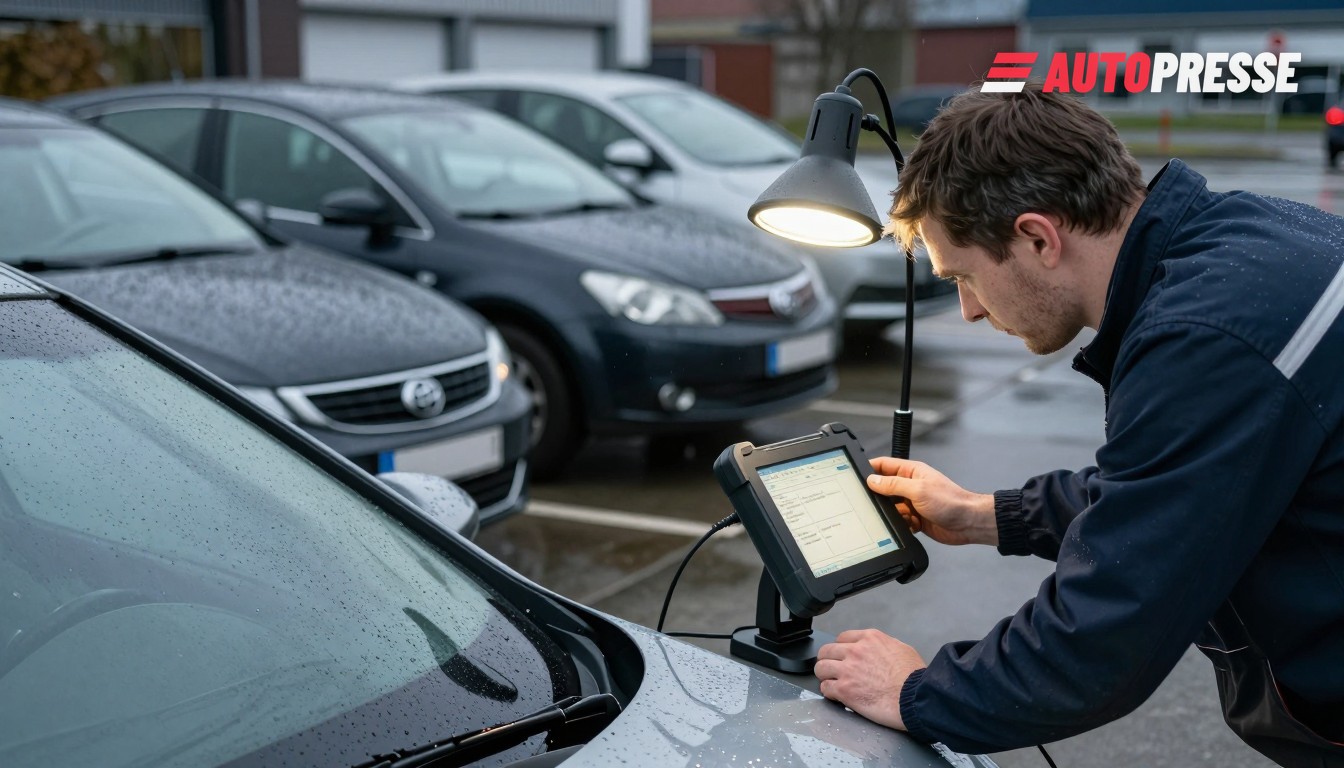
That labour pinch comes as demand shifts: Statistics Austria shows new‑car registrations in January–October 2026 rose 10.7% year‑on‑year and that alternative‑drive vehicles now make up a large slice of new sales — a market evolution that raises demand for technicians with e‑powertrain and high‑voltage skills. Recruiting quickly for new electrical and software skills is now a commercial imperative for OEMs and independent workshops alike.
Industry signals and employer pressure
Business surveys underline the consequences. The DIHK autumn 2026 survey reports that skilled‑worker shortages are a top concern for a third of companies and that manufacturing labour costs (about €45 per hour) remain well above the EU average — a tension that pushes some firms to seek labour from abroad while also looking to automation and training.
At the same time, sentiment in Germany’s automotive industry shows sharp month‑to‑month swings: the ifo Business Climate Index improved in October 2026 but remains volatile, reflecting the uncertainty firms feel as they try to match headcount and competencies to rapid product change.
What this means for the market
Short term: expect longer workshop lead times and recruitment drives aimed at fast‑trainable roles (HV‑technicians, diagnostics, software integrators). Mid term: firms will pursue three strategies in parallel — (1) faster recognition and use of skilled‑immigration channels, (2) targeted apprenticeship and retraining programmes, and (3) more automation where labour costs cannot be met. That mix will shape who wins in vehicle servicing, parts supply and small‑series production in Germany and Austria.
Buyers should budget for slower turnaround on bespoke work and aftermarket retrofit services; dealers and independent workshops must accelerate partnerships with training providers and use digital recruitment tools to shorten hiring lead times.
WorldTrader24 B2B vehicle marketplace listings →
Sources: Federal Employment Agency (Germany), OECD, DIHK, Statistics Austria, ifo Institute, WKO