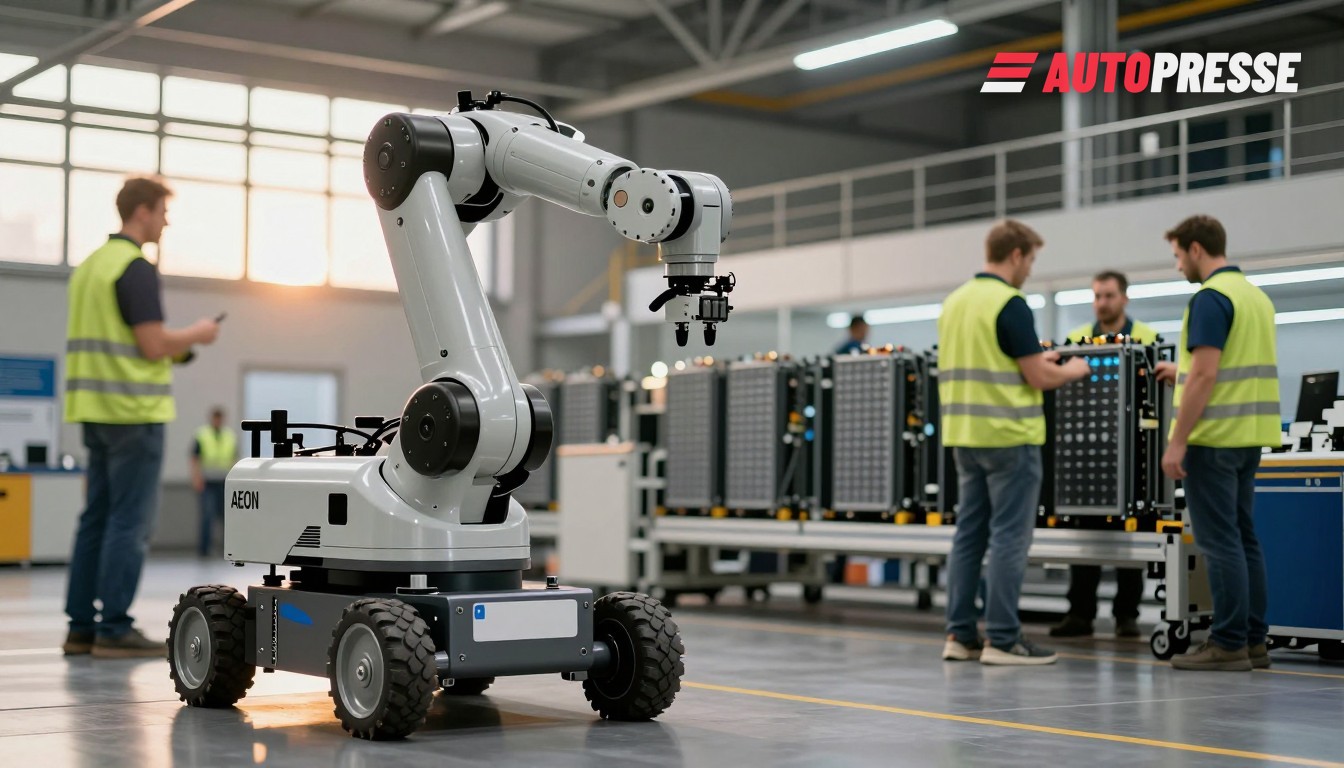
This week Germany’s car industry saw a concrete, verifiable step in factory AI: independent trackers re‑verified that BMW Group’s Plant Leipzig is running a pilot with Hexagon Robotics’ AEON humanoid, with verification dated 13 November 2026. That confirmation matters to drivers, buyers, dealers and workshop staff because it signals faster adoption of AI in vehicle production — a development that will influence parts sourcing, aftersales diagnostics and the skills dealers and technicians must offer.
What BMW has announced and what was confirmed this week
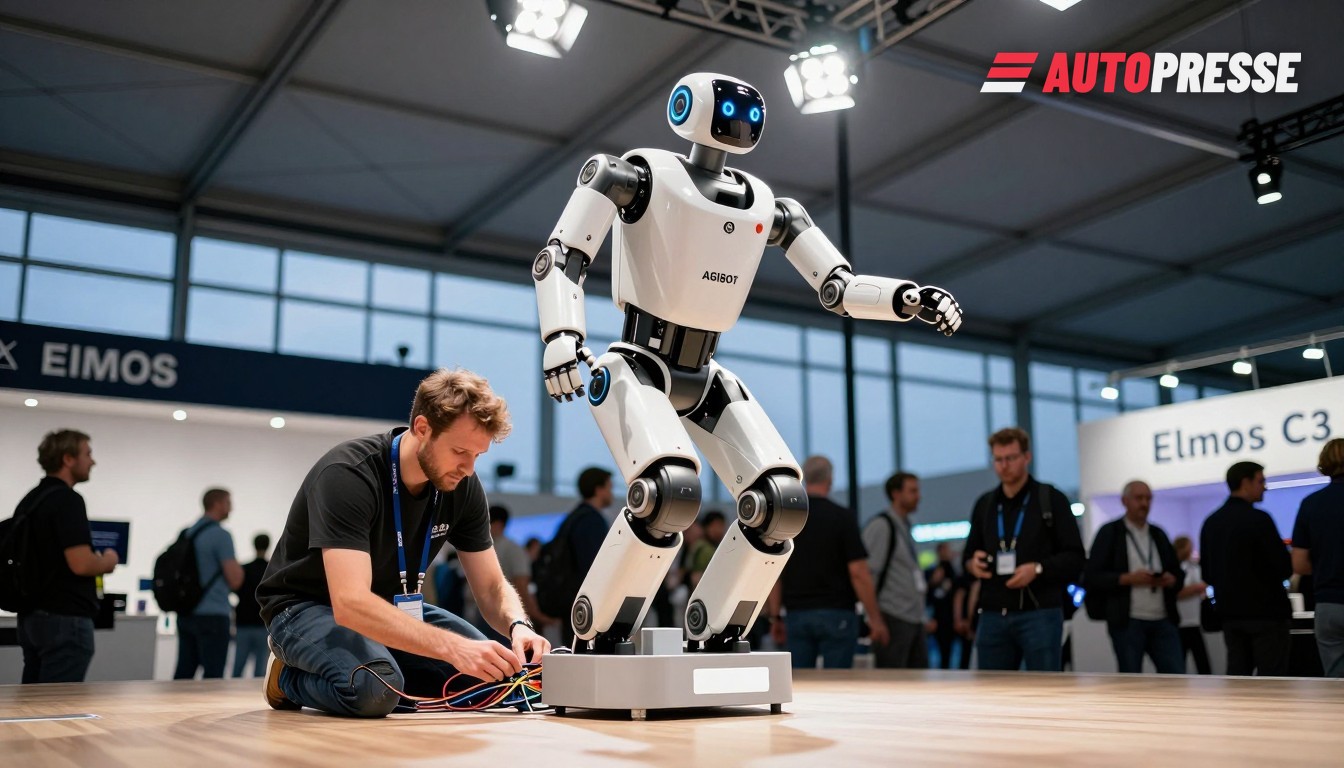
BMW’s own press release (initially published 27 February 2026) set out the company’s “Physical AI” programme and named Plant Leipzig as the first European pilot site for humanoid robots, describing test deployments in December 2025 and a staged pilot programme through 2026. The release quotes BMW executives saying the aim is to integrate AI‑enabled humanoid robots into tasks such as high‑voltage battery assembly and component production and to relieve employees from ergonomically demanding tasks.
Independent deployment trackers updated and verified the Leipzig pilot on 13 November 2026, citing BMW confirmations and vendor evidence that AEON units are performing production tasks in the plant’s iFACTORY environment. That fresh verification is the basis for renewed industry attention this week.
What this means for the market
For suppliers and aftermarket specialists the immediate effect is practical: AI‑driven, humanoid workstations change the shape and cadence of parts feeding, quality checks and tool calibration. Workshops and dealer service centres will face newer vehicle modules and tighter tolerances that often require software‑led diagnostics and calibrated tooling — increasing demand for technicians who can work with AI‑augmented test benches and robot‑grade fixtures. The pilot also shifts attention to integration and data governance: factories will need secure, low‑latency orchestration between robots, sensors and IT systems, and suppliers who offer those integration stacks will be in demand.
For employees the short‑term picture is not simple replacement but task reshaping. BMW’s public materials stress that humanoids are intended as a complement to existing automation — taking on monotonous or ergonomically risky tasks — and that the company has created a Centre of Competence for Physical AI to manage staged integration and training. That implies a skills ladder: commissioning engineers, robot‑trained maintenance teams and AI‑capable inspection services will be scarce skills in the months ahead.
Finally, for buyers and drivers the change is indirect but real: production steps that improve repeatability and quality tend to reduce defect rates and warranty work over time — and the more software and AI that control manufacturing and vehicle functions, the more dealers and repair networks must rely on advanced diagnostics and over‑the‑air updates rather than purely mechanical fixes.
WorldTrader24 B2B-Fahrzeugmarkt für Händler →
Sources: BMW Group press release, The Mimic (Humanoid Robot Deployment Ledger)