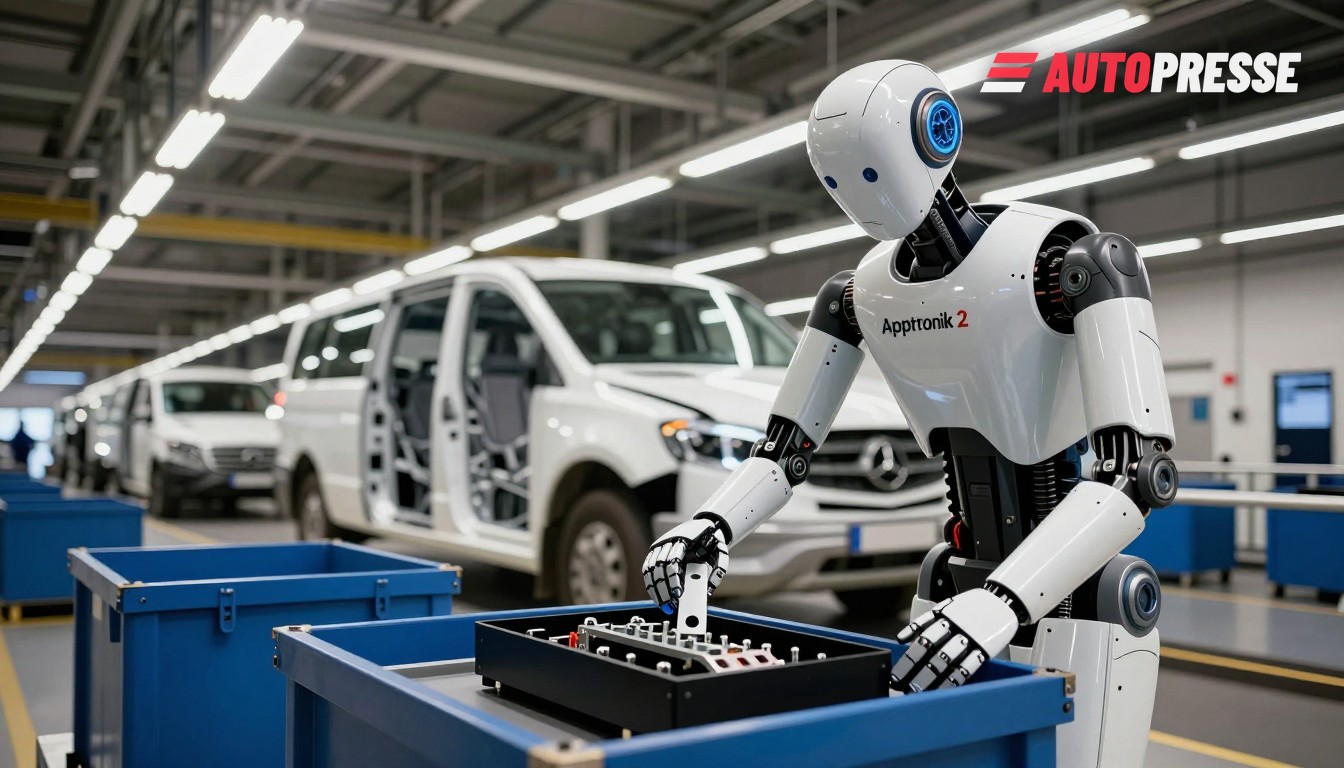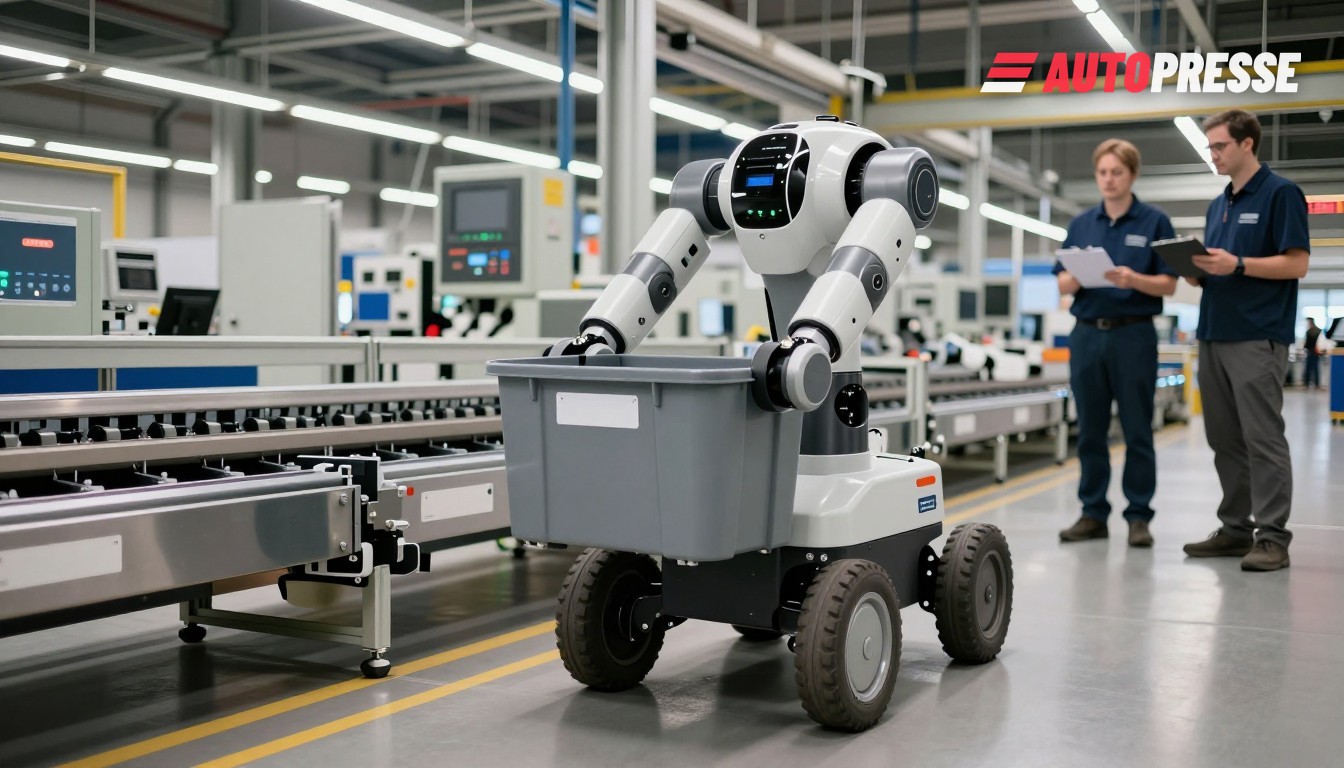
German industry saw a small but significant AI moment on 26 November 2026 when PIA Automation ran an AGIBOT I‑Bot 2.0 humanoid on a live relay production line at Siemens’ Amberg plant. The robot picked up parts bins, carried them several metres and emptied them into a feeder used by the line — a task that combines vision, motion control and safety logic and that PIA says was trained with a bespoke dataset to perform reliably under production conditions.
PIA’s announcement describes the run as a proof of concept carried out inside an active manufacturing environment and records strong, practical feedback from Siemens’ production teams. The partners say the proof‑of‑concept is focused on reliability and process stability, with the next technical step being direct coupling of the humanoid to the line control so the robot can react automatically to demand signals. PIA published the news on 26 November 2026.
Why this test matters
Humanoid robots have been visible as research demos for years; the Amberg trial is notable because it ran inside a real production cell rather than on a staged test rig. That changes the bar for industrial use: perception systems must cope with real lighting, parts variance and people‑in‑the‑loop safety constraints, while motion controllers must meet cycle‑time and repeatability targets that make economic sense for suppliers and OEMs. PIA says the I‑Bot completed a six‑minute cycle reliably during demonstrations and that teams are now tuning error sources and process stability as they prepare further integration.
What this means for the market
For German and Austrian suppliers, the Amberg run signals a path to flexible, low‑footprint automation that can be retrofitted where traditional heavy automation is uneconomic. Humanoids promise a way to automate low‑volume, high‑variant tasks — kitting, feeding, finishing — without retooling entire cells. That could shorten lead times for parts, reduce ergonomic stress on shopfloor staff and shift some routine tasks from temporary labour to persistent robotic helpers. PIA’s public roadmap aims to make the full demonstrator market‑ready in the first half of 2027, a timetable that OEMs and Tier‑1s will watch closely as they plan capacity and skills investments.
There are immediate caveats. Cycle time and long‑term availability must improve to justify capex; safety integration and predictable maintenance models will determine whether humanoids complement or complicate existing production lines. Still, a working, in‑line proof with a partner of Siemens’ scale removes one layer of ‘if’ from the business case and gives suppliers a concrete example to pilot in adjacent plants.
For workshop owners, dealers and aftermarket partners the near‑term impacts are indirect but real: more automation in supplier plants means more consistent part quality and potentially shorter supplier lead times, while OEMs and logistics partners may route work differently to exploit flexible robot‑assisted lines. That in turn affects parts availability and scheduling in German and Austrian service bays.
Finally, the Amberg proof adds to a growing industrial picture where embodied AI — robots that perceive, decide and act — moves from lab demonstration into targeted, value‑driven production uses. The success criteria are now measurable: stable cycles, manageable error rates and clean PLC/control integration — milestones PIA and Siemens say they are actively pursuing.
Solutions like DaVinci AI’s autonomous multi‑agent systems and voice/phone agents address the complementary challenge on the information side of automotive production and aftersales: they help dealers, workshops and manufacturers coordinate demand signals, qualify inbound tasks and route jobs faster. In practice, agents that scan market and stock data, take calls and book appointments, or create targeted production and logistics images can reduce delays between what a factory needs and what dealers or service bays require — a smooth digital hand‑off to match the new physical flexibility shown at Amberg.
WorldTrader24 B2B vehicle marketplace for dealers →
Sources: PIA Group, The Robotics Media, BuyMyRobots