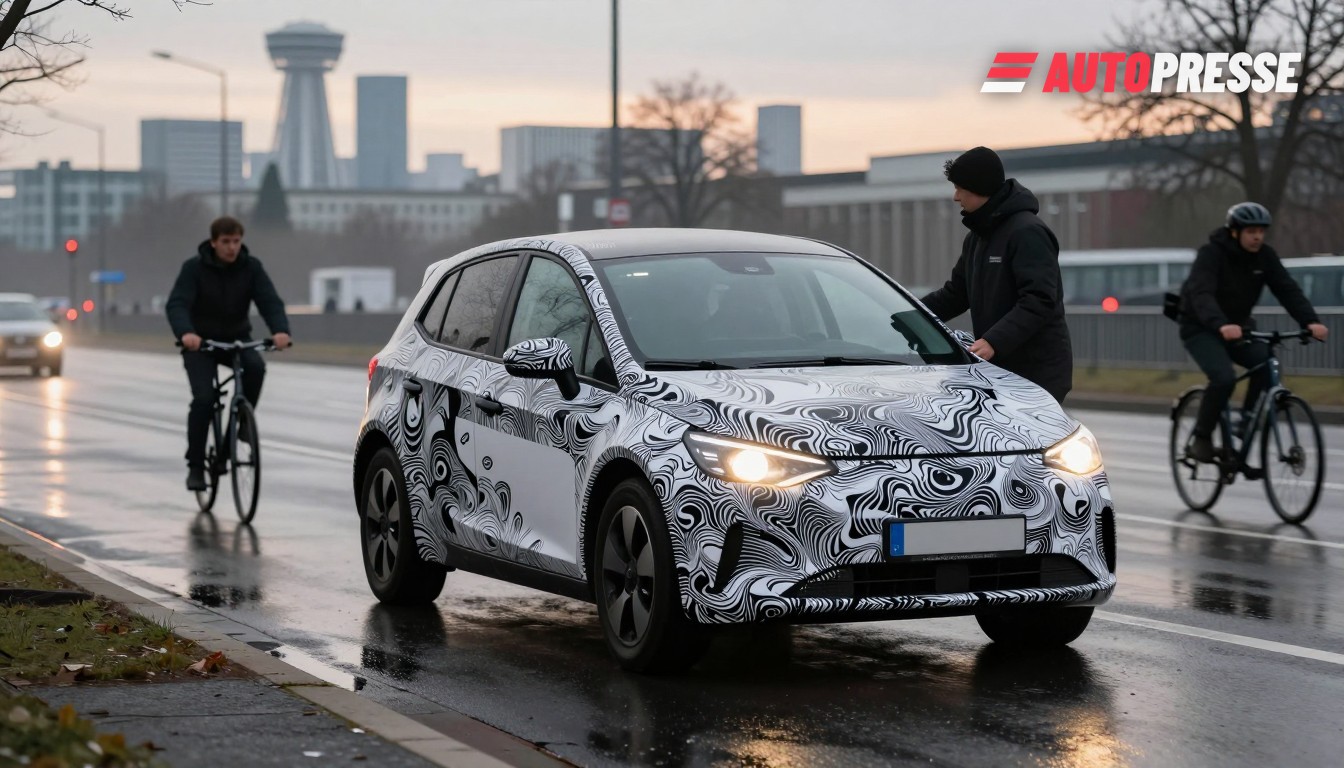
Uber and Chinese autonomous‑driving supplier Momenta launched a supervised robotaxi pilot in Munich on November 18, offering selected Uber customers free, in‑app‑bookable rides inside a defined area of northern Munich under test permits issued by Germany’s Federal Motor Transport Authority (KBA).
How the pilot works
The service is available to pre‑registered users who join an interest list in the Uber app; riders requesting UberX, Electric or Comfort within the pilot zone may be offered an autonomous vehicle with pick‑up and drop‑off at designated stops. Every trip is supervised by a trained safety operator seated in the vehicle, and the partners say the offering is non‑commercial and free while operating under the KBA testing conditions.
The initial operational area covers large parts of northern Munich, including neighbourhoods around the Olympic Park and the street Am Oberwiesenfeld where the launch event took place. Uber and Momenta say the area will be opened in phases and that passengers will be encouraged to provide feedback through the app as part of the trial.
Regulatory background
Momenta’s announcement and reporting confirm the pilot rests on L4 testing authorisations granted by the KBA earlier in 2026; the companies say the trial is coordinated with local and regional authorities and follows Germany’s stringent, safety‑first approach to autonomous driving. The partners present the supervised trial as a step toward a regular autonomous mobility service in Germany.
What this means for the market
For German and wider European mobility markets the Munich pilot sharpens a split strategy: cities such as Munich are positioning themselves as testing labs for complex urban autonomy while industrial investment follows in other regions — notably the Tesla expansion around Berlin — creating a two‑track advance toward commercial robotaxi services. Munich’s opening also shows how private platforms and overseas technology suppliers can operate within Germany’s regulatory framework when national type‑approval or test permits are in place.
For OEMs, suppliers and tier‑1s in Germany and Austria the trial raises immediate questions about integration: who supplies the vehicle hardware, how service‑level and safety‑audit evidence will be shared with type‑approval authorities, and how operators will scale fleet operations inside the EU regulatory envelope. Regulators and local authorities will closely watch safety outcomes, data handling and incident reporting from supervised pilots like Munich’s before approving steps to driverless, commercial services.
Uber and Momenta say the Munich pilot will expand step by step within applicable rules and that the trial will inform future deployments. For Munich drivers, riders and city planners, the next months will show whether supervised, app‑based robotaxi trips can be safely integrated into dense urban traffic and into Europe’s regulatory expectations.
Electric cars for sale on WorldTrader24 →
Sources: Momenta, Sueddeutsche Zeitung, electrive
Partner note: AutoPresse technology partner DaVinci AI develops AI solutions for the entire automotive industry – from market and dealer analytics to autonomous AI agents and image and video production.