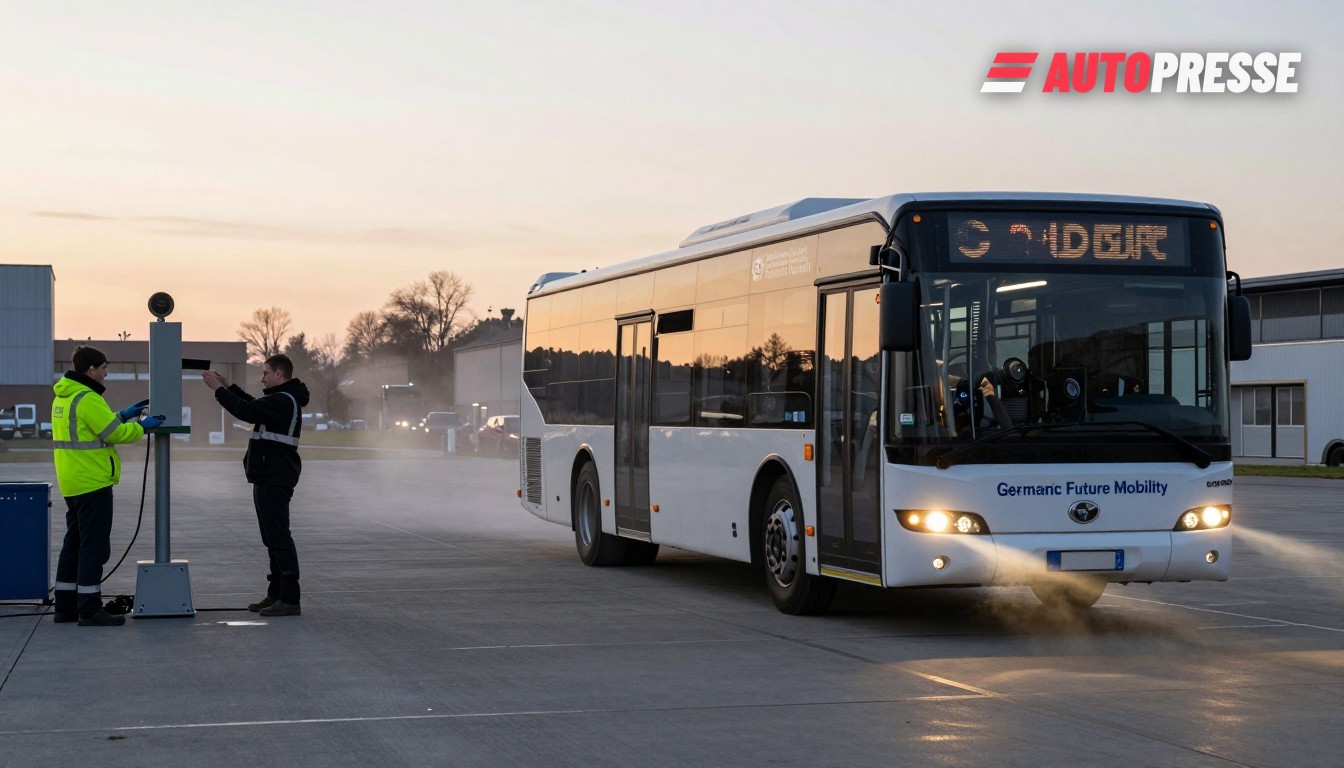
Munich’s public transport network is preparing to host a major step in Europe’s autonomous‑bus push. On 11 November 2026 TIER IV and the Technical University of Munich (TUM) announced that the newly created TUM Autoware Research Center by TIER IV will support development of an Autoware‑based autonomous driving system for a full‑size city bus at the German Center for Future Mobility (DZM) in Munich.
Project details
The research centre, established in October 2026, will adapt software and deployment experience from Autoware‑based bus services in Japan to a European vehicle platform and Munich’s urban environment. MAN Truck & Bus will implement the vehicle actuation and low‑level control software; TUM will provide the sensor architecture and lead system integration. Planned testing includes controlled trials and later runs on MVG service routes with safety personnel on board.
The programme is part of the wider RISE consortium work at DZM. According to TUM, the German Federal Ministry of Transport supports the DZM Munich project with project funding of €20 million over three years to develop the automated city bus with MAN and MVG — a concrete public‑funding commitment that backs real‑world trials.
Project partners emphasise an open‑source, evidence‑based route to deployment: TIER IV says the centre will channel Autoware’s deployment experience into safety, evaluation and scalable operations while contributing findings back to the open‑source ecosystem where appropriate.
What this means for the market
For German OEMs, suppliers and city operators the Munich initiative is important because it links academic research, a proven open‑source stack and vehicle integrators in one funded programme — shortening the path from laboratory models to street tests. The involvement of MAN, MVG and federal funding increases the likelihood that lessons from Munich will be reusable at other German and European transit agencies.
Near‑term effects will be practical: workshops and suppliers that provide sensors, actuators, validation tools and fleet‑operation software can expect new procurement and pilot workstreams; dealers and maintenance partners will need to prepare for different service regimes and software lifecycle management for autonomous fleets. In the longer term, successful trials could accelerate regulatory acceptance and create a scalable market for autonomy‑ready buses across Germany and neighbouring countries.
“The research center was established to help TUM connect open research with real‑world deployment,” said Shinpei Kato, founder and CEO of TIER IV, underlining the project’s aim to move Autoware from demonstration projects into everyday service.
Solutions like those offered by DaVinci AI can help exactly here: multi‑agent AI systems and dealer/service assistants speed integration between operators, fleet management and local workshops; AI‑driven market scans and vehicle‑stock analytics inform procurement and spare‑parts planning; voice and phone agents free operations staff for safety‑critical tasks. For cities and suppliers, persistent memory assistants and automated booking/diagnostic flows reduce friction during pilot roll‑outs and early commercialisation.
WorldTrader24 B2B-Fahrzeugmarkt für Händler →
Sources: TIER IV, Technical University of Munich