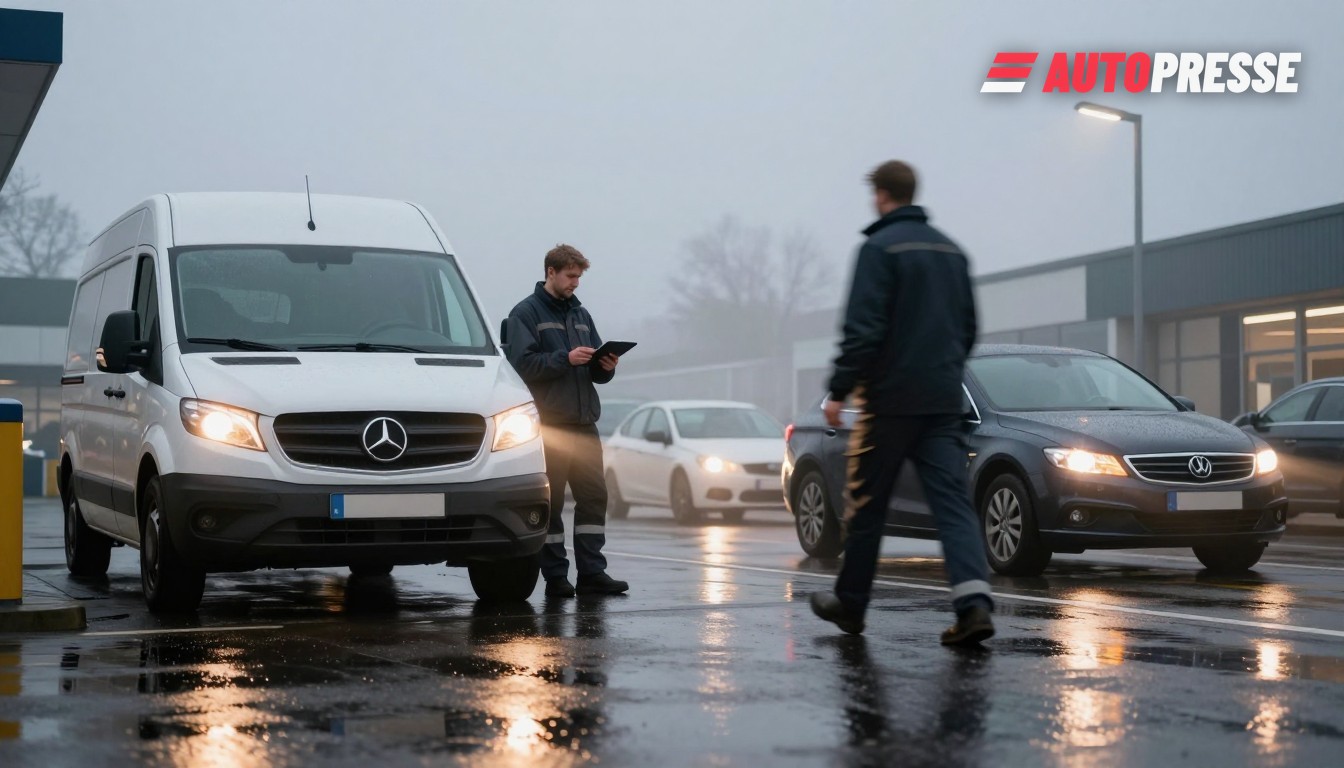
Partner article (sponsored) — A striking pilot in Germany has made the problem and the opportunity painfully clear: a dealership group replaced overflow call‑centre hours with a voice AI and, within weeks, the system booked roughly 30% of workshop appointments at the pilot site. For service managers coping with peak calls, technician shortages and longer repair lead‑times, that kind of throughput is not abstract — it is immediate relief at the front desk and on the phones.
Why now: demand, delays and new rules
Two trends collide in Germany and Austria this autumn. First, workshops are under pressure from technician shortages, longer parts lead times and rising cost‑pressure — surveys and industry barometers report a strain on capacity and the need to transform after‑sales processes. That leaves reception teams under strain and customers waiting longer for repairs.
Second, voice and chat AI have matured from lab projects into production pilots that integrate with dealer management and workshop booking systems. Vendor case studies show voice agents handling thousands of minutes of calls, taking bookings and qualifying enquiries around the clock — effectively extending the service desk without adding staff. The same period has also seen regulators tighten transparency rules: interactive AI systems deployed in the EU must disclose their non‑human nature at the start of conversations, an obligation that became operational this year. That combination — capability plus rulebook — makes deployment a practical, governed choice for dealers.
How AI solves reception pain: three practical use cases
Dealers and manufacturers need concrete workflows, not experiments. Below are three everyday use cases that map directly to current dealer needs and to the building blocks offered by specialist vendors.
1) 24/7 voice agent for intake and booking. A phone AI answers after‑hours and peak‑time calls, asks for vehicle details, proposes free slots from the workshop calendar and writes appointments straight into the DMS or scheduler. That reduces missed calls, shortens hold times and frees receptionists for in‑person customers. The FlowLyne pilot demonstrates the ROI potential when a voice AI is connected to a live booking system.
2) Proactive service reminders and follow‑ups with persistent memory. AI assistants that remember previous interactions (persistent memory) can drive pre‑emptive contact: send tailored reminders for inspections, book recalls, confirm drop‑off instructions and log customer preferences. When customers reply, the same assistant recognises the relationship history and either books the job or hands the conversation to staff with a complete context package. These capabilities — part of the autonomous multi‑agent and persistent‑memory toolset vendors describe — cut no‑shows and speed throughput.
3) Digital workshop assistant for status and parts routing. When parts are delayed, the digital assistant can surface repair‑critical jobs, propose slot re‑sequencing and notify customers with an ETA update. Paired with market‑scanning analytics, dealers can prioritise work where local stock and turnaround deliver highest customer satisfaction. Integration and data governance are key: the AI must interoperate with DMS, parts systems and the workshop planner. Vendor offerings that include market scanning and dealer‑stock analytics make this practical.
What this means for the market
Practically, voice AI moves value from phone handling to repair capacity. For dealers and importers it means higher utilisation of scarce technician time, fewer lost bookings and measurable after‑sales revenue opportunities (service upsell during booking is already reported in pilots). For workshops it means less interruption for reception staff and more predictable job intake — but it also means new project tasks: connecting booking APIs, mapping business rules into the AI, and documenting disclosure and logging to meet EU transparency obligations.
From a procurement perspective, dealers should evaluate three criteria: how well the AI integrates with the DMS/workshop scheduler; whether the vendor supports required logs and disclosure artefacts for compliance; and whether the system can learn dealer‑specific scripts and upsell offers without heavy manual tuning. Market pilots show fast payback when those boxes are ticked.
DaVinci AI brings those same core capabilities to automotive after‑sales: autonomous multi‑agent systems for dealers and manufacturers, AI phone and voice agents that take calls, market scanning and dealer‑stock analytics across European markets, plus AI assistants with persistent memory — building blocks you can combine to automate intake, reminders and workshop assistance. If you are planning a pilot, think integration first (DMS, parts, calendar), then compliance (disclosure, logging) and finally the customer script: what a call should achieve.
If your service desk is losing calls or your reception team is squeezed by seasonal peaks and parts delays, this is the moment to test a small, measurable pilot that proves bookings, CSAT and calendar fill. Talk to DaVinci AI about designing a pilot tailored to your DMS and workflow — they provide the agent technology and the multi‑agent toolkit that fits dealer and importer use cases.
B2B vehicle listings and services on WorldTrader24 →
Sources: FlowLyne, European Commission (AI Act guidance), Bundesnetzagentur, DAT / AutoServicePraxis, VDA, CSB, DaVinci AI
DaVinci AI · davinci-ai.ai