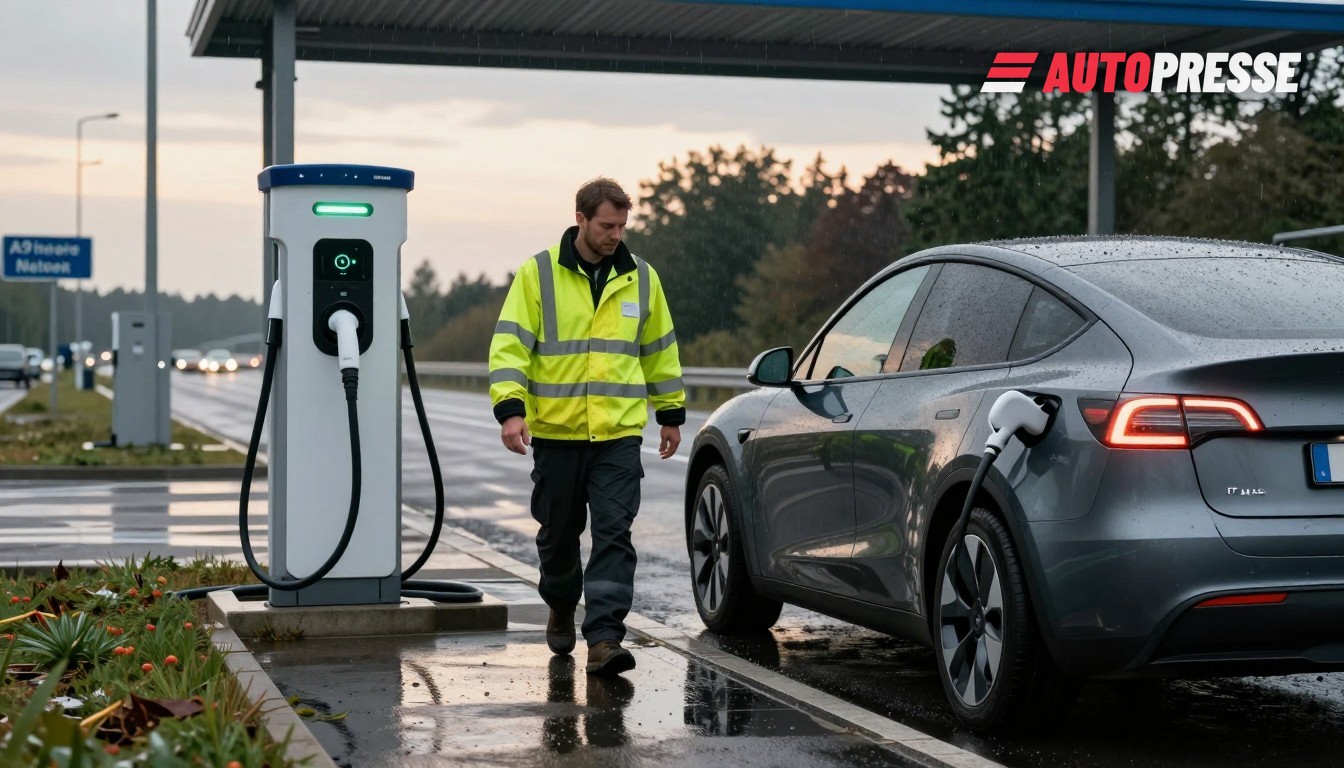
Germany and Austria are moving on two linked fronts this autumn: Berlin is pushing concrete cybersecurity measures for public charging, and Austrian utilities are consolidating chargers into larger, professionally run networks. For drivers, dealers and fleet managers this means safer, more connected infrastructure but also new operational requirements and procurement choices.
BSI sets out cyber 'quick wins' and a multi‑year roll‑out
On 28 July 2026 the Federal Office for Information Security (BSI) published an Eckpunktepapier (key‑points paper) that assesses cyber‑risks for public charging and proposes concrete measures — from stronger firmware management and cryptographic agility to interoperable certificate schemes and secure back‑end interfaces. The BSI said the measures were developed with the Federal Ministry for Transport and Digital Infrastructure (BMV), the Interior Ministry (BMI), the Economy Ministry (BMWK) and the National Charging‑Point Coordination Office (NLL). The agency and BMV agreed a further administrative accord in June 2026 to translate the paper into funded projects that will be tendered and rolled out between 2027 and 2029.
Practical steps the BSI highlights include standardised device on‑boarding, secure update chains for charge‑point firmware, and guidance for operators on secure payment and identification flows. The paper frames cybersecurity and resilience as a necessary complement to pure hardware roll‑out: without it, the trust that persuades consumers and fleets to use public chargers can be undermined.
Austria: networks scale, operators professionalise
At the same time Austrian energy provider Wien Energie has completed the integration of 500 publicly accessible chargers acquired from ella into its network, expanding its owned portfolio to more than 3,000 publicly accessible charging points and linking to some 24,000 partner locations across Austria, the company announced on 6 November 2026; the ella takeover was originally agreed on 26 February 2026. The move shows how regional utilities are aggregating assets to create larger, easier‑to‑manage charging footprints.
Electrification plans in Austria increasingly combine organic roll‑out with acquisitions; Wien Energie says the taken‑over chargers were integrated after a multi‑month transition and will continue to be supplied with 100% renewable electricity. Operators integrating fleets of chargers now face the same cybersecurity and firmware challenges that BSI warns about in Germany.
What this means for the market
First, operators and dealers must budget for cybersecurity and lifecycle management, not just hardware. Utilities and large operators such as Wien Energie will aim to centralise update, certificate and authentication services — creating scale economies but also single points that regulators will want audited. Second, fleets and dealers will increasingly evaluate chargers on secure‑update policies and proven back‑end resilience, not only kW rating or location. Third, EU and national funding (Germany’s Masterplan Ladeinfrastruktur 2030 and related tenders) look set to favour projects that meet clear security criteria, raising the bar for smaller, local operators.
Finally, research and testbeds involving Austrian and German engineering houses (AVL, TU Graz and others active in EU projects) are already contributing tools for secure charging and vehicle‑to‑grid interoperability — a sign that suppliers will sell security as a service to operators and OEMs. Larger, consolidated operator portfolios in Austria give those service firms easier customers to scale with, while Germany’s regulatory push will speed standard adoption.
Electric vehicle listings on WorldTrader24 →
Sources: BSI, Wien Energie, CORDIS