Germany is accelerating trials of inductive (wireless) charging for electric vehicles, moving beyond benches and short demos to multi‑partner motorway and urban pilots that could change how taxis, buses and delivery fleets refuel. Engineers and transport planners in Austria are following closely as manufacturers begin offering home wireless options for customers. These shifts matter to drivers, fleet buyers and dealers because they change charging habits, battery sizing and the aftermarket for retrofits and garage equipment.
From Hannover labs to the A6: what’s new
The federal‑backed LaneCharge research consortium presented final results of a multi‑year project in Hannover that demonstrated inductive charging on up to 12 coils over a 90‑metre test track and confirmed the approach for “stop & go” use cases such as taxi ranks; the project was funded with €2.77 million under the BMDV programme and closed in 2026.
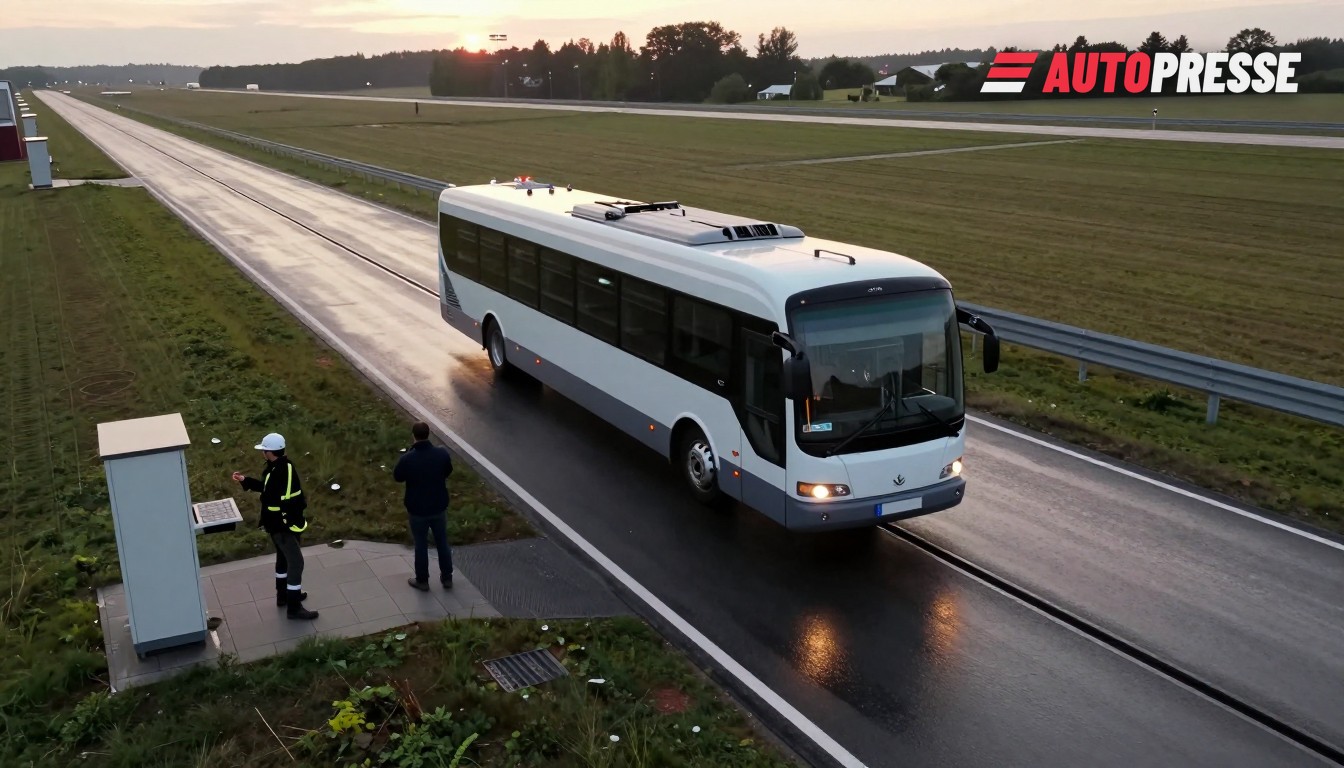
At national scale, the E|MPOWER project completed a contactless power‑transfer test track on Germany’s A6 near Amberg as part of dynamic wireless power transfer trials; the installation and testing were reported as complete in February 2026 and involved FAU Erlangen‑Nürnberg, Electreon and Autobahn GmbH as partners.
Research institutes are also reporting strong laboratory efficiencies: Fraunhofer IISB’s projects show stationary and lightweight vehicle receiver concepts with reported system efficiencies in the mid‑90% range (Fraunhofer lists 94% and cites demonstrators up to 96% in specific subprojects), and the institute completed a robotic test bench in May 2026 to characterise misalignment and dynamic conditions.
Austria: utilities and cities testing stationary use, fleets consider dynamic
Austrian utilities and local authorities have leaned into stationary inductive pilots and second‑life battery integrations rather than highway‑scale dynamic lanes so far. Research and operator projects across Central Europe make Austria a natural observer and early adopter for depot or curbside 'snack‑charging' at taxi ranks, bus stops and parcel depots where a wireless plate can remove plug‑in friction for high‑utilisation fleets. (See national research and municipal pilots cited below.)
Meanwhile OEMs are moving from demos to production options: Porsche announced that the Cayenne Electric can be ordered with an 11 kW inductive charging receiver and a compact floor plate, with the wireless option launching in Europe in 2026 — a sign that home wireless charging is becoming a customer product rather than an R&D novelty.
What this means for the market
Inductive charging reframes three parts of the EV ecosystem. First, operators of taxis, buses and delivery fleets can reduce downtime and potentially downsize batteries if short, frequent charges (‘snack charging’) are available at stops or depots — a direct benefit flagged by LaneCharge project leads.
Second, road‑embedded dynamic charging (as tested on the A6) could relieve long‑distance range anxiety for heavy vehicles, but it requires coordination with road authorities, long‑term funding and new maintenance regimes; the E|MPOWER partners reported completion of practical tests in early 2026.
Third, home wireless options from manufacturers (Porsche’s 11 kW system) push a consumer convenience feature into the mainstream while raising questions about cost, installer availability and interoperability with public standards (SAE/DIN/IEC frameworks are active in Europe). Fraunhofer’s efficiency and test‑bench work suggests technical hurdles (misalignment, EMC, and durability) are being actively addressed, but large‑scale rollout will be staged.
The transition opens commercial opportunities for installers, depot charge‑management software and second‑life battery buffering, and it will reshape how dealers advise fleet customers on battery sizing and total cost of ownership.
Electric vehicle listings on WorldTrader24 →
Sources: NOW GmbH, Fraunhofer IISB, FAU (E|MPOWER), Electreon, Porsche Newsroom, Electrive