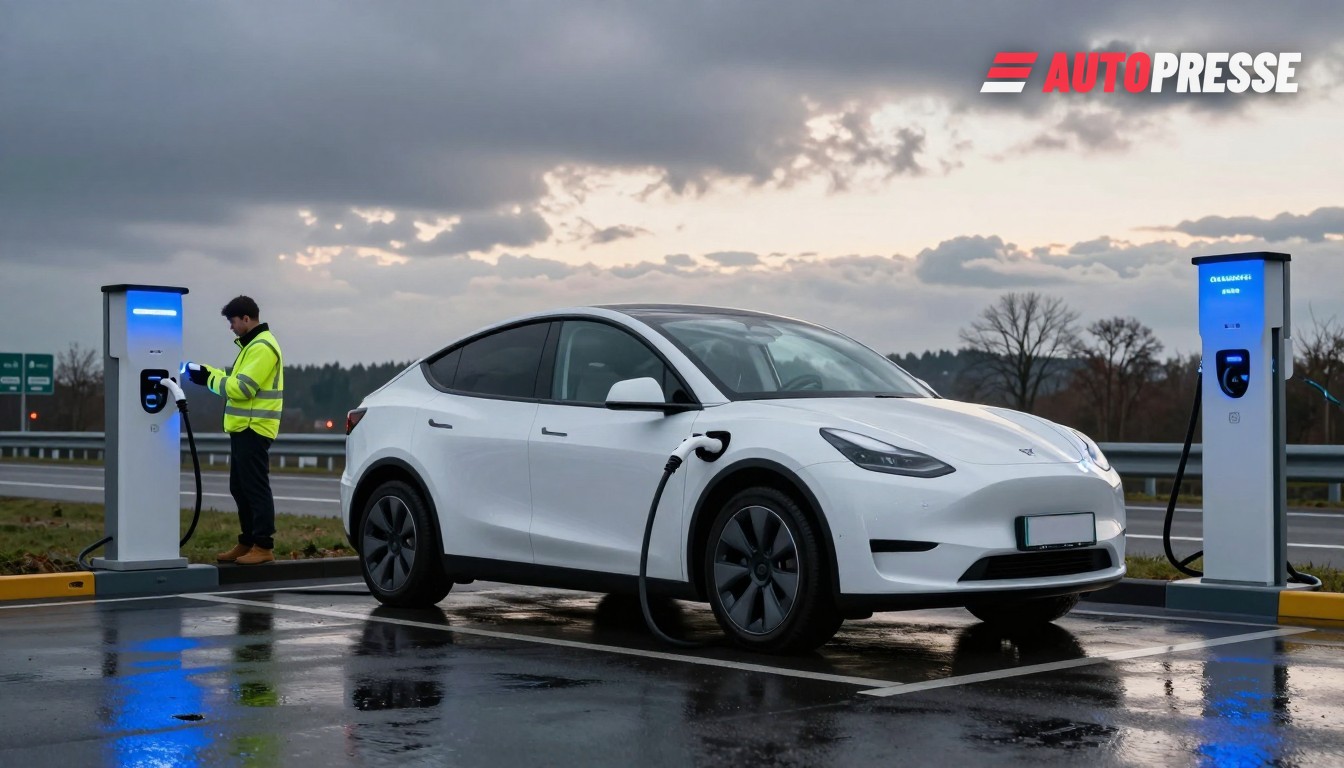
Germany and Austria are no longer just adding chargers — 2026’s technical and regulatory updates are forcing a systems upgrade. New national rules and EU interoperability deadlines are changing how cars, wallboxes and grids talk to one another, while public‑charging inventories and vehicle stocks keep growing. That means installers, fleet operators and dealers must budget for certification, smart meters and software updates as much as hardware.
New technical rules, new requirements
Germany’s Ladesäulenregister shows the scale of the task: on 1 October 2026 there were 160,376 normal (AC) public charge points and 57,737 rapid (DC) points, together capable of about 9.57 GW of simultaneous charging power — figures operators must now reconcile with fresh technical obligations.
At the core of the change is the revised VDE application rule VDE‑AR‑N 4105 (edition 2026‑03), published in 2026. The update expands the rulebook for connecting generation and storage to low‑voltage grids and for the first time specifies verification and connection requirements that affect feed‑back capable charging equipment and small storage units. The VDE text and explanatory material make clear installers and manufacturers will need to demonstrate compliance and, in some cases, upgrade metering and protection arrangements.
Standards converge: vehicle, charger, and network
On the communications side, EN ISO 15118‑20 (the vehicle‑to‑grid application layer) is now the reference for interoperable functions such as plug‑and‑charge and bidirectional services; the EU’s deployment regulation explicitly requires new or renovated public chargers to meet EN ISO 15118‑20 from 1 January 2027. At the same time, OCPP 2.1 (the charge‑point backend protocol) has been updated (edition 2025), bringing native support for V2X functions and richer charge‑point management. Together these standards mean cars, charge points and operator backends must implement compatible stacks — a software and PKI task as much as hardware.
Fraunhofer policy analysis and industry guidance highlight that the standards and the VDE rule are complementary: they create technical pathways for safe bidirectional flows and define the verification steps grid operators will expect before permitting feed‑back. That alignment accelerates utility and aggregator pilots, but also raises compliance costs for small installers and for owners of older wallboxes.
Across the border, Austria’s electric vehicle fleet and charging park are expanding rapidly: the Austrian BEV fleet rose past 326,306 pure electric passenger cars by end‑October 2026, and federal figures reported almost 40,000 public charging points earlier in 2026 — with households still providing the majority of everyday charging. Policy and operators in Austria are therefore prioritising grid‑aware smart charging and targeted fast‑charging hubs rather than wholesale replacement of existing private chargers.
What this means for the market
Short term: installers, fleet managers and dealer‑service teams must factor in certification, smart‑meter upgrades and software updates when planning projects — not just charger count. Public‑charging operators must test OCPP 2.1 / ISO 15118‑20 interoperability and prepare for the EU 1 January 2027 compliance deadline.
Medium term: carmakers and OEM service departments that support plug‑and‑charge, over‑the‑air updates and bidirectional use cases gain advantage; smaller aftermarket suppliers face a wave of retrofits or decommissioning unless they adapt. Policymakers in both countries will need to balance grid‑stability rules with incentives for software upgrades to avoid stranded assets.
For drivers and fleets the practical outcome is mixed: more seamless charging and potential value from vehicle‑to‑grid services, but also occasional downtime and costs when wallboxes or cars require updates or smart meters to be accepted under the new rules. Planning for compatibility — and insisting on documented compliance from installers and network partners — will be essential in 2027 and beyond.
Electric vehicles for sale on WorldTrader24 →
Sources: Bundesnetzagentur, VDE FNN / DKE, Fraunhofer ISI, BEÖ (Statistik Austria), Umweltbundesamt / KBA, Open Charge Alliance