Drivers, dealers and employees searching for “Audi news” in Germany and Austria will find two sharp, connected developments this week: a mass warning strike that shut the Ingolstadt plant for a day and an Audi announcement that it will begin offering a vehicle-integrated AI assistant for Microsoft 365 later this month. Both developments matter to buyers, local suppliers and the workforce across the region.
Strike: 24,000 staff took part in a one‑day warning strike
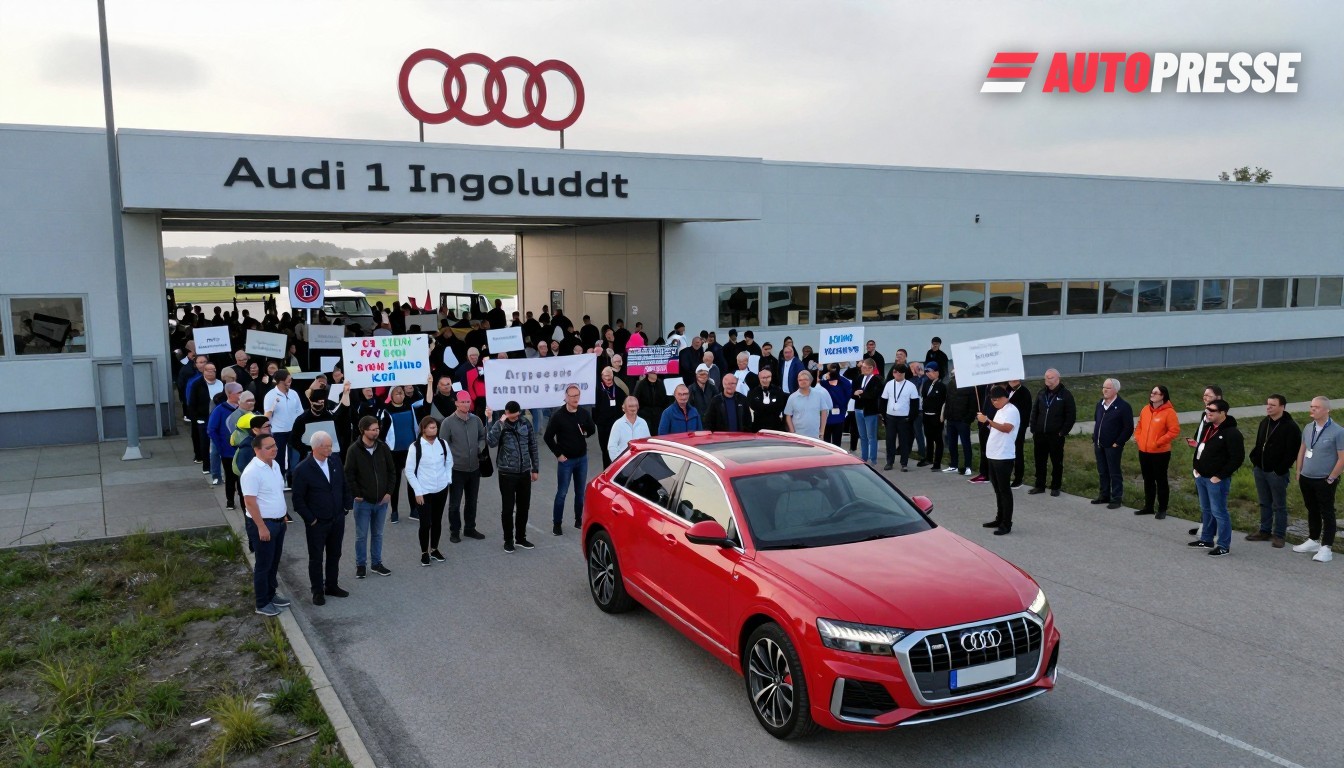
IG Metall reports that from 12:00 on 20 November to 12:00 on 21 November 2026 some 24,000 Audi employees in production and administration downed tools as a day‑long warning strike at the Ingolstadt site. The union says 2,000 people gathered at Gate 11 to open the action and that the day ended symbolically with a closed gate; IG Metall leaders framed the action as a demand for binding commitments on jobs, sites and future investments.
Union leaders quoted in the IG Metall release underlined the stakes: Karola Frank said, in effect, that “the Audi plant was closed for a day” and Jörg Schlagbauer (Audi works‑council chair) argued that workers accept change but need “clear guardrails” — commitments on products, budgets and training to secure jobs amid electrification and software shifts. The union called on employers to return to the negotiating table with binding offers.
Software: Audi launches in‑car AI app for Microsoft 365
Two days later Audi announced it will launch a “connected work” app with an AI‑based assistant for Microsoft 365 in the Audi Application Store in late November 2026. Audi says the app is designed for vehicle use with intelligent voice control and a secure, deeply integrated experience that meets the company's safety standards. The media release (23 Nov 2026) frames the software as a way for drivers to stay connected to work on the move when necessary.
The app is positioned as a convenience and productivity tool, not a replacement for workplace IT: Audi highlights a user experience tuned for driving and cooperation with Cerence AI and Microsoft. The move sits alongside Audi’s other recent product and technology updates, including new compact model launches and electrification steps announced earlier in the autumn.
What this means for the market
For Germany the strike underlines the social and industrial tension of the auto transition: big, concentrated workforce actions at Audi — one of the region’s largest employers — can halt production, push supplier schedules and sharpen political debate about site security and investment. For Austria the story is relevant because Audi remains a visible premium brand and a regular market-top seller in registrations: Statistik Austria records Audi at roughly a 6.0% market share in new passenger‑car registrations from January to October 2026, a reminder that Audi’s industrial moves reverberate through Austrian dealers and supply chains.
At the same time, Audi’s AI app launch is a reminder that manufacturers are pushing software and digital services into the customer and fleet experience — a revenue and differentiation avenue that can offset margin pressure on hardware. Dealers and fleet managers in Germany and Austria will have to factor vehicle‑integrated productivity services into their digital offers and aftersales discussions.
Separately, Audi Austria extended its sponsorship of Ski Austria for four more years on 18 November, showing the brand’s continued market focus in Austria even as industrial tensions rise in Germany. That deal keeps Audi prominent in Austrian consumer visibility during the winter season.
Audi models and listings on WorldTrader24 →
Sources: IG Metall Ingolstadt, Audi Media Center, Statistik Austria, Porsche Holding Newsroom