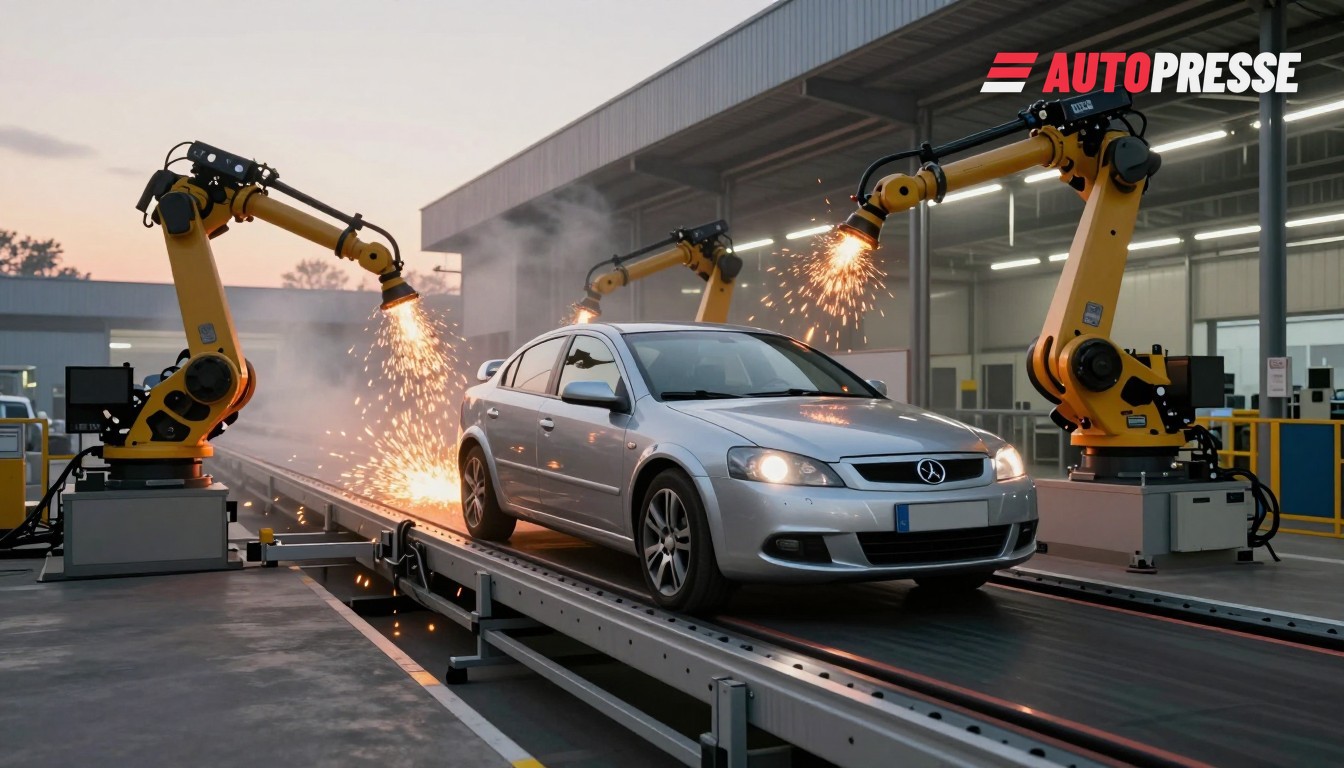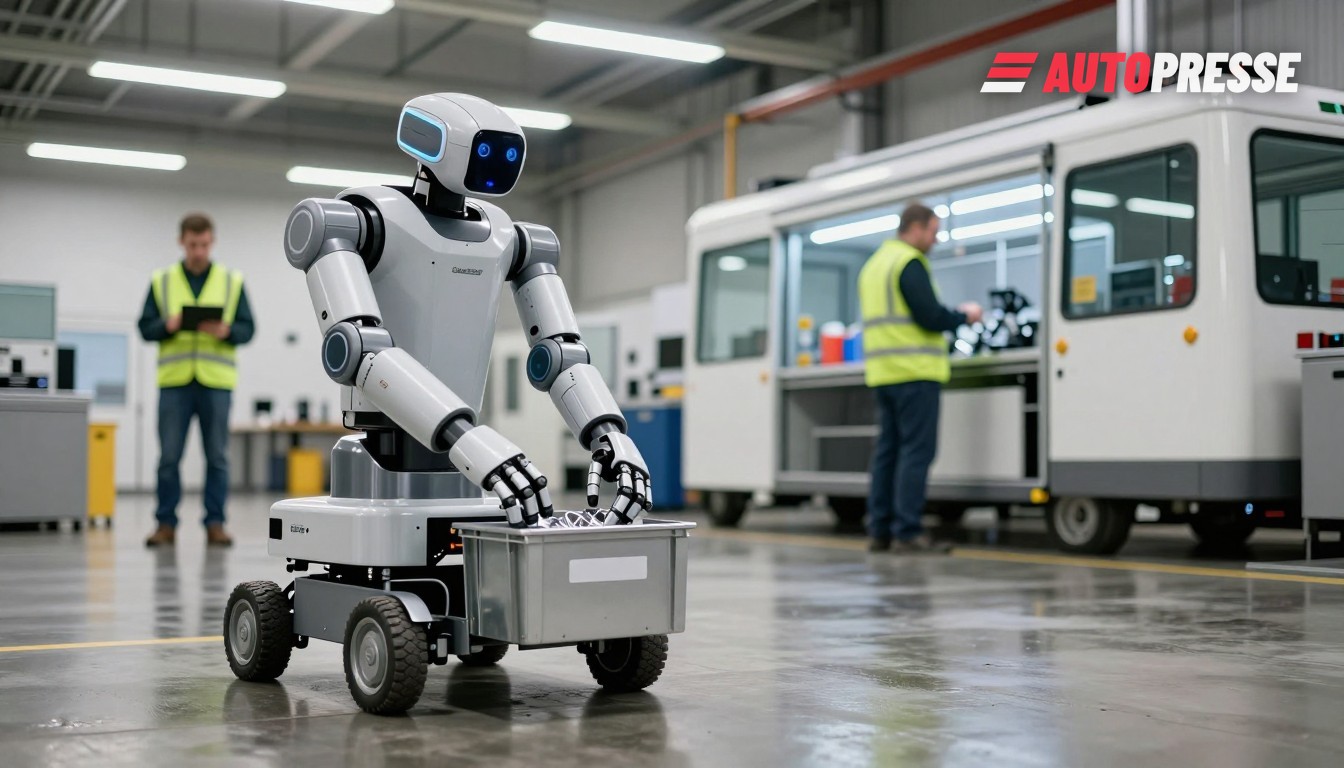
Translated: Humanoids — Audi tests AI robots for Ingolstadt sequencing. Audi this month opened a proof‑of‑concept at its Ingolstadt Production Lab where mobile humanoid robots from Agile Robots pick components from mixed containers and place them in the exact order needed for assembly. The trial, announced at NVIDIA GTC Berlin on 21 October 2026, matters for workers, suppliers and buyers in Germany and Austria because Audi says the task under test drives around one million part picks every day at its factories and is central to just‑in‑time sequencing and cost control.
What Audi and partners are doing
The project is a four‑way collaboration: Audi provides the sequencing expertise and test environment at the Ingolstadt Production Lab; Munich‑based Agile Robots supplies the mobile humanoids; Dassault Systèmes builds a virtual twin with DELMIA and 3DEXPERIENCE tools; and NVIDIA supplies simulation and physical‑AI libraries. The partners say the robots work at human height and are being validated first in simulation before moving into the real sequencing workflow. The announcement was made publicly on 21 October 2026 at NVIDIA GTC Berlin.
Audi describes the objective as automating the difficult tasks of identifying and reliably grasping high‑variant or semi‑rigid parts from unsorted containers and placing them correctly into sequencing trolleys for line assembly — a step the automaker calls a long‑standing automation challenge. Audi highlights potential benefits including reduced manual strain, increased efficiency and enabling employees to focus on higher‑value tasks.
Technical and operational context
According to Audi’s media release, Dassault Systèmes’ virtual companion LEO and NVIDIA Omniverse libraries are being used to simulate feasibility, timings, ergonomics and safety in a virtual twin before physical deployment. Agile Robots says its mobile humanoid design pairs dual‑arm dexterity with a robust mobile base to handle mixed and flexible parts — capabilities Audi needs to avoid large changes to existing production infrastructure.
What this means for the market
For Germany and Austria the test is significant because it targets a bottleneck many plants still solve with human labour or specialised end‑of‑arm tooling. If humanoids prove reliable at high volumes, manufacturers could reduce repetitive tasks on the shop floor and shift headcount to higher‑skilled supervision, process engineering and quality work — but the path to series deployment remains guarded. Experts quoted in German coverage warn that reliability and integration are high hurdles: a system that succeeds in demonstration still faces steep statistical demands in continuous operation. Audi and partners have not provided a timeframe for series rollout.
For suppliers and logistics firms around Germany and Austria, success would raise demand for new grippers, sensors and simulation services, and enlarge opportunities for local robotics and software vendors. For works councils and unions the move will trigger conversations about reskilling rather than immediate job losses, a theme that Audi and Agile Robots emphasise publicly.
Audi models and listings on WorldTrader24 →
Sources: Audi Media Center, Frankfurter Rundschau, CIO