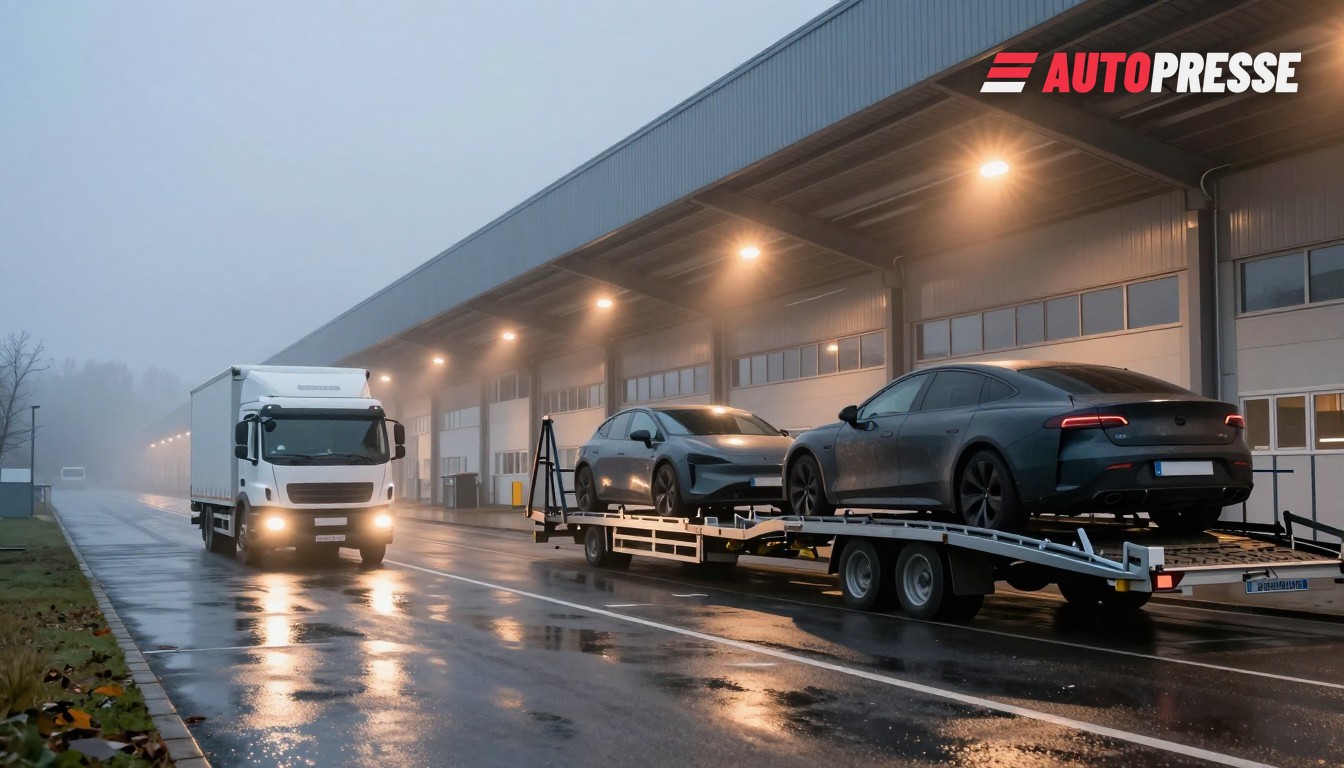
Magna Steyr’s Graz plant is reportedly in advanced talks to produce vehicles for Chinese makers MG (SAIC) and Changan — a move that, if confirmed, could create roughly 1,000 jobs around Graz and re‑shape cross‑border supply chains for Germany and Austria. Local media first reported the talks on 4 November 2026; Magna has so far declined to comment.
What the reports say — and what’s already running in Graz
ORF Steiermark and regional papers summarised industry sources saying two contracts are near finalisation; one report cited a possible production start for an MG model as early as May 2027. The articles note Magna’s existing roster of Chinese customers in Graz, where contract assembly work for brands such as Xpeng and GAC has already begun in recent months.
Magna’s own Q3 2026 investor materials confirm the company has multiple complete‑vehicle programs in Europe with Chinese OEMs and said the launches in Graz have “gone very well.” In its 30 October 2026 webcast transcript Magna referenced activity with Xpeng and GAC and flagged ongoing opportunities for additional Chinese programs at Graz.
Why Austria — and why this matters to Germany
Magna’s Graz site is already positioned as a European assembly hub for Chinese brands that prefer local production to shorten delivery times and meet EU rules. Local reports estimate the two new contracts could produce enough volume to add around 1,000 jobs in the Graz region if both are signed and ramped. Magna’s footprint and supplier links mean many component orders would flow to Austrian and neighbouring German suppliers.
What this means for the market
For Austrian industry the immediate effects are clear: factory utilisation, hiring and higher demand for local Tier‑1 and subcontract suppliers. For German suppliers, a Magna expansion in Graz could open near‑market volume for wiring harnesses, electronics, seating and logistics services — while also increasing competition for skilled labour across borders. Contract assembly for Chinese OEMs in Europe has already helped shorten delivery times for some models and given retailers clearer stock pipelines; more programs in Graz would reinforce that trend.
There are caveats. Media coverage notes Magna “would not comment” on the rumours; until contracts are signed the timeline and exact volumes remain provisional. Local public‑sector planning, supplier readiness and customs/parts localisation will determine how many jobs and supplier orders materialise and when.
For dealers and fleets in Germany and Austria the likely near‑term outcome is more model availability in Europe from Chinese brands assembled locally — which can compress delivery times and change pricing dynamics in urban and fleet procurement. For employees, a successful Magna deal would be a rare large‑scale industrial jobs boost in the region.
Magna Graz supply opportunities on WorldTrader24 B2B marketplace →
Sources: ORF Steiermark, Magna (Q3 2026 webcast), Electrive, Assembly Magazine, Kleine Zeitung