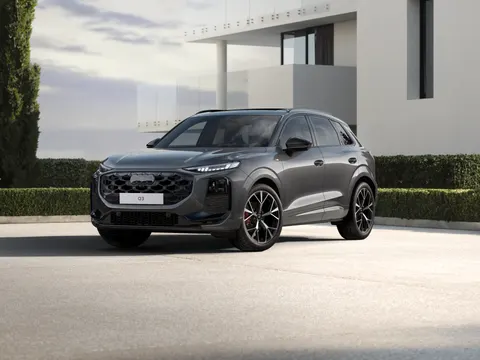
Stellantis has committed to invest more than €1 billion in Germany through 2030 and to build the next‑generation Opel Astra at the Rüsselsheim plant — a move the group says secures the site’s industrial role while shifting Opel toward a regionally focused, electrified model line‑up. The announcement underlines a strategic repositioning inside Stellantis’ FaSTLAne 2030 plan and puts Rüsselsheim at the centre of the company’s European C‑segment strategy.
What Stellantis announced and where
At Investor Day and follow‑up briefings in May–June 2026 the group set out the FaSTLAne 2030 roadmap: a new modular STLA One vehicle architecture, at least four new Opel models by 2030 and targeted investments to localise production for Europe. Opel’s next Astra and a future C‑segment C‑SUV will be based on STLA One; Stellantis named Rüsselsheim as the chosen site for the next Astra generation and committed the multi‑year investment to the German operation.
Stellantis also confirmed deeper engineering and production ties with Chinese partners for certain new models: the planned C‑segment SUV is being developed with Leapmotor in a cooperation that pools development resources, while production locations are being evaluated across Stellantis’ European footprint (reports said Spain is under consideration for series assembly). Stellantis frames the tie‑ups as a way to speed EV development and reduce unit costs.
What this means for the market
For German suppliers the Rüsselsheim decision is a partial win: a confirmed high‑volume B/C‑segment platform program at Rüsselsheim preserves local content opportunities for powertrain, body and electronics suppliers that feed the compact segment. At the same time Stellantis’ insistence on platform scale and partner sourcing increases pressure on tier‑1s to cut costs and win module contracts across borders. Industry analysts say STLA One is explicitly intended to deliver platform cost savings and faster time‑to‑market for electrified models.
Austria’s supplier base also stands to benefit — not least because Stellantis’ European production adjustments keep demand for components and systems concentrated in central Europe. Austrian engineering firms and contract manufacturers with expertise in body systems, e‑powertrain modules and chassis validation can expect new tender rounds as Stellantis and its partners localise pick‑ups for Europe. Independent industry reporting highlights the broader strategy: regional platforms, targeted investments and external partnerships to close the competitiveness gap with low‑cost entrants.
Opel and Stellantis emphasise that the investment is part of a longer transition: product planning runs to 2030, platform roll‑outs are staged and manufacturing allocations remain subject to performance and further board decisions. That creates a multi‑year window for suppliers, dealers and local authorities to lock in contracts, skills programmes and logistics investments — or to be displaced by other plants within Stellantis’ enlarged European footprint.
Electric cars on WorldTrader24 →
Sources: Reuters via Global Banking & Finance, Stellantis media, MarkLines, RTE, Vision‑Mobility