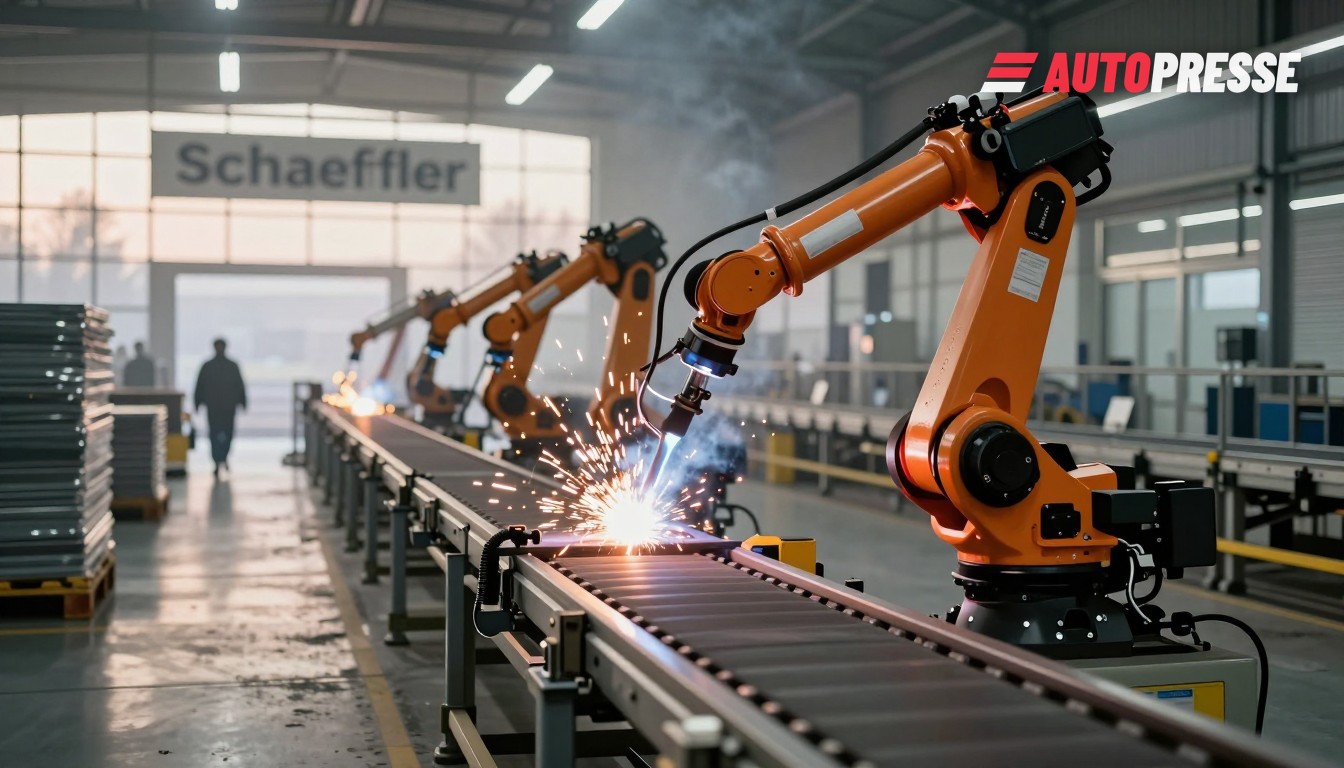
The supplier shake‑out that has been quietly gathering pace across Germany and Austria has taken two striking turns this week: Schaeffler on 3 November announced a Europe‑wide reduction of 3,460 positions — roughly 2,660 in Germany — and Magna’s long‑booked Graz operations are driving talks with Chinese OEMs to expand capacity beyond Austria, with advanced discussions reported for a plant in Slovenia.
Schaeffler’s formal press release (dated 2026‑11‑03) says the package will close five European sites, including four in Germany, and aims to realise roughly €300m of annual earnings improvement from 2030 while incurring about €480m of one‑off costs. The company states the cuts mainly target overcapacity in production and R&D and will be implemented “in close dialogue with employee representatives”; the release adds the group intends to offset parts of the reduction by creating roles in new growth areas. CEO Klaus Rosenfeld is quoted saying the plan shows that “it is both possible and sensible to develop and manufacture in Germany and Europe in a way that is competitive and cost‑efficient.”
Why Austria matters
On the other side of the border, contract manufacturer Magna Steyr in Graz has become a critical hub for China‑based EV makers seeking a European foothold. XPENG and GAC models are already assembled in Graz and XPENG confirmed the first locally assembled P7+ rolled off Magna’s Graz line on 7 April 2026. With Magna’s Austrian capacity described as “not even sufficient” by a Xpeng executive at the Paris show on 12 October, reports in early November say Magna is in advanced talks with XPeng over using Magna’s nearby Hoče (Slovenia) site to build larger volumes — a potential investment in the region of €500–600m and capacity up to 100,000 cars a year in some press accounts.
Magna’s own filings and investor material underline the group’s exposure to volume swings: the company reports that its Graz operations handle multiple OEM programs and notes the commercial sensitivity of regional production volumes when planning customer contracts and capacity. Magna’s 2026 annual information form emphasises that European complete‑vehicle assembly remains a strategic but cyclical business for the group.
What this means for the market
The twin dynamics — German suppliers cutting cost and headcount while contract assemblers in Austria and neighbouring countries expand to meet local‑content and capacity needs — will reconfigure hiring, logistics and supplier maps across the DACH region. For workers and works councils the Schaeffler numbers (3,460 roles to be removed across Europe, ~2,660 in Germany) mean tangible disruption at specific sites named in the company release (Dortmund, Morbach, Berlin and Schwalbach among them). For dealers and fleet buyers the likely short‑term effect is continued pressure on parts lead times and selective model availability as supplier footprints shrink and contract assembly shifts east or across borders.
For policymakers the story is now one of simultaneity: industrial‑policy tools and local incentives matter because OEMs and contract assemblers are already reallocating European capacity to meet looming EU local‑content rules and to control cost bases. Reports that Magna and XPeng are exploring a Slovenian plant underscore that Austria’s auto cluster will compete with nearby sites for investment — not just with German low‑cost sites but with neighbouring EU members that can offer available land, lower wage inflation and state support.
In short: Germany’s supplier retrenchment and Austria’s role as a European assembly gateway for Chinese makers are not separate tales — they are two sides of the same industrial adjustment. Expect focused social‑dialogue rounds, targeted regional incentives, and fresh supplier tendering rounds as the sector re‑optimises capacity for the electric‑vehicle era.
B2B vehicle listings for dealers on WorldTrader24 →
Sources: Schaeffler press release, Reuters/MarketScreener, XPulse (xpev), XPENG investor relations, Magna 2026 annual information form