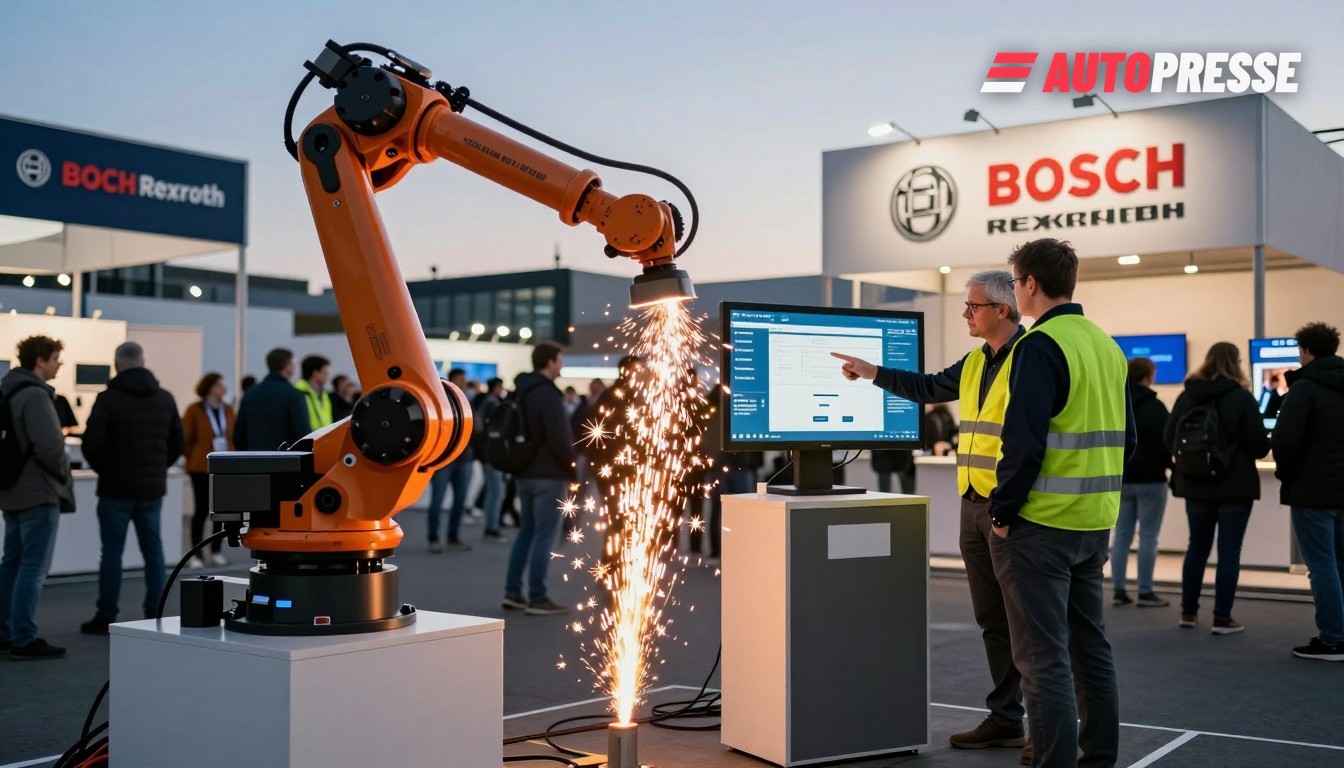
People in Germany and Austria googling for experience with automation providers in automotive — that is, practical user reports and vendor roadmaps for industrial automation projects — will find two recent, concrete examples worth reading. On 2 November 2026 Bosch Rexroth and Grossenbacher outlined a formal technology partnership built around the ctrlX OS platform and open automation; three days later an Austrian parts supplier, Hoeckle Austria GmbH of Langenegg, announced a roughly €2 million investment in new measurement and automated end‑of‑line equipment to raise throughput and quality.
What vendors say: standard platforms, lifecycle and security
In an interview published 2 November 2026, Bosch Rexroth and Grossenbacher representatives argued that mid‑sized machine builders and automotive suppliers increasingly prefer a standard, open software platform that reduces the burden of custom maintenance and speeds field updates. Bosch’s Steffen Winkler told Computer & Automation that the ctrlX OS approach aims to make devices updatable, secure and app‑driven — and that “we believe very strongly in open automation.” Grossenbacher’s Oliver Roth said his firm’s hardware experience complements Bosch Rexroth’s software stack and helps customers avoid the heavy cost of building secure lifecycle tooling themselves.
The interview directly addresses common practical questions buyers search for: who will ship updates, how will security (including Cyber Resilience Act obligations) be handled, and whether a standardised platform can still be adapted to specialized shop‑floor needs. Both vendors frame the partnership as a way to lower integration risk and speed time‑to‑value for customers — precisely the kind of “experience” information fleet owners, OEMs and supplier procurement teams seek when evaluating automation providers.
An operator’s example from Austria
On 5 November 2026 Hoeckle Austria announced it had invested about €2 million in automation and precision measurement technology at its Langenegg plant in Vorarlberg to automate end‑of‑line inspection and reduce manual rework. The company said the new system (developed with a local machine‑builder) combines measuring, assembly and marking in one cell and adds micron‑level surface metrology to strengthen quality assurance. Hoeckle also linked the investment to workforce planning and said it will expand apprentice intake as production modernises.
What this means for the market
For German and Austrian buyers searching for "experience with automation providers in automotive," these two items point to a pragmatic pattern: (1) vendors are selling open, updateable platforms and ecosystem partnerships to reduce long‑term vendor risk and regulatory burden; (2) small and mid‑sized suppliers are deploying turnkey, specialised cells to raise quality and stabilise margins. That combination should make it easier for procurement teams to gather verifiable references: ask prospective vendors for specific platform partners, update and security SLAs, and customer case studies showing the same scope of automation in a similar plant.
Germany’s machine‑builders and Austria’s automotive suppliers are not pursuing automation as a one‑off capex project but as an operational change that ties software lifecycle, security and partner networks into the ROI calculation. That is the practical experience reported by vendors and operators in early November 2026 — exactly the sort of material people searching for experience with automation providers in automotive want to see when choosing integrators.
Immediate vehicle listings on WorldTrader24 →
Sources: Computer & Automation, Automobil Industrie (Vogel)