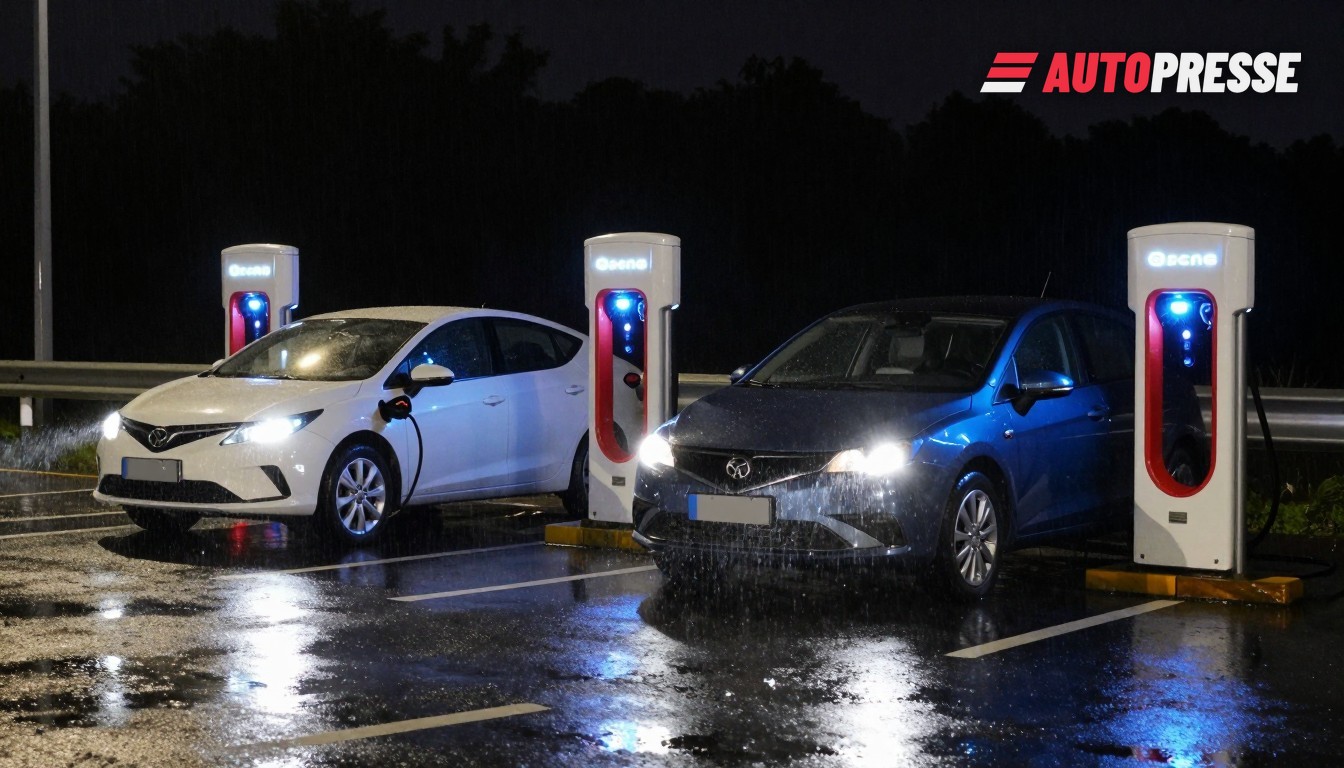
Buyers in Germany and Austria are feeling the squeeze from a higher‑cost credit environment just as used‑car prices shift by powertrain — a combination that matters to private buyers, dealer margins and fleet planners alike. Higher financing costs are nudging customers toward longer terms, balloon deals or cash purchases; dealers are adjusting pricing and trade strategies to protect margins.
Credit costs: the immediate shock
Retail financing is pricier than a year ago. Market comparisons show many mainstream auto loans and fixed offers in the mid‑single to low‑double digit range, while some fixed, bonitätsunabhängige (credit‑independent) offers sit around 6.2% effective annually. The wider banking picture confirms the pass‑through: consumer‑credit rates for new business are substantially above pre‑pandemic levels, reflecting the ECB rate cycle and a higher cost of funds for lenders.
Price signals from the used market
Dealer and online marketplace data show two concurrent trends that complicate sales and trade‑in math. AutoScout24’s October AGPI puts the average asking price on the German used‑car market at €26,728, down slightly month‑on‑month, but notes that used electric cars remain substantially pricier — average listed EVs in October were €39,658 and continue to command higher prices even as overall averages drift lower. The platform’s demand index also shows volatile, fuel‑price‑sensitive interest in used EVs.
In Austria the ÖAMTC reports a widening price gap by drivetrain: used battery‑electric cars cost on average €42,763 in September 2026 — about 5.2% more than a year earlier — while petrol and diesel second‑hand asking prices fell. That split forces different sales tactics for dealers in the two markets: EVs can protect margins but need matching finance/ownership offers; combustion‑engine trade‑ins lose value faster.
What this means for the market
1) Buyer decisions: Higher effective borrowing costs are lengthening purchase decisions and favouring financing plans with low monthly payments (long terms, balloon/balloon‑residual deals) or outright cash purchases for less‑price‑sensitive buyers. Lenders and brokers report customers shopping rates more aggressively than in 2024–25.
2) Dealer strategy: Dealers must manage two opposing forces — falling average used‑car prices that can reduce trade‑in values, and resilient used‑EV prices that preserve margins. That mix makes inventory and repricing more complex: dealers increasingly source 0‑km and EU‑stock vehicles for immediate delivery, run tighter used‑car retail promotions, and tailor finance packages to support affordability.
3) Fleet and corporate buyers: With fleet renewals remaining an important share of demand in both countries, companies are re‑balancing between outright purchase, leasing and total‑cost‑of‑ownership models to limit interest‑rate exposure. National statistics underline still‑robust registration activity in Austria through October 2026, supporting fleet replacement volumes even as macro‑costs climb.
4) Aftermarket and workshops: Diverging park composition — more EVs in younger used‑car cohorts, older combustion cars depreciating faster — shifts service demand and parts planning for workshops and parts suppliers.
WorldTrader24 B2B vehicle marketplace for dealers →
Sources: AutoScout24, ÖAMTC, Capitalo/market loan comparisons, OeNB, Statistik Austria