The European Commission’s delegated Regulation (EU) 2026/699 — published in the Official Journal on 3 June 2026 and in force from 23 June 2026 — has rewritten who may read and work on a modern car’s software and safety‑relevant systems. The rule extends standardised access to on‑board diagnostic (OBD) information and repair & maintenance information (RMI) beyond the physical OBD port to any channel manufacturers use, and sets conditions for secure access. For drivers, dealers and independent workshops in Germany and Austria the change promises easier independent repairs — but implementation is uneven.
How Germany and Austria are implementing SERMI
The regulation creates a staged rollout. Since 23 September 2026 the first stage obliges manufacturers to supply diagnostic tool makers with the information needed for newer vehicles; further steps — variant coding, parts‑mapping and programming functions — follow on 23 December 2026, with single‑vehicle RMI access required in June 2027 and full coverage including software updates by June 2028, according to industry reporting. Independent workshops must meet authentication and security conditions (certified diagnostic‑tool makers, employee identification); vehicle makers may require certificates such as ISO 27001 or TISAX for diagnostic‑tool manufacturers. The rule applies to vehicle types first granted type‑approval after 1 September 2020.
Austria has moved quickly to translate the rules into workshop practice. The Austrian Chamber of Commerce (WKO) publishes a SERMI factsheet for independent garages explaining accreditation requirements (proof of a fixed workshop, technician qualifications, device certification) and how to apply for “secure access” under the new Annex X arrangements — guidance designed to get multi‑brand garages ready for the new access model. Local guilds and the state‑level chamber network are already briefing members on the authentication steps.
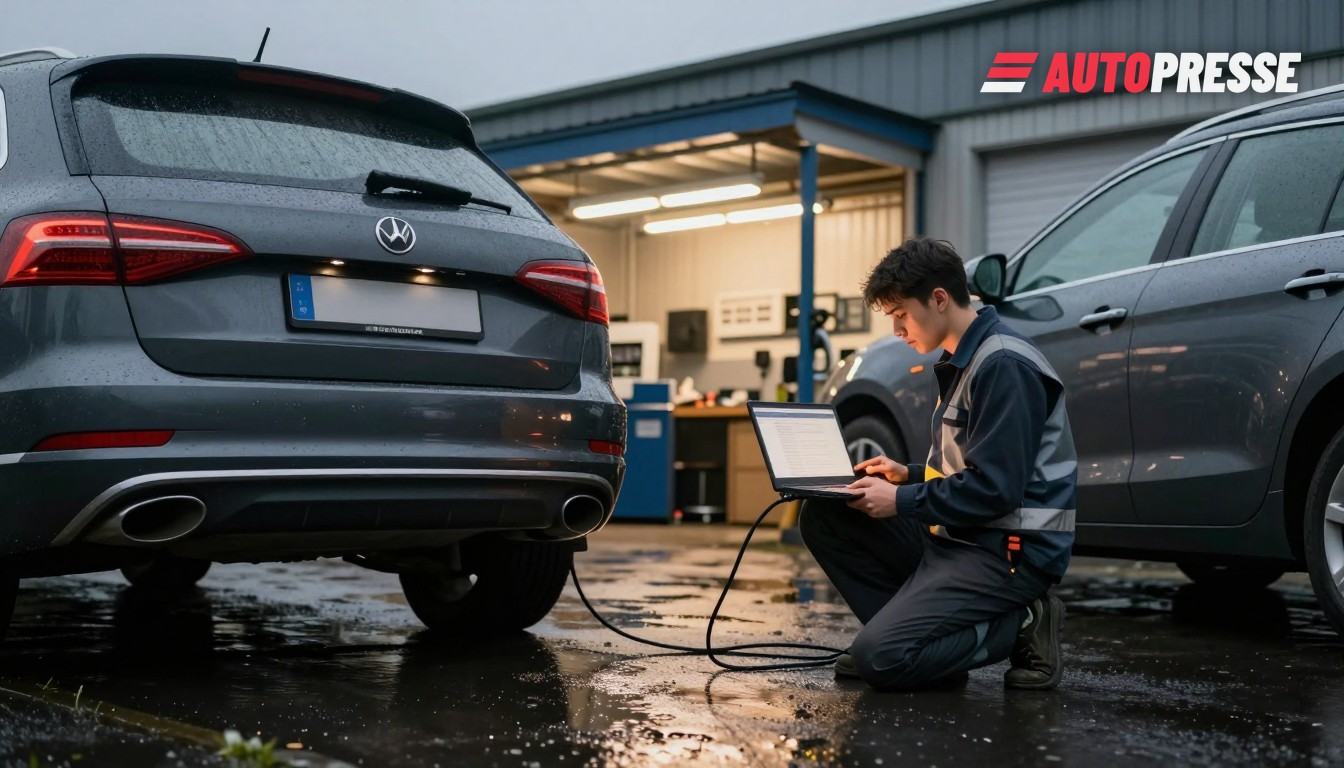
In Germany implementation has hit friction. An EU Commission‑run survey cited by the trade press found fewer than half of independent workshops reported full access to required data, versus 93% of manufacturer‑bound dealers — a gap German guilds warn must close quickly to preserve workshop choice and affordable service. Carsten Beuß, Hauptgeschäftsführer of the Kraftfahrzeuggewerbe Baden‑Württemberg, said bluntly: “Ein Anspruch, der in einer Verordnung steht, ist noch kein Zugang in der Werkstatt.” Industry observers say the obstacles are not legal alone but practical: diagnostic‑tool providers and manufacturers must integrate interfaces, agree fees and authentication flows before a technician in the bay can actually use the data.
Where gaps remain
The delegated act permits vehicle manufacturers to apply “necessary and proportionate” cybersecurity measures and — in narrow, defined circumstances — to temporarily restrict access if a real cybersecurity incident requires it. That balance aims to protect vehicle safety while preventing blanket lockouts, but it leaves room for implementation disagreements over fees, time‑limits on access tokens (the regulation allows 24‑hour tokens in some cases) and the practical handover of credentials from OEMs to diagnostic tool makers. The regulation also requires machine‑readable OE parts databases tied to VINs — a technical and commercial lift for the supply chain.
What this means for the market
For drivers: the regulation should preserve free workshop choice — but only if manufacturers, tool vendors and national approval authorities turn legal rights into working interfaces in the next 12–18 months. For independent workshops: expect new costs for certified diagnostic equipment and administrative steps to obtain authenticated access, but also new service opportunities as networks of multi‑brand garages regain capacity to handle complex EV and software work. For manufacturers and toolmakers: the order imposes investment in secure APIs, credential flows and parts databases — and the need to publish clear tariffs and timelines or face complaints from approval authorities. For the aftermarket ecosystem (parts, diagnostics, training) the regulation is a structural opportunity — assuming the remaining practical gaps are filled quickly.
Sources: European Commission (Delegated Regulation 2026/699), kfz‑betrieb (Doris S. Pfaff), WKO SERMI factsheet, automotive.at (interview with Michael Schnabl), European Commission Staff Working Document 52026SC0174