The latest spy and launch photos show Europe’s EV market tightening around two poles: urban buyers chasing affordable, sporty city cars and fleet managers ordering larger, fast‑charging cargo vans. Cupra’s small Raval has already taken more than 50,000 customer orders since its April launch, while Kia used IAA Transportation in Hannover to debut the larger PV7 that targets fleet and passenger‑transport customers — both developments that matter for dealers, workshops and charging operators in Germany and Austria.
Cupra Raval: almost production — and selling
Spy photography and Cupra’s own media brief from the Paris Motor Show confirm the Raval is a real commercial success: Cupra says the model “has become the most successful launch in the brand’s history” with more than 50,000 customer orders and roughly 15,000 cars already delivered since April. That acceleration is notable for Germany and Austria because the Raval is positioned as an affordable BEV aimed at urban private buyers and young fleets.
Independent spy coverage shows the Raval running with minimal disguise and confirms its production dimensions and entry pricing expectations — roughly a little over 4.0 metres long with a targeted starting price around €26,000 — plus a choice of battery chemistries and two range tiers in early spec sheets. Those package and price signals explain why orders have outpaced initial forecasts.
Kia PV7: a van scaled for European fleets
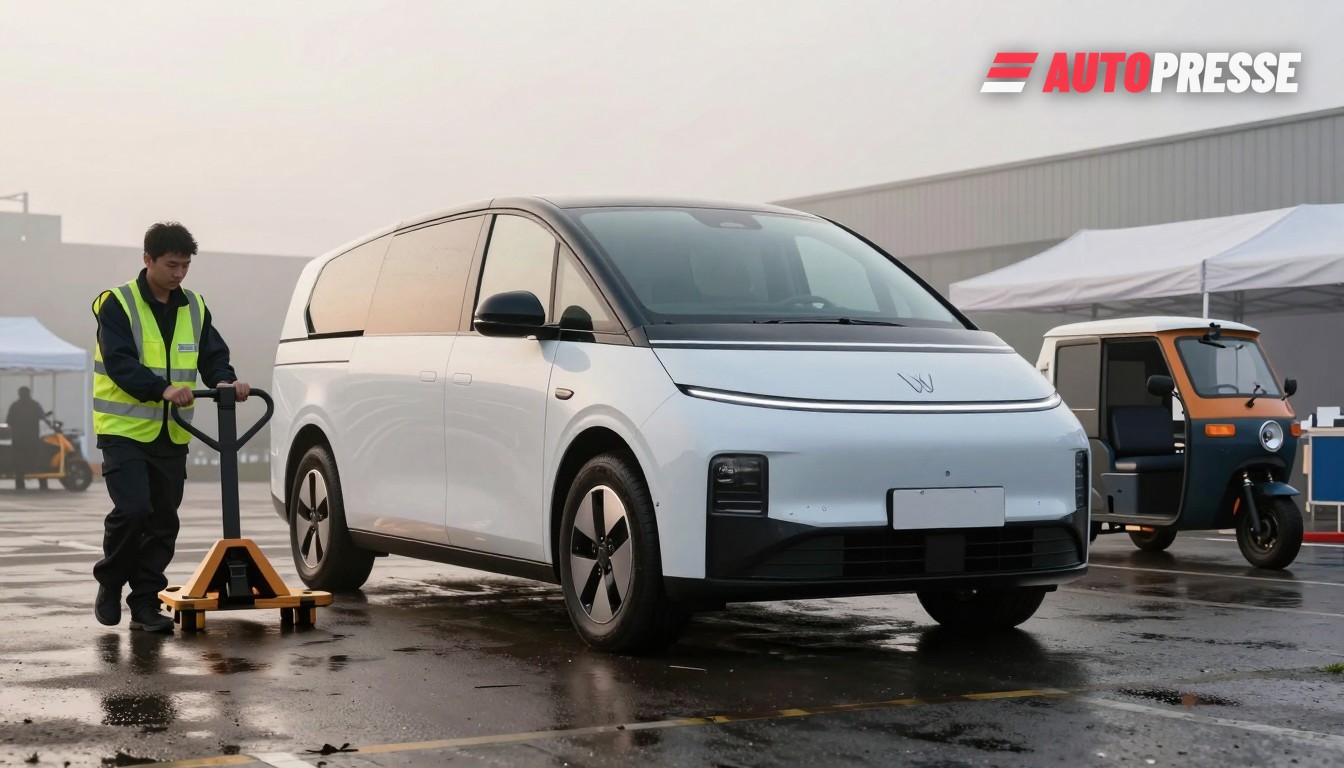
Kia’s PV7 made its full public debut at IAA Transportation in Hannover on 14 September 2026 after being previewed and repeatedly spied in development form. The PV7 is the larger sibling to the PV5 and will arrive in Europe in 2027; Kia positions it as a multi‑role PBV (Platform Beyond Vehicle) offering both Cargo and Passenger body types. Electrek’s coverage and IAA reporting underline that the PV5 has already been a European best‑seller in small electric vans, and Kia expects the PV7 to capture growing fleet demand.
Preview material and show coverage describe a notably longer chassis than the PV5; Kia says the PV7 will share the E‑GMP.S modular architecture and will support multiple configurations for fleets and shuttle operators. Early kit sheets and show reports highlight fast‑charging readiness and an emphasis on payload and modular interiors — features that directly affect depot charging, workshop training and vehicle‑spec procurement across German and Austrian fleets.
What this means for the market
Two trends are clear from these spy and launch signals. First, affordable urban BEVs like the Raval are increasing pressure on German and Austrian dealer networks to offer quick turnover, competitive finance and fast‑fit options (home charging packages, short delivery windows). Cupra’s >50,000 orders make the Raval a volume event for small‑car forecourts and will test aftersales capacity as early owners generate service and parts demand.
Second, the PV7 launch confirms that mid‑sized electric vans are moving from niche to mainstream in Europe. Fleet buyers in Germany and Austria must now plan for larger, higher‑power depot chargers and new maintenance skills for high‑voltage packs and modular interiors. Charging operators and local planners should note the PV7’s IAA positioning: manufacturers expect business customers to be an early core audience.
For buyers and dealers, the upshot is straightforward: expect more choice and faster specification cycles. Cupra’s Raval proves price‑sensitive private buyers will switch to compact BEVs if the package, price and delivery line up. Meanwhile, Kia’s PV7 signals that fleets will demand turn‑key electric van solutions — and that infrastructure and workshop training in Germany and Austria must keep pace.
Cupra Raval listings on WorldTrader24 →
Sources: SEAT & CUPRA media centre, Electrek, Autoevolution, NewMobility.news