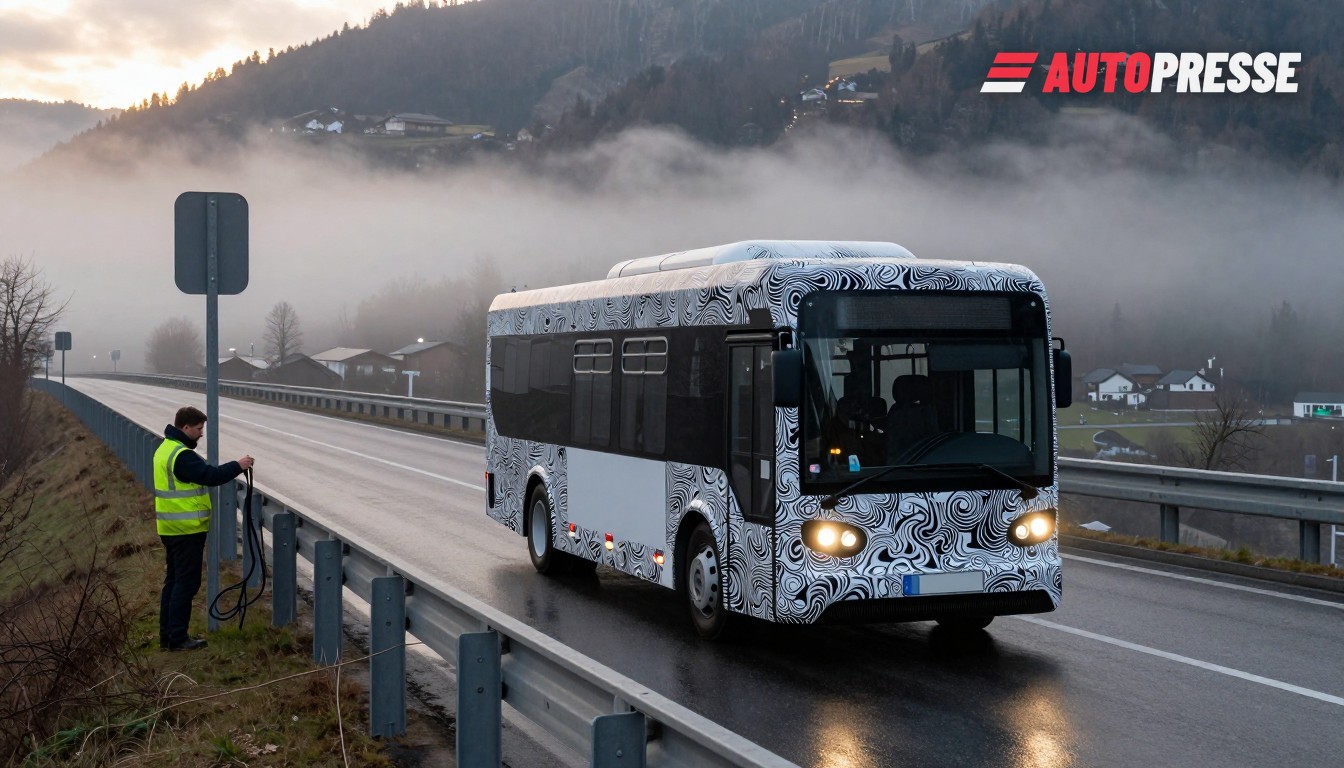
Berlin and Vienna are among 22 European governments that have signed a joint declaration to create large‑scale, cross‑border testbeds for automated vehicles — a policy step intended to speed real‑world Level‑4 trials, align type‑approval work and channel EU infrastructure funding to corridors and cities that host pilots. The declaration names Austria’s Minister Peter Hanke and Germany’s Federal Minister of Transport Patrick Schnieder as signatories and formalises the initiative first launched at the Transport Council in June 2026.
What the declaration actually requires
The Joint Declaration sets out a practical framework: participants will use a common set of technical requirements for approval based on existing EU rules (Regulations (EU) 2018/858 and 2019/2144) and comparable international norms, develop joint testing and approval processes, and aim for mutual recognition of approvals within the testbed to allow continuous cross‑border operations. It makes clear that a single authority will remain responsible for type‑approval decisions for a given vehicle type, while other national authorities may participate in testing and confirmatory checks.
The signatories also commit to systems‑level readiness: digital infrastructure, cooperative ITS and in‑service monitoring must be in place; regions and local public‑transport authorities are explicitly invited to design replicable use cases; and sharing of safety‑relevant and cybersecurity event data between sides is foreseen. The declaration is expressly non‑binding (not an international treaty) but creates a governance structure and workstreams for coordinated pre‑deployment.
EU funding and research backing
The European Commission has already tied practical support to the initiative: the Connecting Europe Facility (CEF) 2026 work programme allocates EUR 20 million for digital infrastructure dedicated to autonomous‑driving testbeds, and the Commission has publicly encouraged Member States to participate in cross‑border pilots. At the same time Horizon Europe has earmarked calls to support large‑scale, AI‑enabled Level‑4 urban pilots that require cross‑border city cooperation and at least one cross‑border demonstrator. Those funding streams create concrete money and project architecture for German and Austrian regions that host pilots.
What this means for the market
For OEMs and suppliers in Germany and Austria the testbed offers two immediate, verifiable advantages. First, harmonised approval processes and mutual recognition — if implemented as the declaration describes — should cut administrative friction for cross‑border services and reduce duplicative testing for vehicles intended to operate in adjacent markets. Second, the declaration explicitly encourages preference for vehicles, systems and components that demonstrate a meaningful EU footprint and ‘added value’ to the European mobility value chain; non‑EU partners can participate only under strategic partnerships with EU stakeholders and with increasing EU content over time. That language signals procurement and pilot selection could favour German and Austrian suppliers that commit manufacturing, R&D or operations inside the EU.
Cities, regional transport authorities and logistics operators in both countries now face a policy window: the declaration links local use‑case design to access to EU project funds and to national cooperation. That raises near‑term opportunities for test corridors and technology suppliers — and it heightens the value of on‑site digital infrastructure (maps, roadside sensors, high‑quality mobile coverage) that the CEF work programme will partially fund.
Finally, the governance model in the declaration — joint workstreams, shared data reporting and the aim of mutual recognition — shifts competition from isolated pilots to coordinated, corridor‑level projects. For German and Austrian manufacturers and systems suppliers that can show EU‑based supply chains and test readiness, the declaration creates a clear route to early commercial trials and to the attention of EU research funds and procurement pilots.
Available vehicles for immediate delivery on WorldTrader24 →
Sources: European Commission (DG MOVE), Council of the European Union