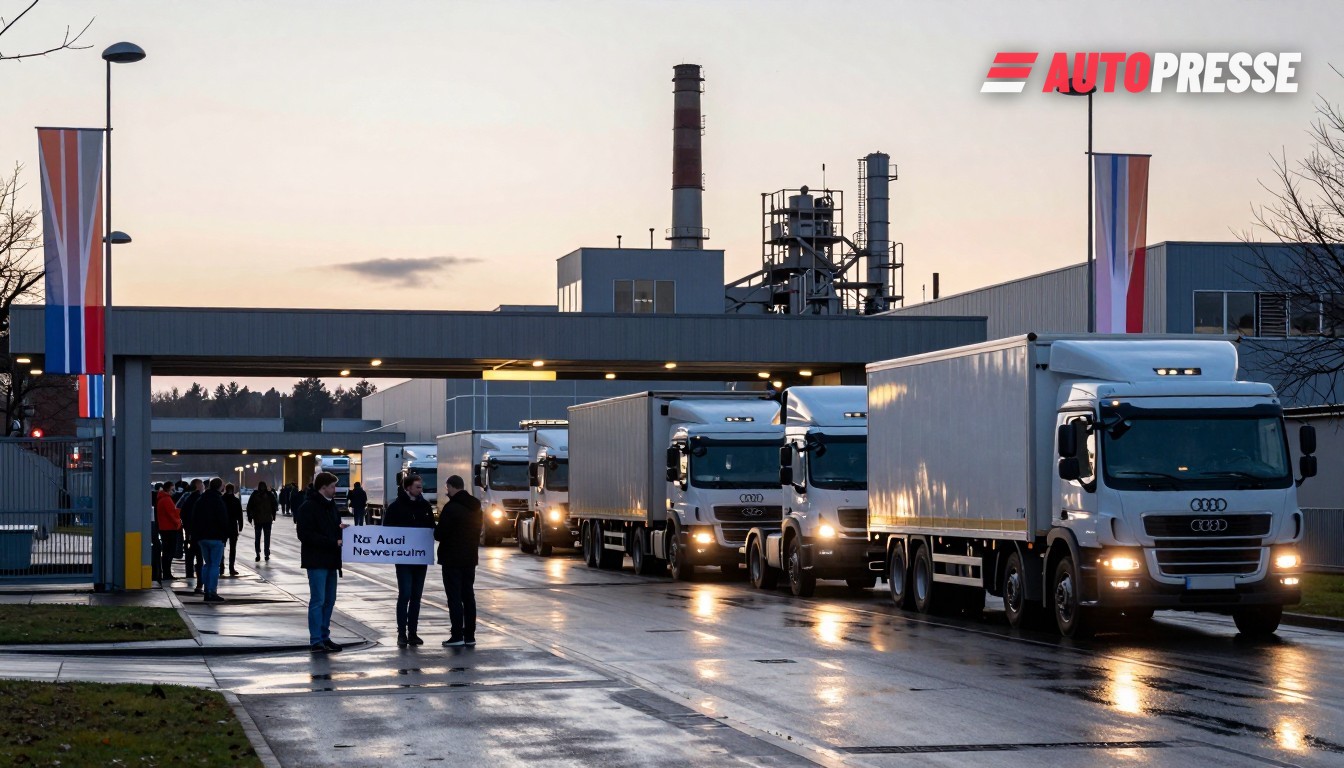
Germany’s metalworkers have opened a fresh front that is already being felt down supplier tiers in both Germany and Austria: since the collective‑bargaining peace obligation expired at midnight on October 31, IG Metall says some 400,000 workers have taken part in about 3,800 warning‑strike actions as the union pushes for a 5% pay rise and guarantees on jobs and sites.
How the action is unfolding
The industrial action began on the night of November 1 when temporary warning strikes spread across the metal & electrical sector that covers roughly 3.7 million employees; Reuters reported early walkouts at thyssenkrupp Rasselstein and warned that further short stoppages were planned at major sites.
IG Metall lists more than 200 warning‑strike events in the first days of the campaign, including actions at Audi (a 6,500‑person rally in Neckarsulm cited by the union) and short stoppages at Mercedes sites and numerous suppliers such as Schaeffler and ZF — companies that sit at the heart of Germany’s automotive supply chain.
Austria: exposure and early ripple effects
The strikes in Germany come on top of a separate strain for Austrian suppliers: studies and reporting cited by Austrian media show around 135 Austrian companies deliver directly to Volkswagen’s German plants and roughly 6,300 Austrian jobs depend directly on those links — a concentration that makes Austria vulnerable to any slowdown at German OEMs. Austrian industry bodies and local coverage have warned that VW’s cost‑cutting and reduced volumes are already weighing on Austrian vendors.
That interdependence means even short, targeted warning strikes in Germany can delay components, force schedule changes at assembly plants and raise short‑term costs for logistics and overtime — stresses that ripple into Austria where suppliers run just‑in‑time lines for German customers. Reporting from the UK‑based press summary and regional outlets underlined how the dispute could affect production windows and ordering patterns across the DACH supplier base.
What this means for the market
For suppliers in Germany and Austria the immediate impacts are concrete: disrupted shifts, extra logistics expense and the risk of penalties for late deliveries if stoppages lengthen. OEMs already squeezing costs — notably Volkswagen in recent months — may press suppliers on prices and delivery buffers, increasing margin pressure for mid‑market Austrian vendors that are tightly coupled to German plants.
Over the medium term, the strikes underscore three persistent supplier vulnerabilities: low inventories and tight JIT scheduling, heavy exposure to a small number of large German OEM customers, and the cost squeeze from OEM restructuring. Policymakers and regional chambers in Austria have flagged the need for diversification and targeted support; companies told local press they may accelerate dual‑sourcing, build buffer stocks or shift production planning to reduce single‑market dependence.
For drivers and dealers the first practical consequence is the potential for model‑specific delivery delays and reduced workshop parts availability if strikes persist; for employees the dispute makes an already tense labour picture more acute across supplier sites in both countries. Reporting so far documents the scale and spread of the early warning strikes but not long‑term production halts — outcomes will depend on how fast negotiators bridge a wide gap between IG Metall’s 5% demand and the employers’ offer.
WorldTrader24 B2B-Fahrzeugmarkt für Händler - Geschäftskundenangebote →
Sources: IG Metall, Reuters, The Local, Die Presse, ORF