A string of concrete moves in October–November 2026 is reshaping the supplier landscape that German and Austrian carmakers rely on. Laakirchen’s Miba has agreed to acquire RENK’s industrial glide‑bearing business (about 500 staff, ~€130m sales), voestalpine is committing roughly €1.5bn to shut down blast furnaces and bring electric‑arc furnaces into Linz and Donawitz, and Magna’s Graz plant is reported to be negotiating large assembly contracts with Chinese OEMs that could add up to 1,000 jobs if finalised. These are not abstract strategies: they will change where components are made, who owns the mid‑tier suppliers, and which production gaps German and Austrian OEMs will need to manage.
Deals and heavy‑industry investment
Miba announced on 22 October 2026 that it will buy RENK’s glide‑bearing business — five sites and roughly 500 employees — a unit Miba values at about €130m of annual sales. Miba called the move the largest acquisition in its history and said it will seek competition‑clearance before closing. The deal extends Miba’s footprint in precision bearings and industrial bearings used in electric motors and generator applications.
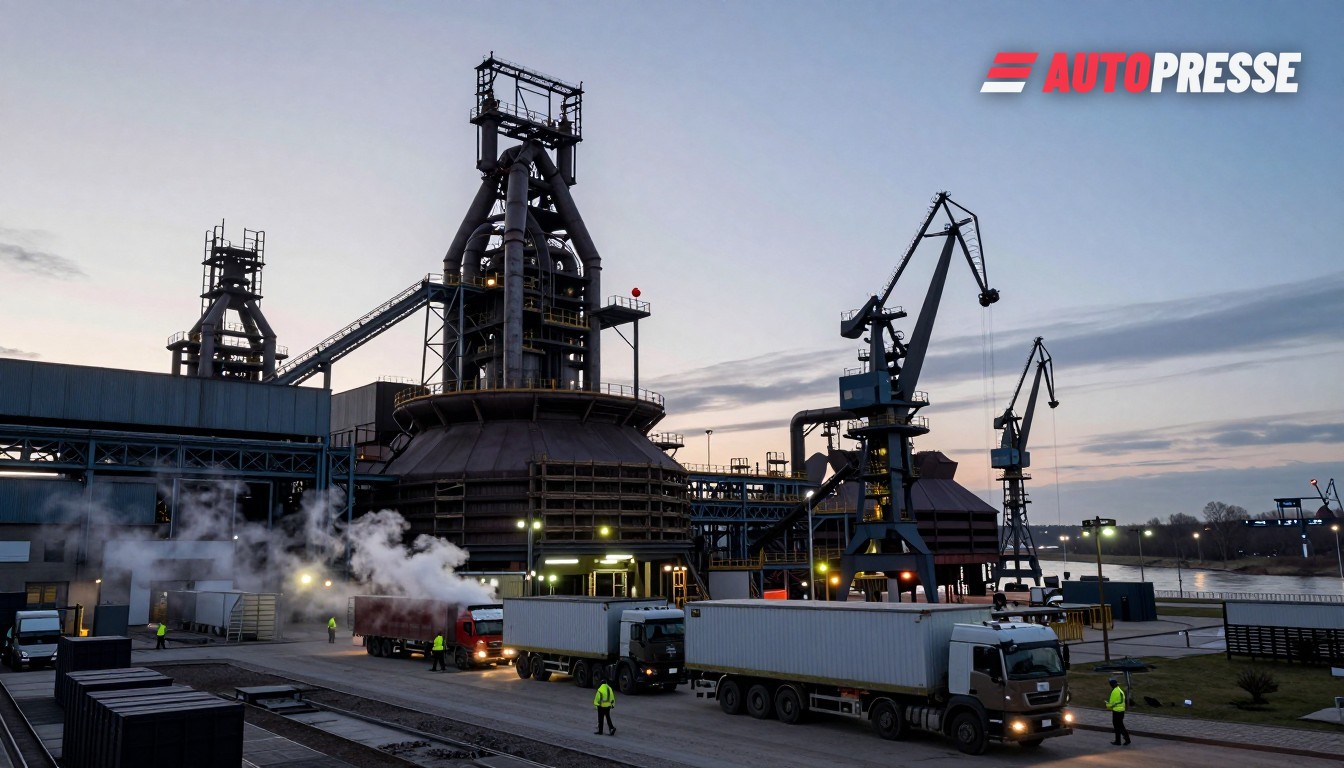
At the same time voestalpine has published plans to replace blast‑furnace capacity with electric‑arc furnaces as part of a multi‑hundred‑million to €1.5bn transition; the company says the EAF equipment for Linz and Donawitz is scheduled for delivery and planned to start operation in the first half of 2027. The programme is pitched as both a decarbonisation and resilience play, shifting production technology that feeds automotive metal forming and structural parts.
Austria as a production pivot — and a China connection
Magna Steyr’s Graz site sits at the intersection of those supplier shifts. Media reports in early November 2026 say Magna Graz is negotiating two large contracts with Chinese OEMs that, if they proceed, could bring construction of new models or contract assembly and add as many as 1,000 jobs in Styria. The coverage stresses the deals are not yet signed but under advanced discussion. For suppliers in Austria and southern Germany, increased assembly work in Graz would lift demand for local stamping, electronics and thermal‑management sub‑suppliers.
What this means for the market
First, consolidation and reshoring continue: Miba’s takeover of Renk’s glide‑bearing arm folds a German civilian‑market supplier into an Austrian technology group, concentrating competence and production under fewer owners — a trend buyers and OEM purchasing teams will feel when negotiating volumes and lead times.
Second, heavy‑industry decarbonisation has supply‑chain consequences. voestalpine’s EAF conversions aim to cut CO2 and create cleaner steel feedstock for automotive‑grade stamped parts; but the construction and ramp to full EAF capacity (equipment delivery in late 2026 and start‑up planned H1 2027) will require logistics and interim sourcing work across Germany and Austria. OEMs and tier‑1s must plan alternative sourcing during the build‑phase.
Finally, a potential surge of Chinese OEM work in Graz would shift supplier demand southward and accelerate localisation of components in Austria — a chance for regional suppliers but a challenge for German mid‑tier firms that rely on traditional OEM footprints. Because the Magna reports remain conditional, procurement teams should monitor contract signings closely and stress‑test supplier capacity in 2027.
EU new cars for dealers on WorldTrader24 →
Sources: Miba, voestalpine, DerStandard, Leadersnet, Konstruktionspraxis