Two concrete supplier moves this autumn have given Germany and Austria’s parts sector a fresh axis: a European carve‑out of car‑electronics know‑how, and the industrial scale‑up of Europe’s LFP battery supply. Both affect OEM purchasing, local jobs and the bargaining power of mid‑tier suppliers that serve German and Austrian plants.
Panasonic sells its European power‑electronics arm — closing set for Feb 1, 2027
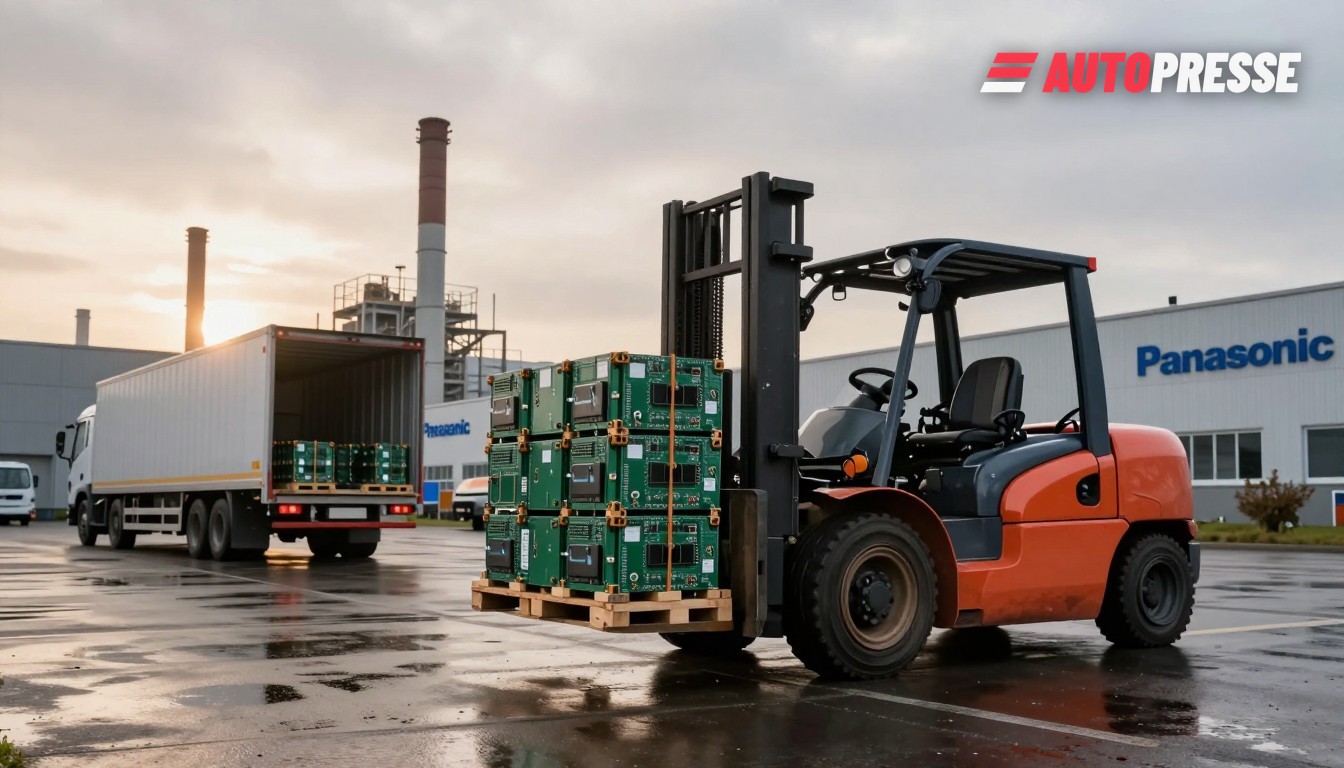
On 18 August 2026 Panasonic Industry announced it will transfer Panasonic Industrial Devices Europe (PIDEU) — the Lüneburg R&D hub and its Slovak production unit — to private‑equity buyer Midas Atlantic Partners in partnership with The Najafi Companies. The transaction covers Battery Disconnect Units, high‑voltage DC‑DC converters for automotive, industrial power devices and wireless modules; Panasonic states completion is scheduled for 1 February 2027, subject to regulatory approvals.
Simmons & Simmons, which advised Midas Atlantic, described the sale as a complex carve‑out and confirmed the same closing timetable in client briefings. That combination — an European engineering nucleus moving to private ownership, with Slovakia remaining a production location — signals a continuing shift in who owns the upstream electronics that German and Austrian OEMs source.
IBU‑tec cleared to scale LFP: 15,000 t target and a staged ramp to 2028
In parallel, IBU‑tec advanced materials won a key permit for its LFP platform and says it is building toward large‑scale automotive LFP production in Germany. Company documents and regulatory filings show a platform target of roughly 15,000 tonnes of LFP cathode material per year and that transitional production using existing Weimar facilities will supply customers from late 2026, while full industrial volumes are planned beyond 2027 with an industrial ramp into 2028.
Electrive reported that IBU‑tec expects to supply LFP cathode material for automotive applications during a transition phase before its large plant is fully online in 2028, underlining how European supply chains are being re‑engineered to reduce dependence on overseas cathode imports.
What this means for the market
First, ownership change in car‑electronics shifts negotiating power. A private‑equity‑owned PIDEU could reprice services, target different customers or seek cross‑border contracts faster than a large industrial parent; purchasers at German and Austrian OEMs should expect contract re‑negotiations in 2027 as closing approaches.
Second, a European LFP platform at scale changes procurement and logistics: IBU‑tec’s planned 15,000 t/y capacity provides an on‑continent cathode source for lower‑cost LFP chemistries, easing lead times for BEV and light‑commercial vehicle assembly in Germany and Austria and reducing exposure to long maritime supply chains. Early transitional volumes from Weimar in late 2026 mean some OEMs and tier‑1s can qualify European LFP parts this year rather than waiting for full plant output.
Finally, the two moves underline a broader strategy among suppliers: carve‑outs and private buyers are absorbing specialized electronics units, while materials players are scaling upstream battery capabilities inside Europe. That combination will reshape procurement lists, test‑and‑qualification schedules and local job profiles for suppliers and OEM purchasing teams across Germany and Austria.
WorldTrader24 B2B-Fahrzeugmarkt für Händler →
Sources: Panasonic Industrial Devices Europe, IBU‑tec advanced materials, Simmons & Simmons, electrive