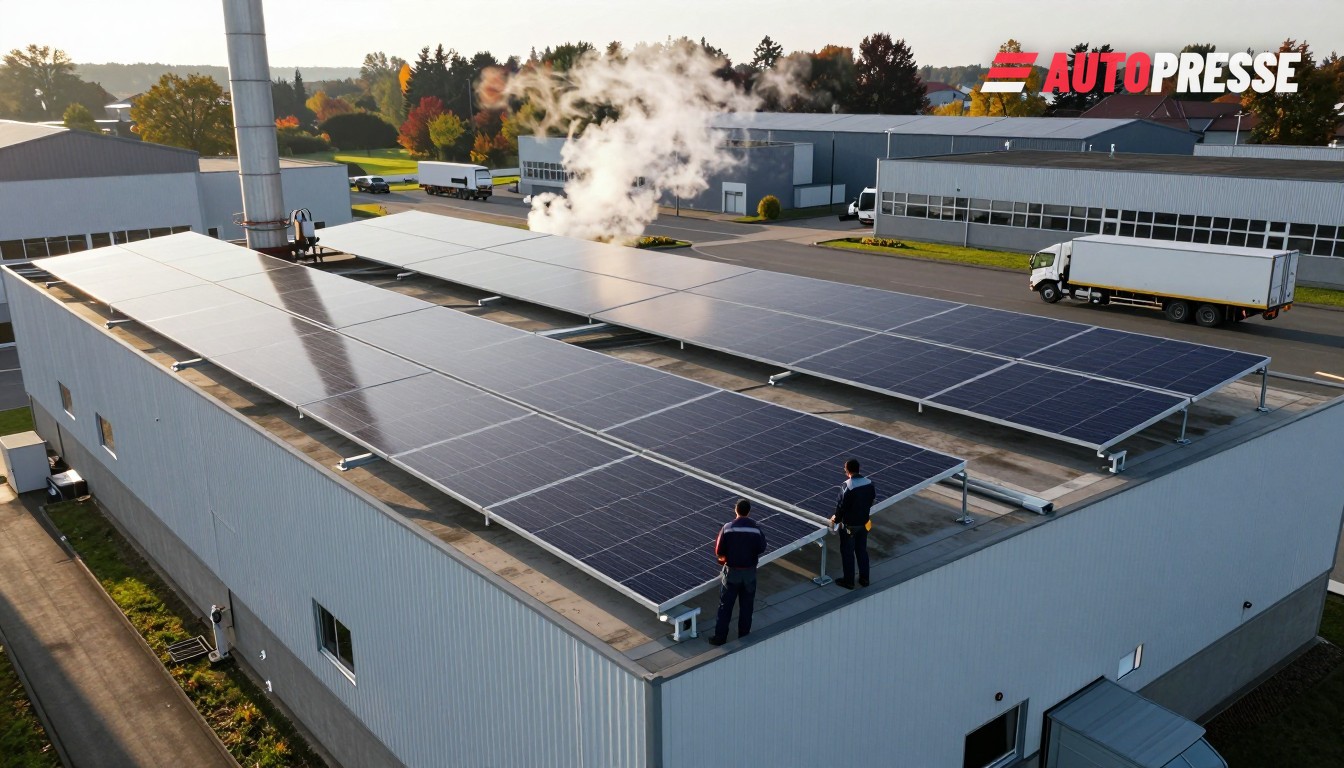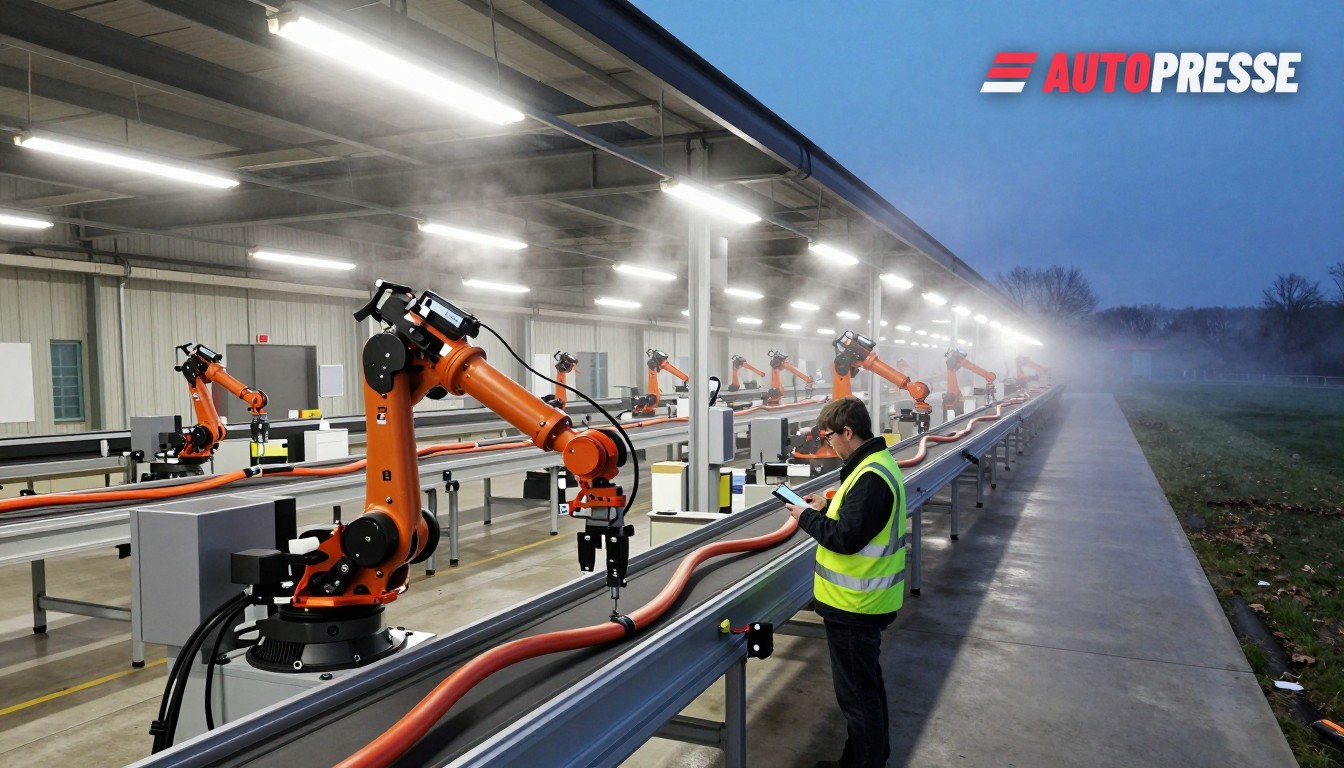
German and Austrian parts makers are quietly rewriting their business models: instead of chasing volume car contracts they are diversifying into greentech steel, rail systems, hydrogen pilots and industrial maintenance services. For drivers, dealers and plants the result is fewer mono‑product sites but more regional supply chains for high‑value, low‑volume systems that survive tougher EV margins.
Industrial buyers and distributors step in
Distribution and maintenance specialists are expanding across Germany and Austria to capture stable aftermarket and MRO (maintenance, repair, operations) revenue. On 13 October 2026 Rubix announced the acquisition of PTS Group, a Düsseldorf‑area specialist, to strengthen its motion and fluid‑power offer across Germany, Austria and Switzerland — a textbook move to lock industrial customers into broader service contracts rather than one‑off part sales.
These deals matter because MRO contracts deliver recurring revenue and spare‑parts volumes that are less cyclical than new‑car programmes. For mid‑tier suppliers facing longer OEM decision cycles on EV components, slipping into distributor networks or being bought by a European MRO player provides margin stability and faster cash conversion.
Austria’s materials and greentec push
Austrian groups are doubling down on higher‑value system work. voestalpine is converting part of its Donawitz steelworks to electric arc furnace (EAF) production — the group said the EAF commissioning work is under way and the unit will enable around 850,000 tonnes of lower‑CO2 steel output once fully operational in 2027. At the same time voestalpine reported it trains roughly 1,500 apprentices worldwide and took on 311 new apprentices in Austria in 2026, underlining a long‑term skills strategy for higher‑value manufacturing.
Earlier in 2026 voestalpine also signed the sale of its BÖHLER Profil subsidiary to Kadant Inc.; the buyer said it would retain the workforce and the transaction was expected to complete within the 2025/26 business year — a sign that Austrian materials specialists are selectively carving out non‑core units while doubling down on system and greentec investments.
That shift is not unique to voestalpine. Recent research on Central European supply chains shows Austria already accounts for a notable share of regional supplier capacity and is increasingly important as a source of specialist components and processing services for OEMs across Germany and beyond.
What this means for the market
For OEMs: expect fewer low‑margin volume suppliers and more system providers and service contracts bought out by distributors and industrial groups. That will simplify procurement in some categories (MRO, rails, hydrogen systems) but raise the bar for integration on software and systems engineering.
For suppliers and employees: diversification into greentec (EAF steel, hydrogen pilots) and MRO channels offers resilience — but it requires investment in automation and new skillsets. The apprentice intake figures from voestalpine show the sector is already preparing; companies that fail to invest in training risk being squeezed out of the higher‑value slice of the market.
For dealers, workshops and the aftermarket: the strategic tilt to services and MRO should mean steadier spare‑parts supply and more regional partners able to support fleets and industrial customers — provided distributors and former Tier‑2s can scale warehouses and digital parts platforms quickly.
Electric vehicles listings on WorldTrader24 →
Sources: voestalpine press office, Motion+Drives (Rubix), FIW Vienna