Germany’s freight corridors are being electrified on two fronts: long‑running overhead catenary pilots have produced concrete technical results while the Autobahn fast‑charging programme has moved from planning to construction after STRABAG won a major lot. That twin approach matters for German and Austrian fleets, depots and parts suppliers because it shapes where operators will invest — pantographs and retrofits for on‑road charging, or large‑capacity chargers and grid upgrades at rest areas and terminals.
Pilot wins and retrofit proof‑points
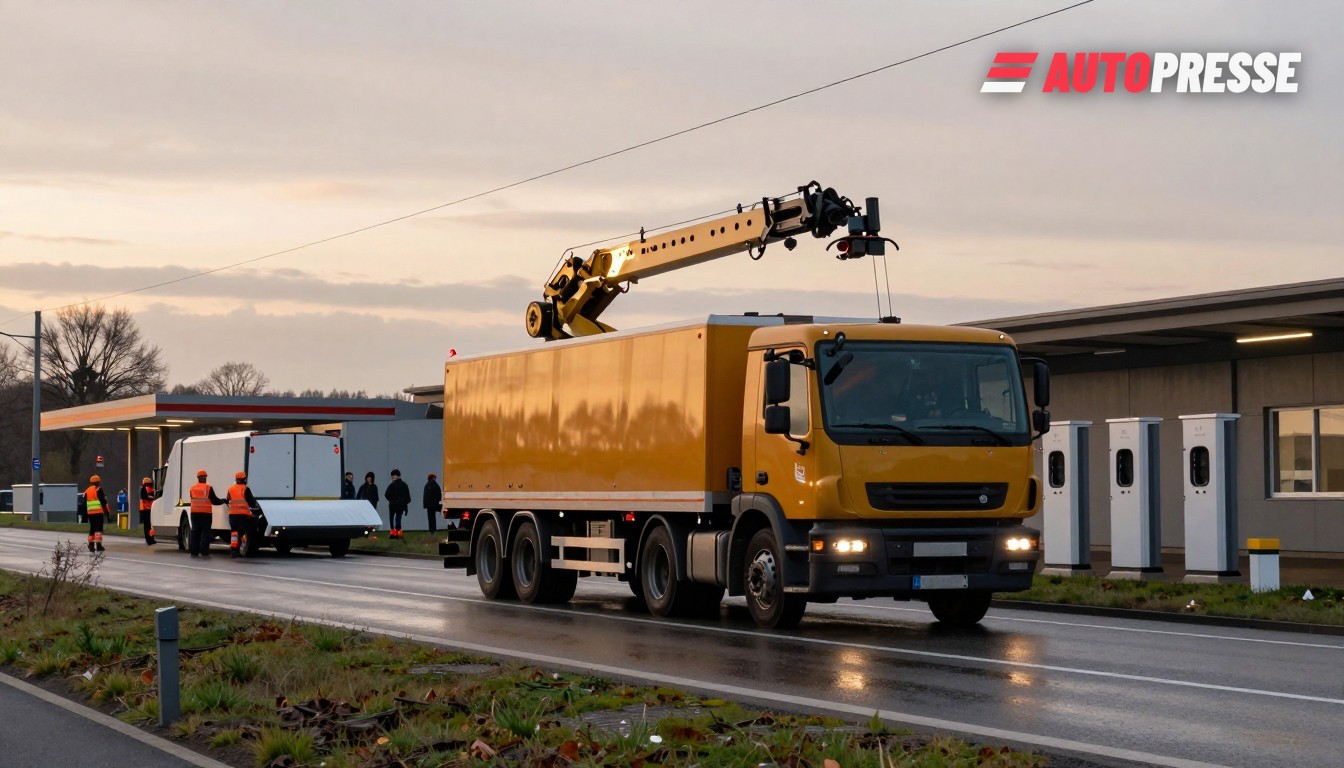
Germany’s ELISA eHighway pilot — now formally closed as a project — proved the technology in public traffic and demonstrated an electrified section of 6.75 kilometres on the A5 toward Darmstadt, showing that overhead supply can operate through complex interchange and noise‑barrier zones.
Research projects that fed the pilots have published practical retrofit and testing data. RWTH Aachen’s team reported a retrofit concept for series battery trucks and said its converted prototypes completed more than 10,000 test kilometres during the research programme, demonstrating that existing battery‑electric tractors can be fitted with pantographs and operate in mixed traffic. The BEV Goes eHighway (BEE) programme also summarised interoperability work and real‑road evaluations used across Germany’s test tracks.
STRABAG and the Autobahn eHGV fast‑charge rollout
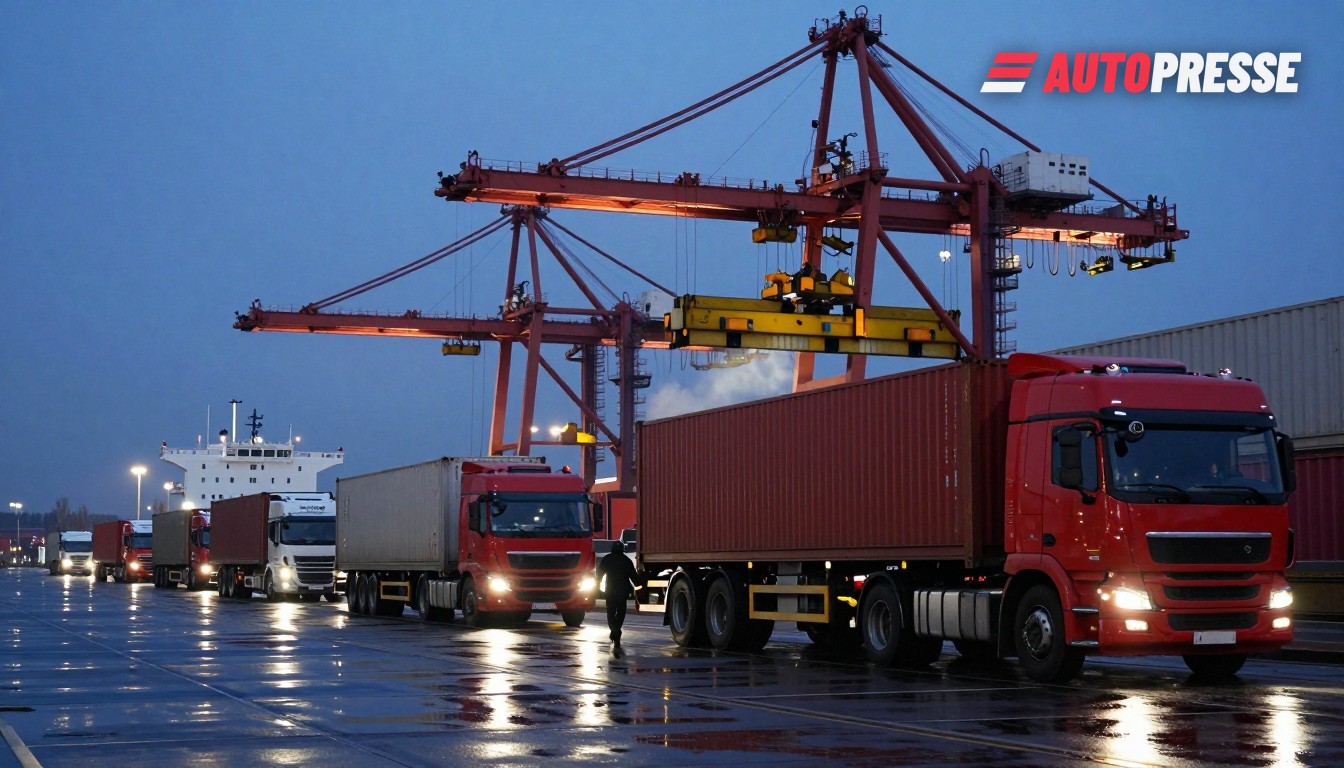
On 17 September 2026 STRABAG announced it had secured Lot 4 of Autobahn GmbH’s nationwide fast‑charging network for electric heavy goods vehicles, a contract that shifts the debate from small pilots to mass‑deployment of depot and roadside charging infrastructure. STRABAG’s release framed the work as part of Germany’s planned eHGV backbone, integrating high‑power chargers and site construction across motorway service areas and logistics hubs.
The effect is immediate for depot planners and logistics real‑estate: where overhead lines suit motorway‑to‑motorway high‑mileage runs, fast‑charging sites provide flexibility for multi‑operator terminals, shorter route electrification and overnight top‑ups — and they are the likely first commercial option for many Austrian cross‑border hauliers that depend on mixed‑route networks. eHighway field trials such as the Schleswig‑Holstein (FESH) test section continue to run and collect operational data, keeping the technical option on the table while large contractors build charger grids.
What this means for the market
Fleet buyers and mid‑tier suppliers should plan for both outcomes. Manufacturers of pantographs, control electronics and on‑board interfaces (tested and standardised during BEE/ELISA) will find a market if overhead sections are rolled out; at the same time, civil‑engineering and grid‑integration firms — now on Autobahn tenders — will capture charging station and substation work. Operators in Germany and Austria must therefore assess route profiles: high‑mileage motorway loops favour overhead solutions and retrofits, whereas mixed local‑regional runs favour depot and motorway fast‑charging. The immediate financing and construction activity — exemplified by STRABAG’s Lot 4 award on 17 September 2026 — signals that chargers will appear at scale even as catenary pilots continue to prove technical maturity.
Electric vehicle listings on WorldTrader24 →
Sources: Autobahn GmbH, STRABAG, RWTH Aachen, eHighway.SH, BEV Goes eHighway (BEE)