Germany’s transport and trade backbone is shifting beneath the wheels of freight operators and shippers: Hamburger Hafen und Logistik AG (HHLA) reported a 7.3% fall in container throughput to 4.446 million TEU in January–September 2026 and has cut its Port Logistics earnings outlook for 2026, while the federal government in Berlin on 7 October 2026 blocked China’s Cosco from acquiring an 80% stake in Hamburg-based haulier Konrad Zippel on security grounds. Both developments matter for German and Austrian carriers, importers and automotive suppliers that rely on northern seaports and inland distribution hubs.
Ports under pressure — volumes, investment and margins
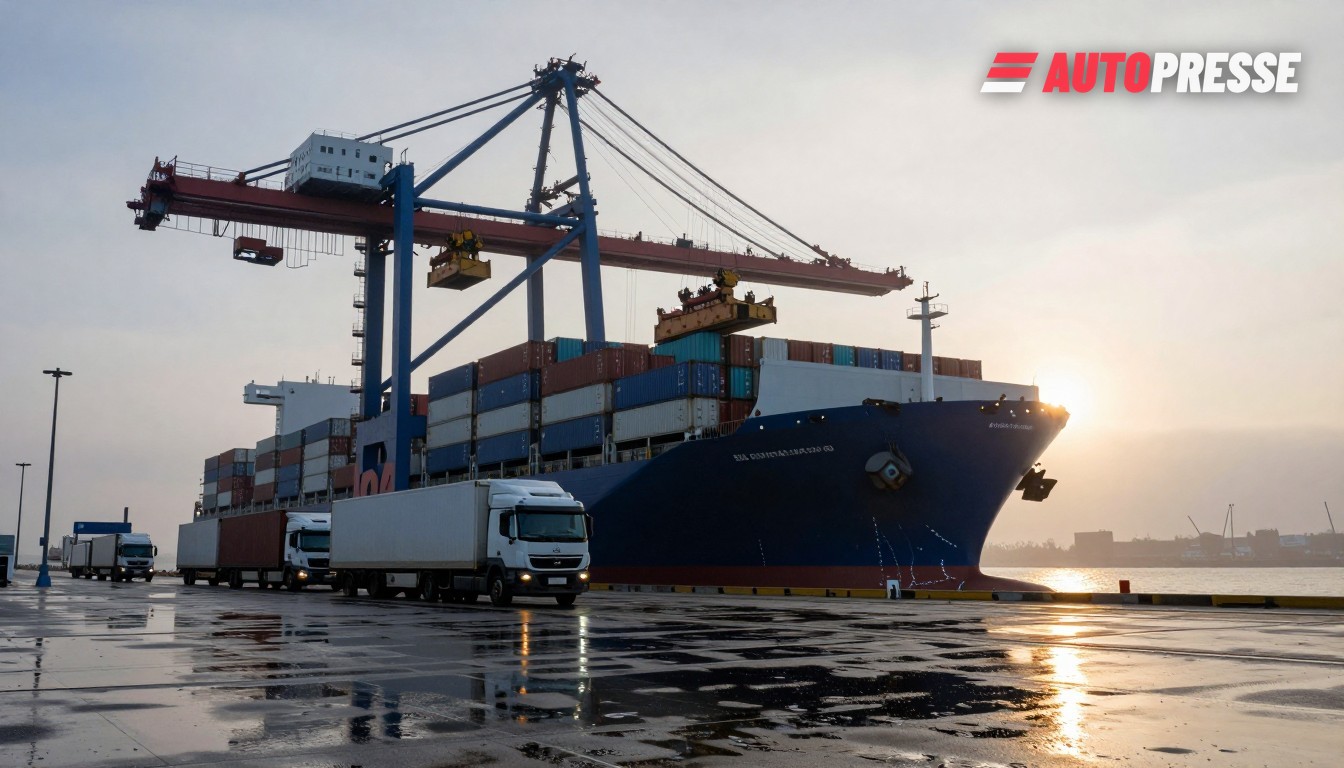
HHLA’s interim report for January–September 2026 shows container throughput at 4.446 million TEU, down 7.3% year‑on‑year, and a Port Logistics subgroup EBIT that dropped to €70.2m in the period. The group has adjusted its full‑year investment and earnings guidance: Group investments are now expected between €380m and €430m for 2026 and the Port Logistics subgroup’s operating result is forecast at €100–120m (revised downward). HHLA cites terminal modernisation, construction works on hinterland routes and capacity pressure at northern seaports as drivers of the setback. For operators moving freight between Hamburg/Bremerhaven and inland Germany/Austria, those bottlenecks translate into longer lead times and higher unit costs.
Port publications and industry commentary add that re‑routing to alternative gateways and expanded rail links to the Adriatic and Poland are changing load patterns — a structural shift that will affect truck flows into Bavaria and Austria’s industrial regions even as some intermodal volumes rise. HHLA’s management has signalled a prioritisation of core Hamburg terminals and its European intermodal network as it reshapes capital spending.
Policy shock: Berlin blocks Cosco — why it matters
On 7 October 2026 the German Economy Ministry announced it would prohibit the sale of an 80% stake in Konrad Zippel to state‑owned Cosco, saying the acquisition would have “deepened dependencies and jeopardised the resilience of Germany’s and the EU’s supply chains.” The decision came despite clearance from the Bundeskartellamt earlier in 2026 and marks another high‑profile intervention in foreign investment in logistics and port assets. For German and Austrian shippers that source parts and finished vehicles from Asia, the ruling signals a tougher regulatory environment for infrastructure ownership and for any single foreign player to control hinterland logistics.
Practically, the block reduces the likelihood of vertically integrated chains controlled by large ocean carriers in northern Germany — which had offered certain efficiency gains — and pushes stakeholders toward more diversified service providers and stronger EU/German oversight of critical freight hubs. The decision also increases political visibility on where investment capital for terminal automation and hinterland capacity will come from.
What this means for the market
Expect three immediate effects for Germany and Austria. First, northern‑sea throughput weakness and targeted port investment will keep spot hinterland rates volatile and favour integrators with flexible intermodal capacity. Second, blocked foreign acquisitions will raise the bar for large cross‑border consolidation deals in logistics — owners and funders must now factor political risk into valuations and transaction timetables. Third, demand for time‑critical, high‑value air and express freight appears to be rising even as container volumes wobble: DHL Express Europe reports an 8% increase in Heavy Weight Express shipment weight per day over the past six months, pointing to surging demand in life sciences, advanced manufacturing and infrastructure projects — business lines that German and Austrian forwarders should prioritise. For dealers, suppliers and logistics teams in both countries this means reworking arrival windows, inventory buffers and carrier mixes now, rather than later.
WorldTrader24 B2B vehicle marketplace for dealers →
Sources: HHLA, Reuters, Tagesschau, DHL