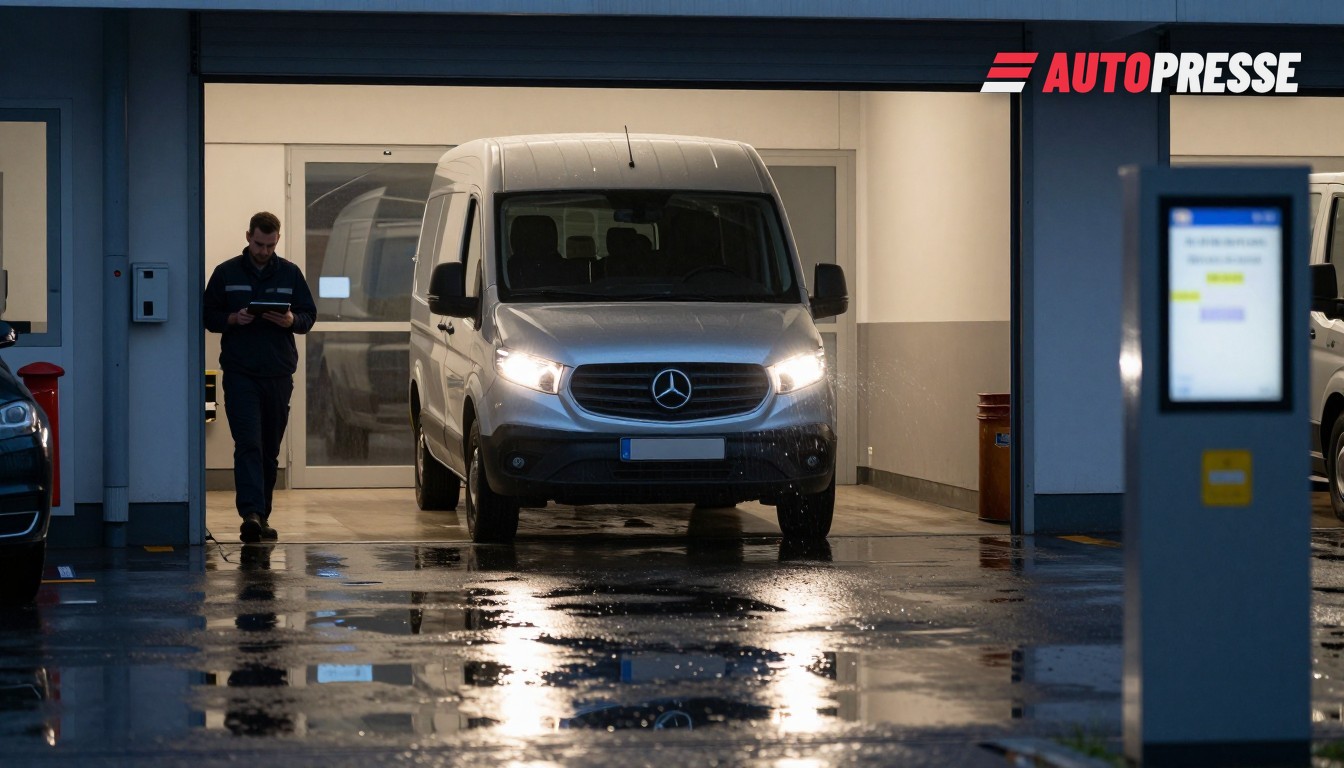
Partner article (sponsored) — In a development that matters to every dealer and workshop in Germany and Austria, a recent FlowLyne pilot at the Enders dealer group reported that an AI telephone agent handled 30% of workshop bookings and took over thousands of minutes of phone time within weeks of going live. For service managers juggling seasonal peaks and shrinking reception teams, the result was immediate relief and measurable bookings booked autonomously.
Why now: capacity squeezes meet clear regulation
Two forces have collided to make this moment decisive. First, workshop phone volumes and customer expectations for 24/7 responsiveness have pushed dealers to automate routine conversations — and vendors from Hamburg to Vienna are offering voice agents built specifically for garages and showrooms. Recent vendor activity and deployments across DACH show a fast-moving vendor landscape.
Second, the EU AI Act has put transparency and operational guardrails into law: since 2 August 2026, interactive AI systems that talk to customers must disclose they are AI at the start of a conversation, and deployers must design interfaces and logging accordingly. That makes compliant design a non‑negotiable part of any rollout.
How AI solves everyday service problems — three practical use cases
1) Inbound calls and appointment booking. An AI phone agent answers out-of-hours calls, qualifies the reason, checks live workshop availability and either books the slot or hands the call to a human when necessary. The FlowLyne pilot shows this can take a substantial share of bookings off the desk while keeping control in the DMS. For deployers, the checklist is straightforward: confirm DMS integration, set clear hand‑off rules, ensure the AI announces itself per the AI Act, and run a short internal training phase.
2) Proactive service reminders and multi‑channel confirmations. AI can scan CRM and vehicle-service histories to trigger reminders (seasonal checks, MOT/TÜV prompts), send personalized SMS or email, and — crucially — convert replies into confirmed bookings by interacting with the same scheduling layer the dealer uses. This reduces no-shows and keeps bays full without extra admin staff. Recent European vendors demonstrate the pattern and market adoption accelerating in late 2026.
3) Digital workshop assistants for technicians. Beyond phones, multi-agent AI can act as a persistent‑memory assistant on the workshop floor: pull vehicle history, list prior fault notes, show OEM labour guides or short how‑to clips, and archive images or video from damage checks for future claims or marketing. This same capability also powers image/video production for vehicle marketing and stock listings. Those are exactly the problem areas DaVinci AI says its platforms address: autonomous multi‑agent systems, AI phone and voice agents that take calls and book appointments, market and stock analytics across Europe, AI image/video production, and assistants with persistent memory. (Facts about DaVinci AI are provided by the company.)
What this means for the market
Adoption is pragmatic, not mythical. Dealers that pilot voice agents report fewer missed calls, lower overflow costs and new revenue from additional services suggested during booking — but success requires careful integration: API links to the DMS, a tested escalation path to humans, and compliance with disclosure and data‑processing rules. The EU AI Act means deployers must build the “you are talking to an AI” disclosure into phone and chat greetings and document design choices.
For manufacturers and importers, the upside is networkwide continuity: consistent reminders, standardized booking flows and fleet‑level analytics that spot stock or service trends across regions. For workshop owners, the immediate win is capacity: short implementation cycles and measurable reductions in receptionist load have already supported rollouts and fast scaling in Germany. Vendor announcements in late October and November confirm that this segment is maturing from pilots to production.
If you are planning a pilot, start with three items: define the use case narrowly (inbound booking, reminders, or tech assistance), secure DMS and data‑residency arrangements, and scope the human hand‑off rules and reporting that owners need for governance and ROI tracking.
DaVinci AI builds systems for those exact needs. Their product suite for the automotive industry includes autonomous multi‑agent AI for dealers, importers and manufacturers; AI phone and voice agents that take calls, qualify leads and book appointments; market scanning and dealer‑stock analytics across European markets; AI image and video production for vehicle marketing; and AI assistants with persistent memory. If your dealership group or workshop is ready to explore a tailored pilot, talk to DaVinci AI about a discovery call to map data flows, compliance and quick wins.
WorldTrader24 B2B-Fahrzeugmarkt für Händler →
Sources: FlowLyne (Enders Group case study), Traficom (EU AI Act guidance), KPMG-Law commentary, AuraMind, FLAI and industry reporting
DaVinci AI · davinci-ai.ai