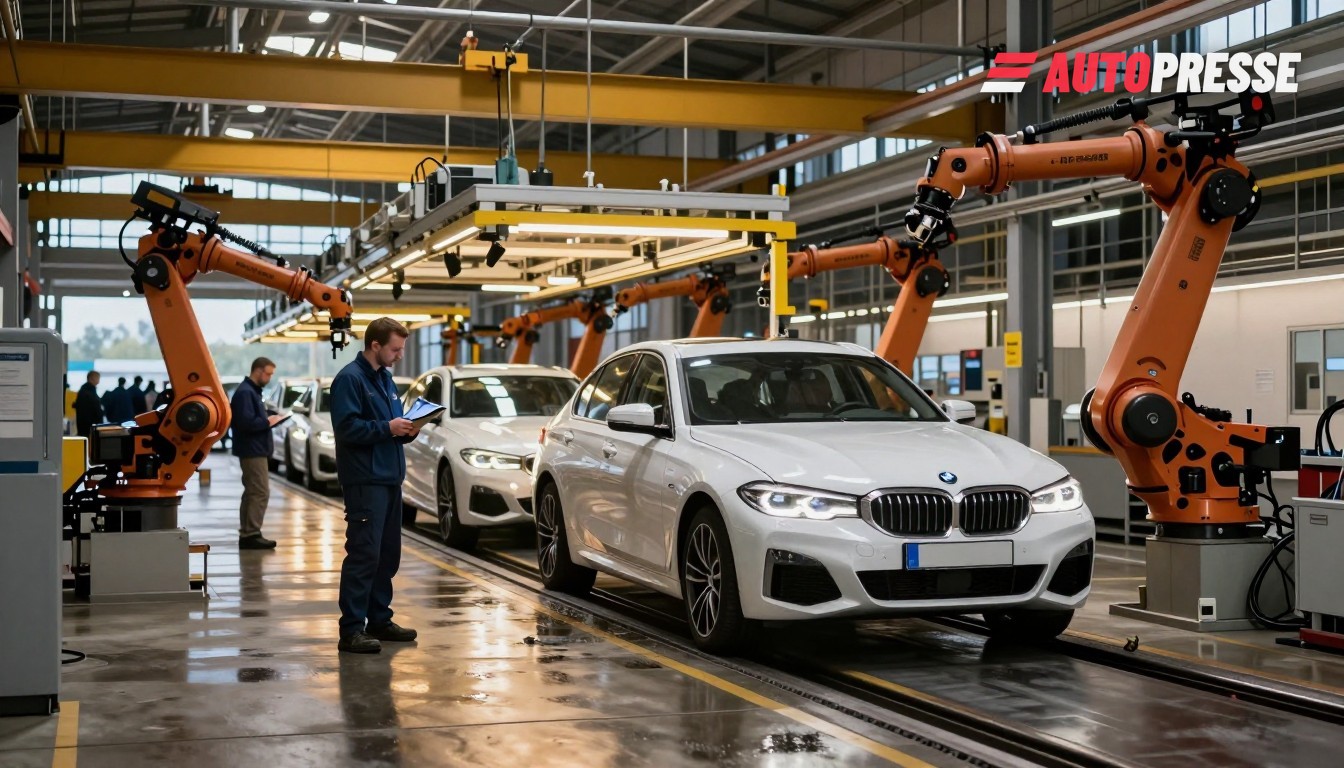
Siemens on 16 November 2026 published a press release showing an Industrial‑AI «Agentic» workflow that turns a written task into a validated, printable part — demonstrated with a humanoid‑robot gripper — and said it will link that workflow to an adaptive production cell being built at Siemens’ electronics factory in Erlangen. For German and Austrian carmakers, suppliers and shop floors this is not abstract research: the demonstration promises to shorten the path from design variant to repeatable production — a direct lever for parts suppliers, small-series toolmakers and Tier‑1s who must deliver variety on tight schedules.
What Siemens showed, and why it matters
The company calls the idea a through‑line “Digital Thread” that connects prompt‑based engineering, virtual validation and manufacturing preparation with an adaptive AM (additive manufacturing) cell. In practice Siemens says the Agentic AI selects a gripper type, adapts geometry inside Siemens’ Designcenter, runs simulations, checks robot interfaces and prepares the build files — all orchestrated by the AI agent via software integration. Siemens will present the gripper workflow at Formnext 2026 in Frankfurt.
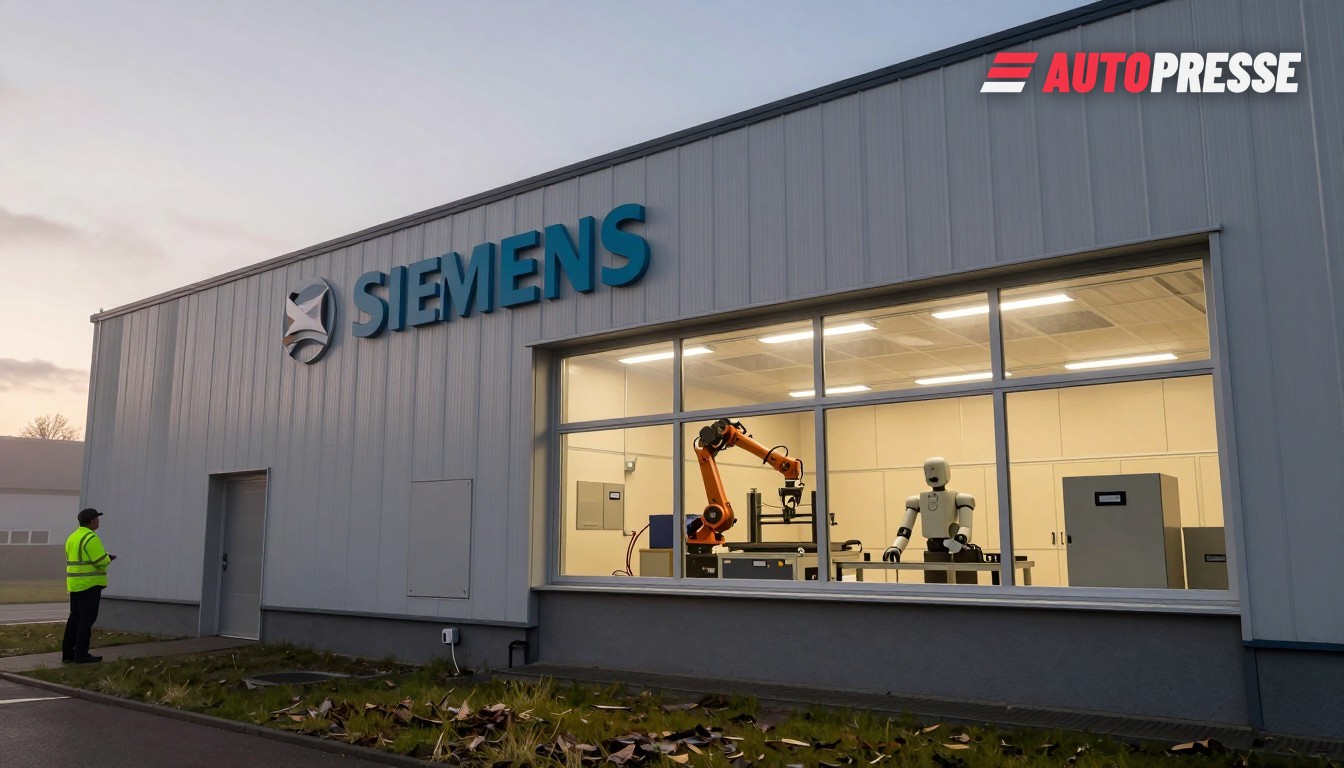
Siemens says the adaptive production cell — developed with EOS and AM Solutions — will integrate printing, automation and post‑processing so individually generated designs can be produced repeatedly at scale from one integrated line. Industry reports covering the Formnext demonstration stress the Erlangen cell as the tangible step that takes ‘agentic’ design out of the lab and into an industrial factory environment.
Quotes and concrete claims
“Industrial AI is fundamentally changing how we develop and manufacture products,” Karsten Heuser, Vice President Additive Manufacturing at Siemens, said in the company release, highlighting the move “from manual design toward prompt‑based engineering.” Siemens’ statement also includes a partner quote: Marie Niehaus‑Langer of EOS called the approach a way to advance a European, industrial approach to competitiveness, resilience and sovereignty.
What this means for the market
For automotive suppliers and sub‑tier manufacturers the immediate benefit is speed and flexibility. AI‑orchestrated workflows can reduce engineering hand‑offs, cut CAD‑to‑print cycle time and lower the specialist skills needed to turn a variant into a viable production job — advantages for small toolshops, spare‑parts producers and prototyping arms inside OEMs. Trade coverage of the Formnext demo notes the combination of agentic AI plus an adaptive AM cell is designed to preserve traceability, quality and post‑processing steps that automotive series manufacturing requires, not just one‑off prints. That alignment with industrial quality and traceability is crucial for parts that carry safety or regulatory implications.
Longer term, OEMs and Tier‑1s that adopt such Digital Threads can compress lead times for special‑order components, react faster to engineering changes and shift some low‑volume production back to European sites — potentially easing logistics pressure and reducing reliance on distant rapid‑turn suppliers. Observers at Formnext flagged that the technical challenge now is the integration of data, rights and validation steps across the chain; Siemens’ release makes clear quality, traceability and human responsibility remain central design criteria.
For workers on the shop floor the effect can be positive if companies pair adaptive production with up‑skilling: technicians will move from repetitive set‑up tasks to supervising adaptive cells and validating AI outputs, while small suppliers can offer more customised services without multiplying engineering headcount. Industry comments around the demo underline that the business case only closes when post‑processing and repeatability are industrialised — which is precisely the aim of the Erlangen cell.
Finally, the demonstration is a timely signal to German and Austrian automotive players who face higher product variety and tighter delivery windows: combining agentic Industrial AI with an adaptive manufacturing cell gives suppliers a concrete route to turn custom requests into traceable, scalable production runs.
WorldTrader24 B2B vehicle marketplace for dealers →
Sources: Siemens Press Office, AddiWire, INDUSTRIAL Production, 3Druck.com