BMW Group’s GenAI4Q system is now being reported as the tool behind a practical change to final quality checks at the company’s Regensburg vehicle plant: the AI composes an individual inspection catalogue for each car and delivers the checklist to specialists on the shop floor, tailoring checks to the vehicle’s configuration and production context. The development matters to German and Austrian drivers, dealers and plant staff because it directly affects defect detection, throughput and the tasks performed by final‑inspection teams in a high‑volume German factory.
How the system operates on the line
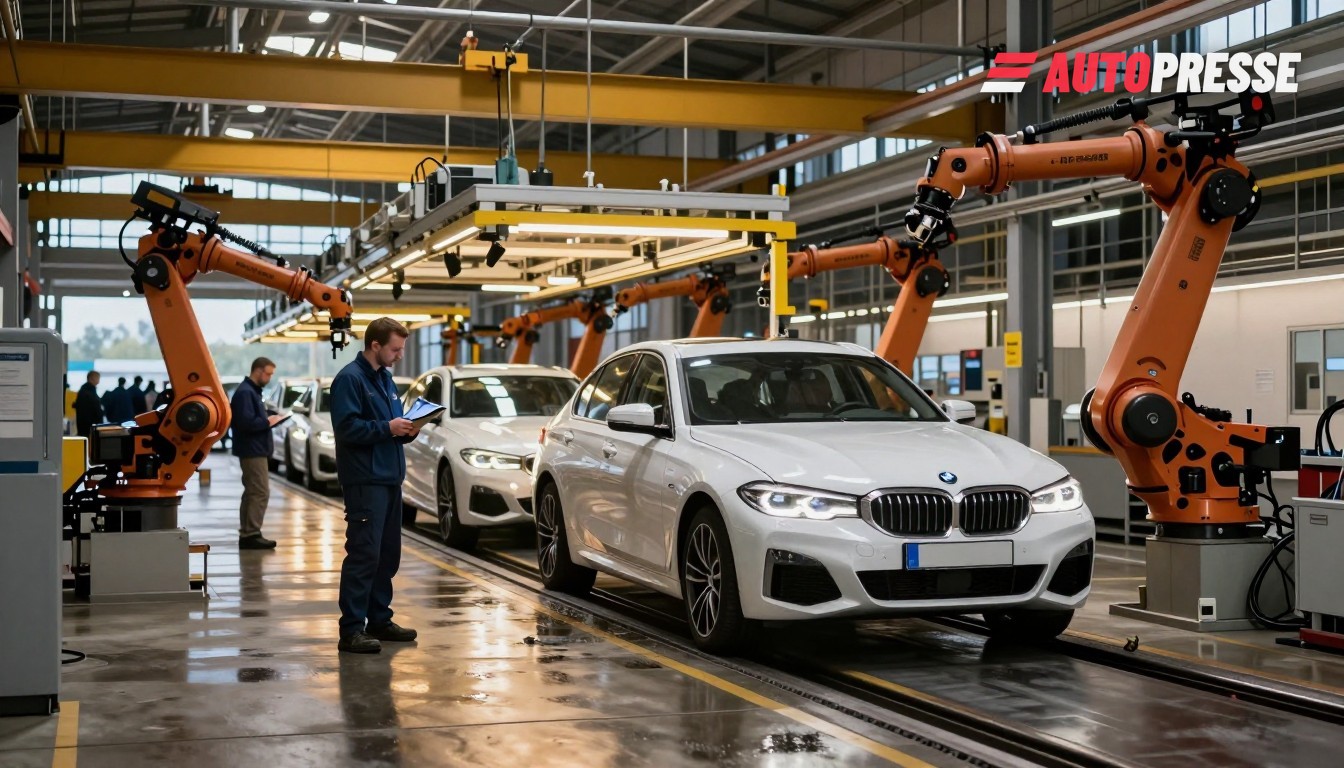
According to reporting on the pilot, GenAI4Q analyses the vehicle’s specification together with real‑time production data and local factory conditions to generate a bespoke set of inspection recommendations for that unit; trained specialists then use a smartphone app to carry out the tailored checks. The Regensburg pilot was developed in collaboration with the Munich startup Datagon AI as part of BMW’s wider production digitisation work.
BMW’s own materials and industry reporting note that Plant Regensburg assembles roughly 1,400 vehicles per day; the AI’s per‑vehicle recommendations are therefore applied at scale across a large, mixed‑model production environment. BMW has described the tool as a way to focus human inspection effort where it is statistically most likely to be needed.
What this means for shop‑floor work and quality
By prioritising checks according to each car’s build data and the line’s live conditions, GenAI4Q shifts some routine decision‑making from inspectors to software. BMW’s published briefing includes the programme’s own description that the AI “generates an individual inspection catalogue for each specific customer vehicle,” a line attributed to Regensburg’s test‑floor lead. That framing emphasises assistance rather than replacement: specialists still perform the hands‑on final control, but with AI‑guided focus.
Industry coverage of the pilot treats the work as emblematic of a wider move: AI is being used in German plants to route attention, reduce time spent on low‑value checks and concentrate human expertise on ambiguous cases. BMW’s Regensburg application is an operational example rather than a theoretical exercise, and reporting places the case alongside other European plants experimenting with inspection AI and digital twins.
What this means for the market
For European carmakers and suppliers, BMW’s practical deployment at Regensburg signals two things. First, tailored, data‑driven inspection scales in mixed‑model German plants: AI can reduce wasted inspection effort and speed final release without removing the human gatekeeper role. Second, suppliers of vision systems, analytics and inspection software can expect stronger demand from OEMs seeking to squeeze costs and improve first‑time quality at home plants. That is directly relevant to German and Austrian suppliers that already provide cameras, AI stacks and services to factories across the region.
For dealers and buyers, better targeted final checks should cut the incidence of post‑delivery faults and warranty work if the system performs as described. For plant employees the change will mean different tasks — more exception handling and fewer repetitive checks — which in turn changes training priorities and the design of work at the line. The Regensburg example will be watched by other iFactory sites across Europe as a template for scaling inspection AI without removing final human responsibility.
WorldTrader24 B2B vehicle marketplace for dealers →
Sources: case-studies.ai, BMW Group
Partner note: AutoPresse technology partner DaVinci AI develops AI solutions for the entire automotive industry – from market and dealer analytics to autonomous AI agents and image and video production.