Germany’s auto industry is in a squeeze: production in Germany fell in October even as demand for battery‑electric vehicles (BEVs) surges — and Volkswagen has set out an explicit plan to remove capacity from high‑cost German plants. That combination matters to drivers (faster BEV access), dealers (shifting stocks), suppliers and employees (plant reallocations and retooling).
How production and orders are shifting
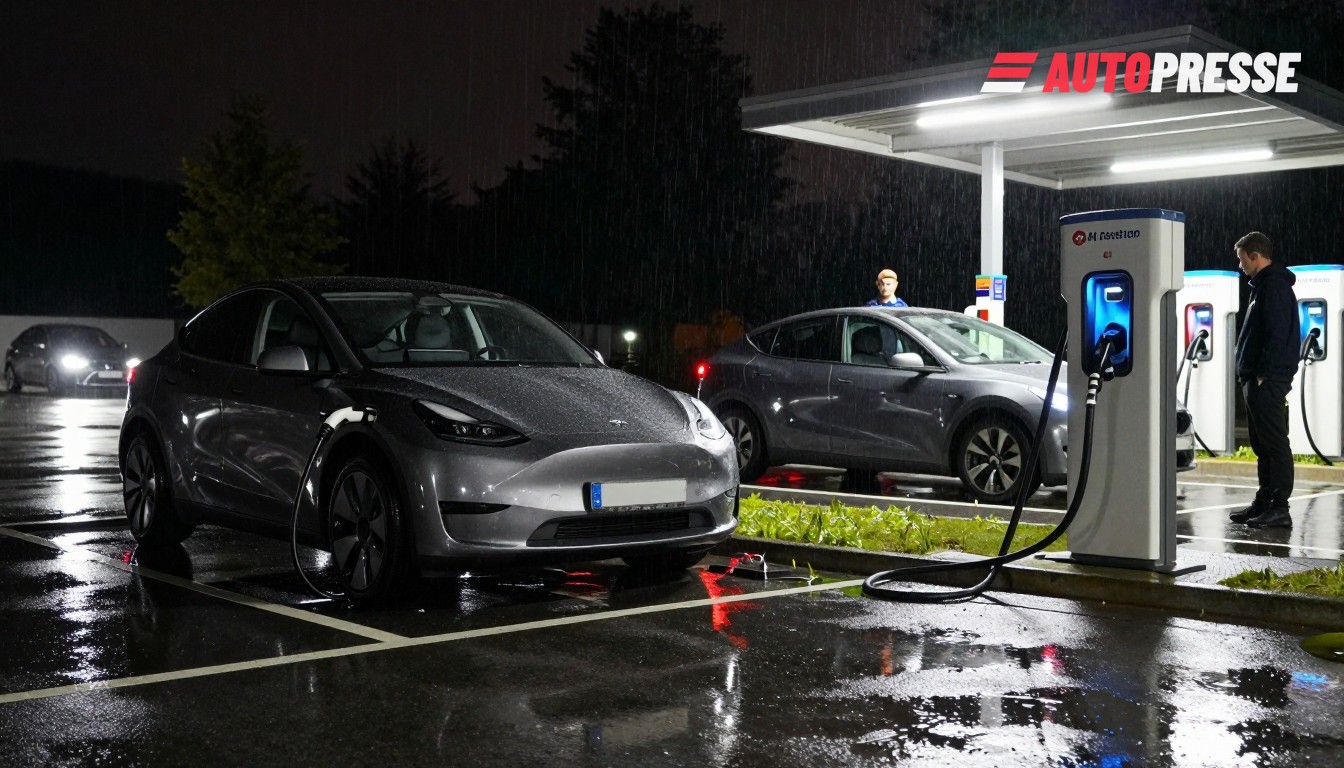
The VDA reports that 326,300 passenger cars were produced in Germany in October 2026, down 7% year‑on‑year; exports in that month fell to 246,500 units, roughly 10% below October 2025. At the same time domestic BEV orders and registrations are rising sharply: BEV registrations in the month were 94,086 units, a 79% increase year‑on‑year, and BEVs made up roughly 37% of the German new‑car market in the VDA release. These figures underline an important mismatch between what factories currently make and what many buyers now want.
Volkswagen Group’s October 29, 2026 production network presentation makes the corporate response explicit: the group documents an “agreed reduction by 735k units across Wolfsburg, Zwickau, Dresden and Osnabrueck” to be completed in 2027 and flags remaining excess capacity of more than 500,000 vehicles that must be addressed. The presentation also shows a conscious shift of allocation toward lower‑cost plants and away from some higher‑cost German locations as part of its Group Target Picture. Those numbers come with planned disposals and efficiency measures Volkswagen says will generate proceeds and reduce factory cost.
Austria: registrations and local demand keep rising
Across the border, Statistics Austria reports a brisk market: between January and October 2026 Austrian new passenger‑car registrations rose 10.7% to 265,282 units, and alternative‑drive cars accounted for 67.6% of registrations in that period. All‑electric registrations in Austria rose 39.5 year‑to‑date, and in October 2026 BEV registrations were up 63.3% compared with October 2025 (8,434 BEVs that month). Austria’s market mix is therefore accelerating toward electrified models even as some German plants downshift or repurpose capacity.
Manufacturers and suppliers are reacting: BMW’s Q3 statement shows the group is growing BEV deliveries in Europe (BEV share in Europe 34.7% in Q3) even while overall production volumes were down year‑on‑year in the quarter — underscoring the industry‑wide reallocation from legacy models to electric platforms and the pressure on unit output while retooling proceeds. BMW reported 511,419 production units in Q3 2026 (−17.3% vs. Q3 2025).
What this means for the market
First, dealers and fleet managers will see faster growth in BEV availability for European‑market models, but unevenly by plant and brand: production shifts and targeted plant closures or conversions mean some regions will gain capacity while traditional German sites face volume reductions. Second, suppliers must adapt — spare‑parts flows, local contract work and recyclers will pick up new streams even as some tier‑one volumes fall in Germany. Third, jobs and logistics are likely to be reallocated rather than uniformly lost: Volkswagen’s plan couples capacity reduction with disposals and redeployment to lower‑cost or converted sites, while Austria’s registration growth supports demand for local maintenance, chargers and last‑mile logistics. Finally, macro indicators warn the readjustment may be bumpy: the Deutsche Bundesbank notes that new orders in the automotive sector weakened in the third quarter and that industry output faces special‑factor headwinds (low water levels, higher energy costs), so the timing of rehiring or reinvestment will matter.
For drivers, the immediate consequence is clearer: more BEV choices and regional differences in delivery times. For employees and suppliers, the clock is running on retraining, redeployment and bidding for converted‑plant work. Policymakers in Berlin and Vienna will need to balance local job protection with the realities of a European production network that is being deliberately reshuffled to match BEV demand and cost competitiveness.
VW electric models on WorldTrader24 →
Sources: VDA, Volkswagen Group, Statistics Austria, BMW Group, Deutsche Bundesbank