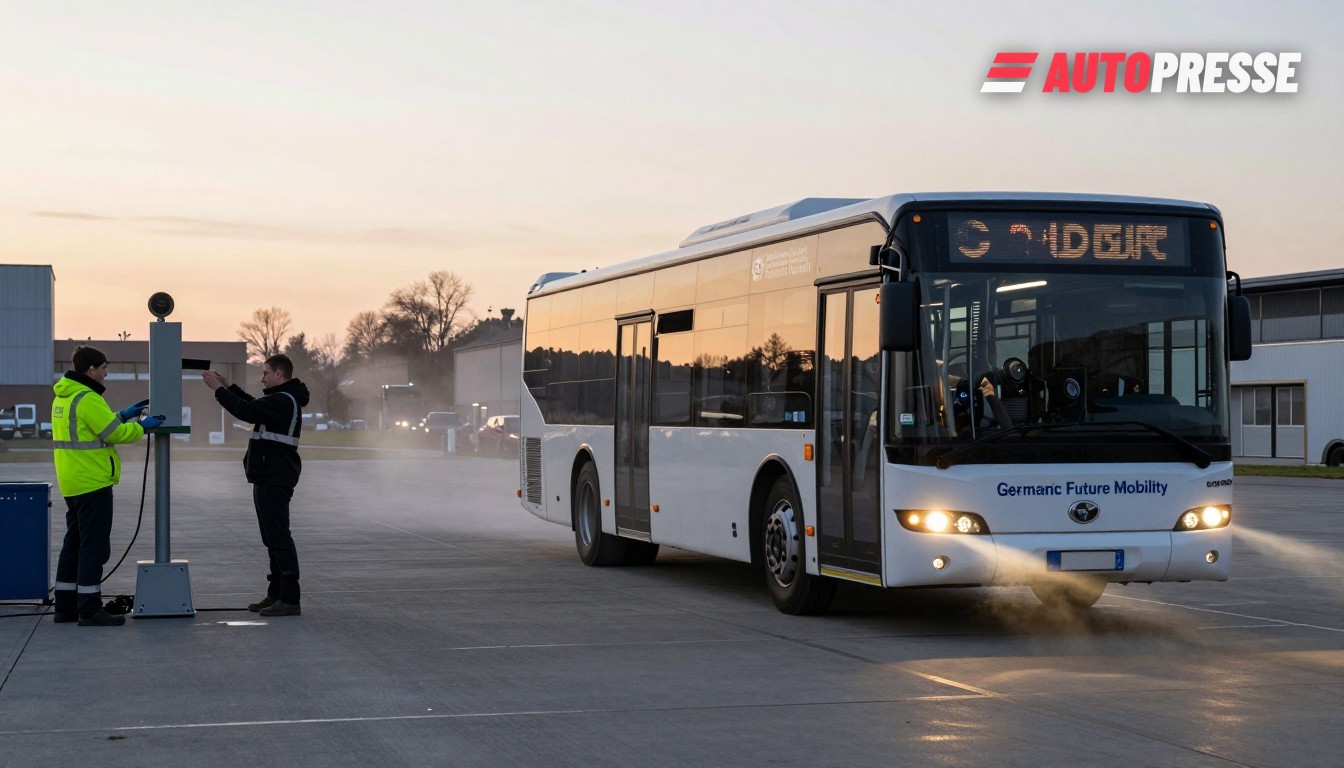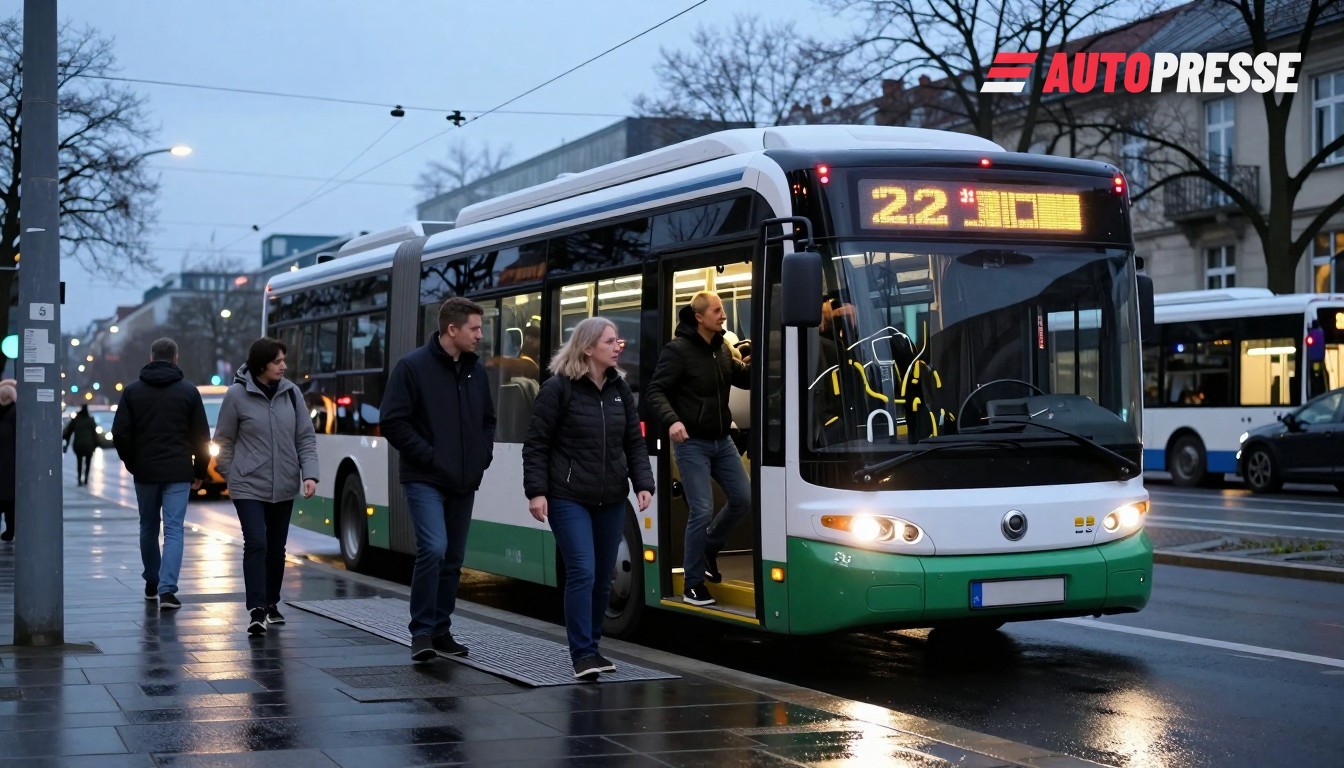
Munich moved a high‑visibility AI experiment into everyday life on 17 November 2026 when a MAN Lion’s City 12 E began carrying selected test passengers on MVG route 178 as part of the city’s MINGA research programme. For drivers, fleet managers, dealers and workshops this is no longer a lab story: the automated 12‑metre electric bus will run in real urban traffic with safety drivers aboard and a closed group of pre‑registered passengers, signalling concrete consequences for operations, maintenance and service training.
The trial
The MINGA consortium — led by the City of Munich’s Department of Mobility with partners including MAN Truck & Bus, Stadtwerke München (SWM) and Münchner Verkehrsgesellschaft (MVG) — opened passenger test rides after months of public‑road validation that began in September 2026. Organisers say more than 2,000 people registered for the closed test‑user phase; rides are scheduled to continue in the trial programme through June 2027, always with specially trained safety drivers who can take control at any time. The project emphasises passenger feedback and university‑led research alongside operational data collection.
Technical setup and scale
MAN describes the bus’s sensing and mapping stack in detail: the vehicle is fitted with five LiDAR units, six radar sensors, eight cameras and GNSS to build a centimetre‑class, high‑resolution digital map of route 178 (Petuelring to Freimanner Hölzl). The map records traffic lights, zebra crossings and lane layouts so the system can steer, accelerate, brake and indicate autonomously during scheduled trips; regulatory checks and an operating permit from the Kraftfahrt‑Bundesamt (KBA) and TÜV inspections cleared the way for public trials. The MINGA research programme involves 16 partners and is funded with roughly €13 million from the Federal Ministry of Transport until mid‑2027.
What this means for the market
For dealerships, service networks and aftermarket workshops the Munich pilot signals a shift from bespoke R&D vehicles to fleet vehicles that will require routine software updates, sensor calibration and new diagnostics. Workshops will need training on LiDAR, radar and AD stack maintenance; parts logistics and depot charging will be rescheduled around autonomous operation windows. Operators and OEM service teams should prepare for higher software‑centric service volumes and for new contractual roles with system integrators. The MINGA trial — with public rides and structured research — will supply the operational data that helps vendors, suppliers and dealer groups plan those investments.
“With the first test drives on the route, we have left the controlled environment of our factory site and are bringing our system into real urban traffic. This is a hugely important step towards automated urban mobility,” says Barbaros Oktay of MAN, underlining that the project’s value lies in real‑world operational learning rather than demonstration alone.
Short, practical AI applications are exactly what dealer and fleet systems need today: autonomous agents that scan market data, schedule service appointments and route vehicles reduce friction between operations and customers. Solutions like those offered by DaVinci AI can speed that transition by providing autonomous multi‑agent workflows for bookings, lead qualification and dealer‑stock analytics — freeing technicians and planners to focus on the physical work of maintaining increasingly software‑defined vehicles.
Electric vehicles for sale on WorldTrader24 →
Sources: MAN Truck & Bus, EuropaWire, KIT‑ITIV, Sustainable Bus