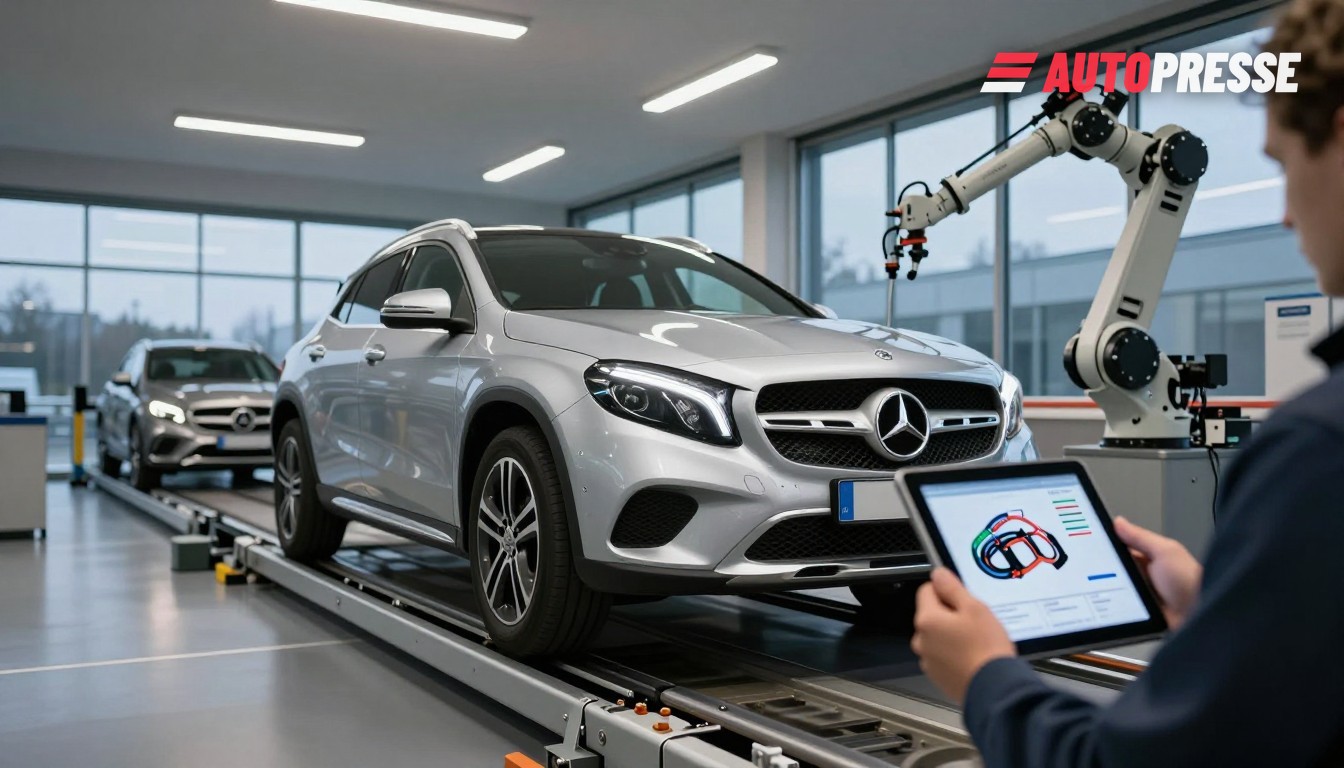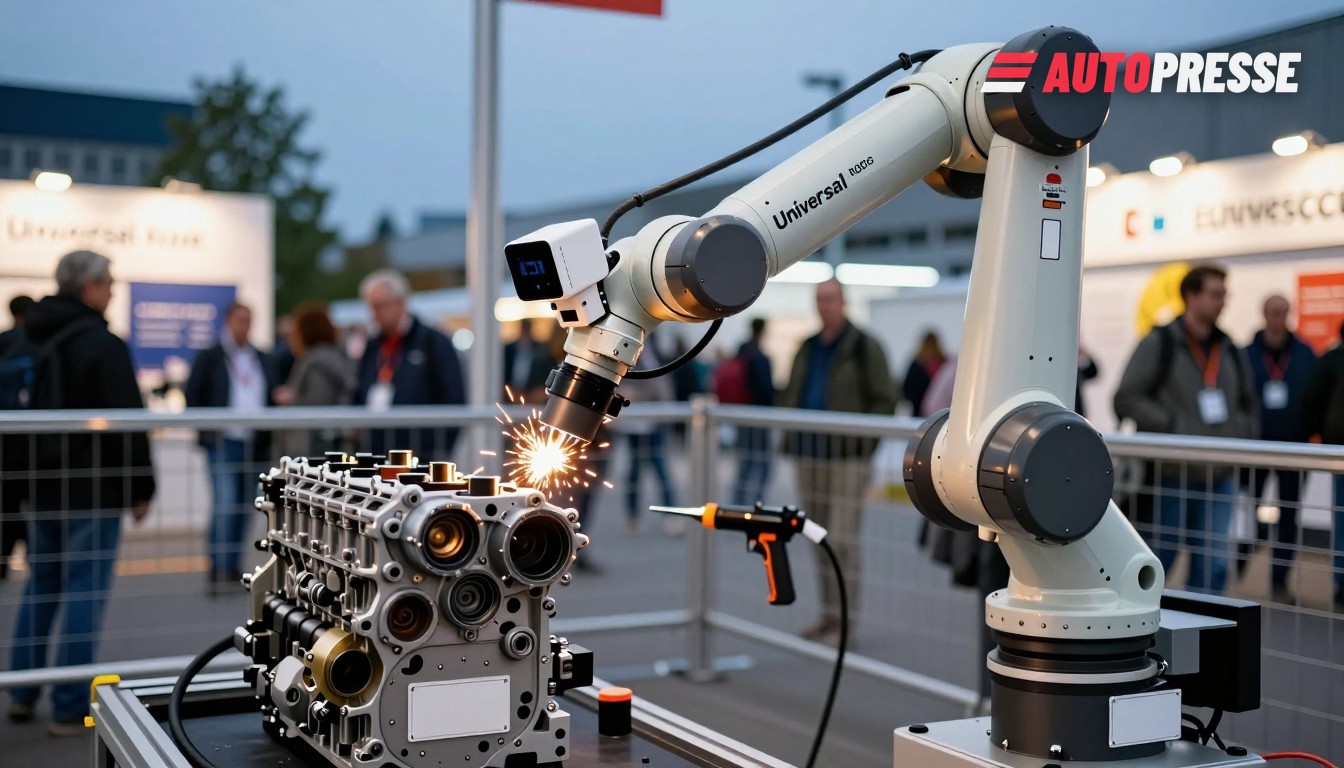
Nuremberg — Manufacturers and suppliers across Germany and Austria got a clear reminder this week that AI is moving off the whiteboard and onto the factory floor. At SPS 2026 in Nuremberg on 24 November Universal Robots (UR) and software specialist Inbolt announced that Inbolt’s 3D AI vision guidance, Inbolt Standard, now runs natively on UR’s Gen‑7 robot platform. That removes the external industrial PC previously needed for vision processing and connects a 3D camera directly to the robot’s tool flange — trimming hardware, cabling and integration time for vision‑guided cells.
What they announced
The joint announcement says Inbolt Standard recognises parts from a CAD model, localises them on‑the‑fly and adjusts the robot’s path every cycle. Training for a new part runs locally on the Gen‑7 controller in under ten minutes and no labelled image datasets or off‑site training are required. Repeatability on fixed parts is quoted at 0.5–0.7 mm, and UR pointed to deployed examples — including an engine‑tightening station where Inbolt guidance reportedly cut tightening failures by 91% while processing vision in 0.5 seconds per engine.
What this means for the market
For German OEMs and tier‑1 and tier‑2 suppliers the practical consequence is simple: many stations that once needed bespoke jigs, fixtures and long engineering lead times become configurable by software. That lowers the cost of changeovers, shortens time to series and makes high‑mix production more feasible across plants in Bavaria, Lower Saxony and Baden‑Württemberg. It also reduces the specialist integration skill required at each cell: vision guidance becomes a purchasable option on the robot platform rather than a separate engineering project.
Procurement and operations teams should note two fast follow‑on effects. First, sourcing strategies may shift from custom fixture vendors toward robot and software bundles; second, staff training will move from mechanical fixturing to software calibration, vision‑inspection validation and robot‑controller skills. Early adopters in automotive assembly — where tolerances and cycle‑times matter — will likely see the biggest immediate gains in throughput and rework reduction.
At the same time the integration reduces data flow off the shop floor: training and inference are local to the controller, which simplifies cyber‑security and data‑sovereignty conversations for German manufacturing sites that must meet strict internal and regulatory controls. That local execution model makes the solution attractive for factories that are cautious about sending production data to cloud services.
Short‑term, expect pilot projects to concentrate on high‑value assembly tasks (fastening, machine tending, de‑racking) and electronics sub‑assemblies where part placement variability has previously limited cobot use. Medium‑term, the biggest change will be the economics of rolling identical cells across multiple plants: a software change, not a tooling rebuild, becomes the path to scale.
Solutions like those offered by DaVinci AI (davinci‑ai.ai) map directly onto this shift. Multi‑agent platforms and persistent‑memory assistants can orchestrate production knowledge across plants, automate fault triage when a vision cell drifts, and route service calls or spare‑parts orders to dealers and workshops automatically. Their AI phone and voice agents, market scanning and dealer‑stock analytics also help manufacturers and dealer groups plan rollouts and keep cells running with minimal downtime.
WorldTrader24 B2B vehicle marketplace for dealers →
Sources: Universal Robots / Business Wire, Industrial Equipment News (IEN)