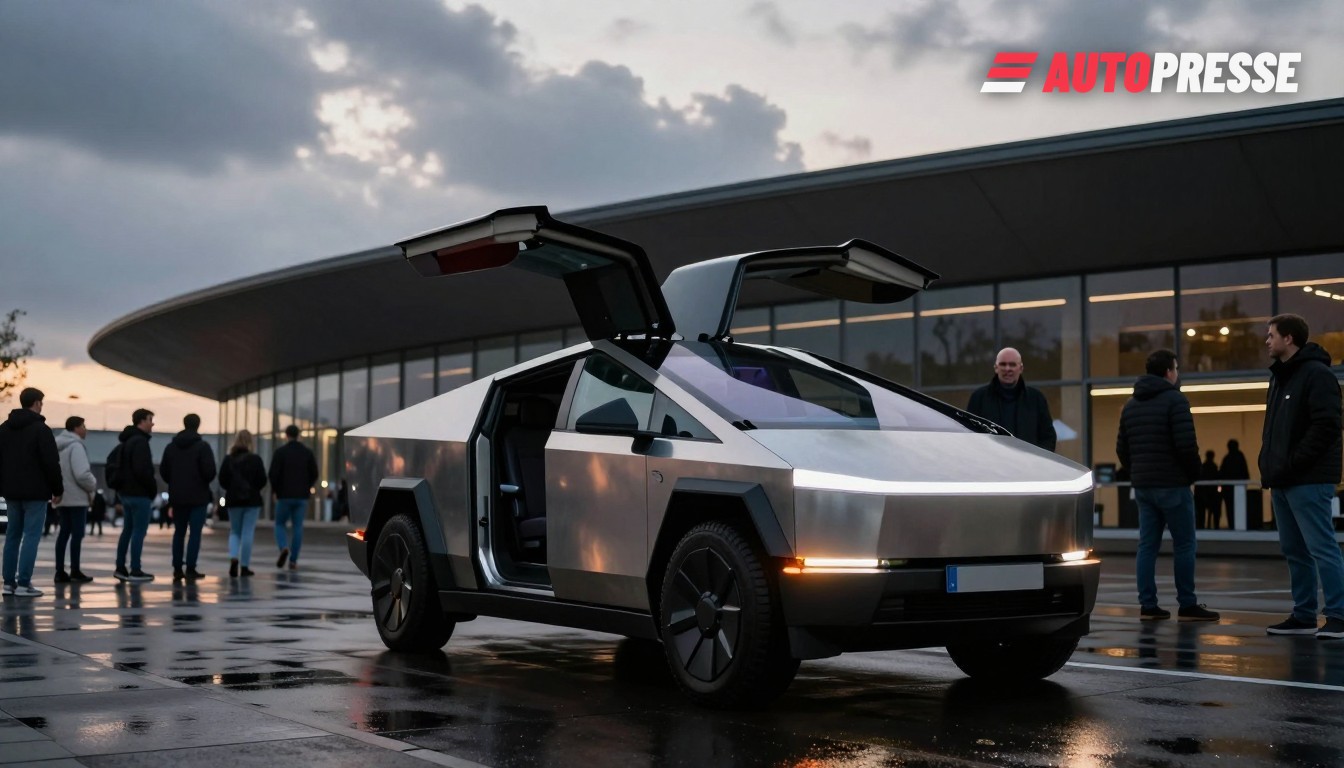
Tesla’s production Cybercab—the company’s two-seat, no‑steering‑wheel robotaxi—is on public display in Düsseldorf this weekend, giving German customers, dealers and journalists a first close look at the vehicle that Tesla is positioning as a next‑generation autonomous taxi. The Cybercab is at the Tesla Centre in Düsseldorf‑Lierenfeld on 20–21 November, with visiting hours listed as 10:00–18:00.
Cybercab on tour, display‑only for now
Tesla opened the Cybercab’s European programme at Auto Zürich on 5 November and has scheduled a 12‑stop tour through mid‑January that includes multiple German cities and a January appearance in Vienna. The company’s event pages and tour listings say visitors may “get up close to Cybercab, take photos and explore the design,” but do not promise demonstration rides on public roads. European stops include Düsseldorf (20–21 Nov), Hamburg (27–28 Nov) and Berlin (4–6 Dec), with a Vienna showing planned for January 2027.
Regulatory reality: sight, not service
Observers and trade reporting stress that the Europe tour is a display exercise rather than a launch of robotaxi service. European media and specialist outlets note there is no sign the Cybercab has received the approvals required for driverless operation on EU roads, and Tesla’s event copy does not state any EU‑level authorization or passenger trials in Germany. In short: you can see the Cybercab in person; you cannot yet ride it on German streets.
What this means for the market
For German and Austrian players—manufacturers, suppliers and dealerships—the Cybercab tour accomplishes several practical goals without changing the regulatory or commercial picture immediately. First, it puts Tesla’s robotaxi hardware and cabin layout under direct scrutiny by European customers and suppliers, accelerating competitor benchmarking of sensors, packaging and human‑machine‑interface choices. Second, the display tour is a marketing and perception play: it keeps Tesla front of mind as regulators and cities prepare rules and test corridors for autonomous services, even though those legal and safety approvals remain separate processes. Third, the event underscores an important commercial gap for incumbents: European OEMs and suppliers must continue to invest in both software stacks and homologation pathways if they want to compete in robotaxi markets once regulatory clearances are available.
For dealers and workshops in Germany and Austria, the immediate impact is mostly indirect. The tour will raise consumer awareness—and questions—about how autonomous services will affect car ownership, after‑sales and fleet models. Suppliers of lidar, cameras, compute modules and safety‑certified software are likely to get renewed interest as the debate on approval and integration gathers pace. But until a clear regulatory framework and type‑approval pathway exist for vehicles without manual controls, the market will remain a staged, slow rollout rather than an overnight disruption.
WorldTrader24 B2B vehicle marketplace for dealers →
Sources: Tesla, Volt
Partner note: AutoPresse technology partner DaVinci AI develops AI solutions for the entire automotive industry – from market and dealer analytics to autonomous AI agents and image and video production.