Germany and Austria are sharpening different parts of the EV value chain at speed: German recyclers are moving from pilots to industrial scale, while Austria’s Graz plant is converting inward investment into series assembly for Chinese electric vehicles. Both trends are already changing jobs, supplier orders and where batteries and cars are finally finished for European buyers.
Recycling goes industrial in Germany
cylib — a German battery recycler spun out of RWTH Aachen research — has advanced from pilot projects to national scale. In October 2026 the European Commission named cylib’s Dormagen project a Strategic Project under the Critical Raw Materials Act.
The company has been building an integrated recycling network: it secured a €63.4 million public grant in December 2025 to finance Dormagen’s second build‑out stage, and in November 2026 announced an agreement to acquire BASF’s battery‑recycling business to accelerate capacity and feedstock access.
cylib also bought an existing Bavarian processing plant that will produce up to 10,000 tonnes of black mass per year and, the company says, is expected to begin operations in the fourth quarter of 2026, subject to environmental approvals. That gives the Dormagen refinery nearby feedstock and brings processing capacity closer to Germany’s automotive clusters.
Graz: Europe’s flexible assembler gains volume
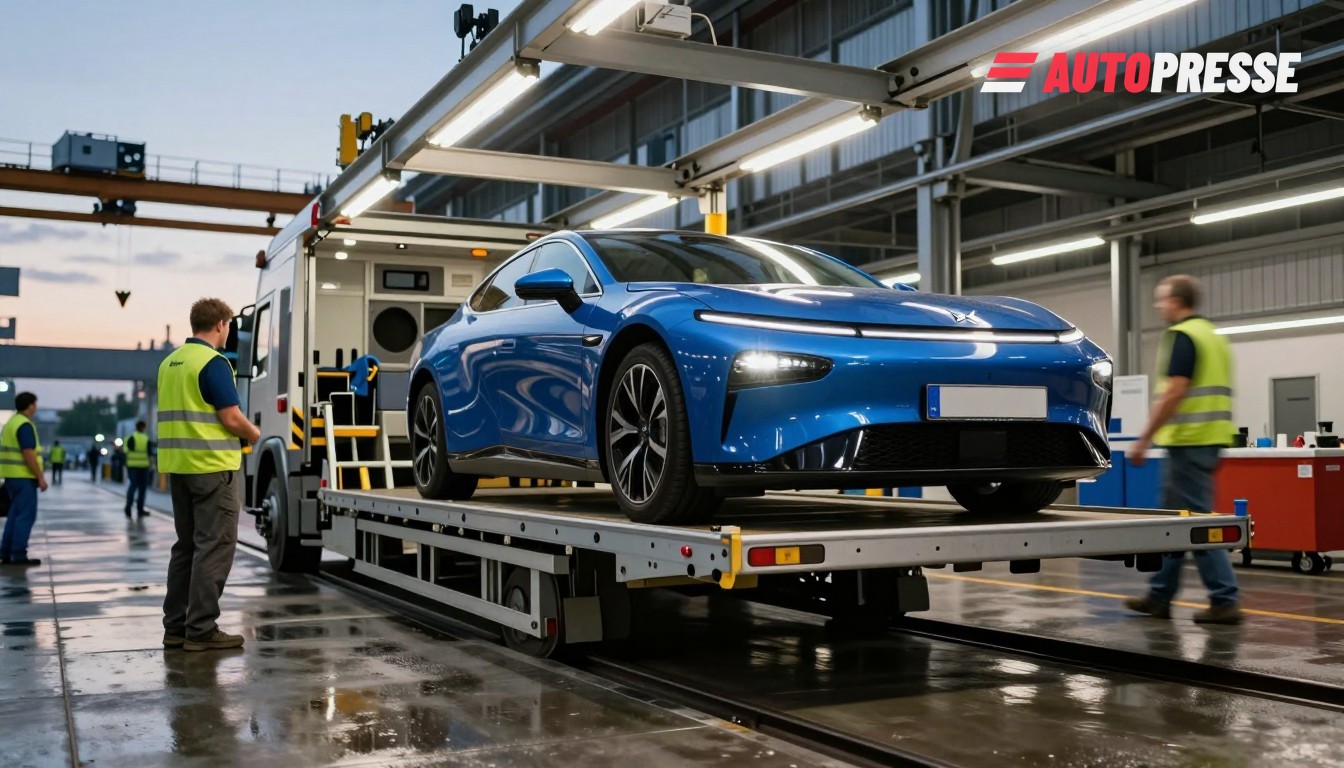
Across the border, Magna Steyr’s Graz facility has moved from niche contract programmes to steady series assembly of China‑origin EVs for the European market. Trial and low‑volume runs for XPeng models began in 2025 and by March 26, 2026 the GAC Aion UT began rolling off the Graz line — concrete evidence that localisation is happening now, not sometime in the future.
Industry trackers and regional reporting show Graz has added work for local suppliers and is being lined up for further orders that would expand Austrian supplier content and logistics activity. That makes Graz a supplier magnet for southern Germany and Styria, with implications for parts deliveries, labour demand and after‑sales networks.
What this means for the market
For drivers and fleets: more localised assembly shortens delivery chains and may speed homologation and warranties for certain China‑sourced EVs in Europe, while a maturing recycling industry promises steadier access to recycled cathode and anode materials that could stabilise battery input costs over the medium term.
For suppliers and workshops: Germany’s ramp in hydrometallurgical and mechanical recycling creates near‑term demand for sorting, dismantling and logistics, and Graz’s contract work increases orders for body, electronics and thermal management suppliers in Austria and southern Germany. Both moves require retraining — from high‑voltage diagnostics to recycling process operation — and will shift employment within the region.
For policy and industry planners: the EU’s Critical Raw Materials framework and national grants are already steering investment into European recycling hubs. Companies that secure both feedstock and downstream processing in Germany or Austria will be best placed to supply OEMs seeking locally sourced battery material and shorter lead times.
Electric cars listings on WorldTrader24 →
Sources: cylib newsroom, electrive, AutoPresse, Battery‑News