Germany hit a milestone in October 2026 when battery‑electric vehicles (BEVs) reached a 37.0% share of new passenger‑car registrations — a record monthly high that underlines how fast the market pivot has become. That same year Austria passed the 300,000 BEV threshold on its roads and posted double‑digit growth in new registrations, underscoring that both markets are moving from hardware‑led electrification to software‑driven products and services.
Software‑defined vehicles move from lab to showroom
Manufacturers in Germany and Austria are increasingly shipping cars with zonal electronic architectures, broad over‑the‑air (OTA) update capability and centralised software stacks for infotainment, energy and ADAS functions. The International Energy Agency’s recent review shows a rapid rise in OEMs rolling out near‑full OTA update capability and zonal ECUs — a shift that turns cars into platforms for recurring revenue (services, subscriptions, feature unlocks) and continuous security obligations.
For buyers this means faster feature upgrades and personalised services; for dealers and OEM workshops it means new revenue lines but also new skills and tooling (software diagnostics, secure update management). For regulators and cybersecurity teams, the change increases the attack surface and magnifies the importance of coordinated vulnerability disclosure and secure supply chains.
Charging, market mix and international players
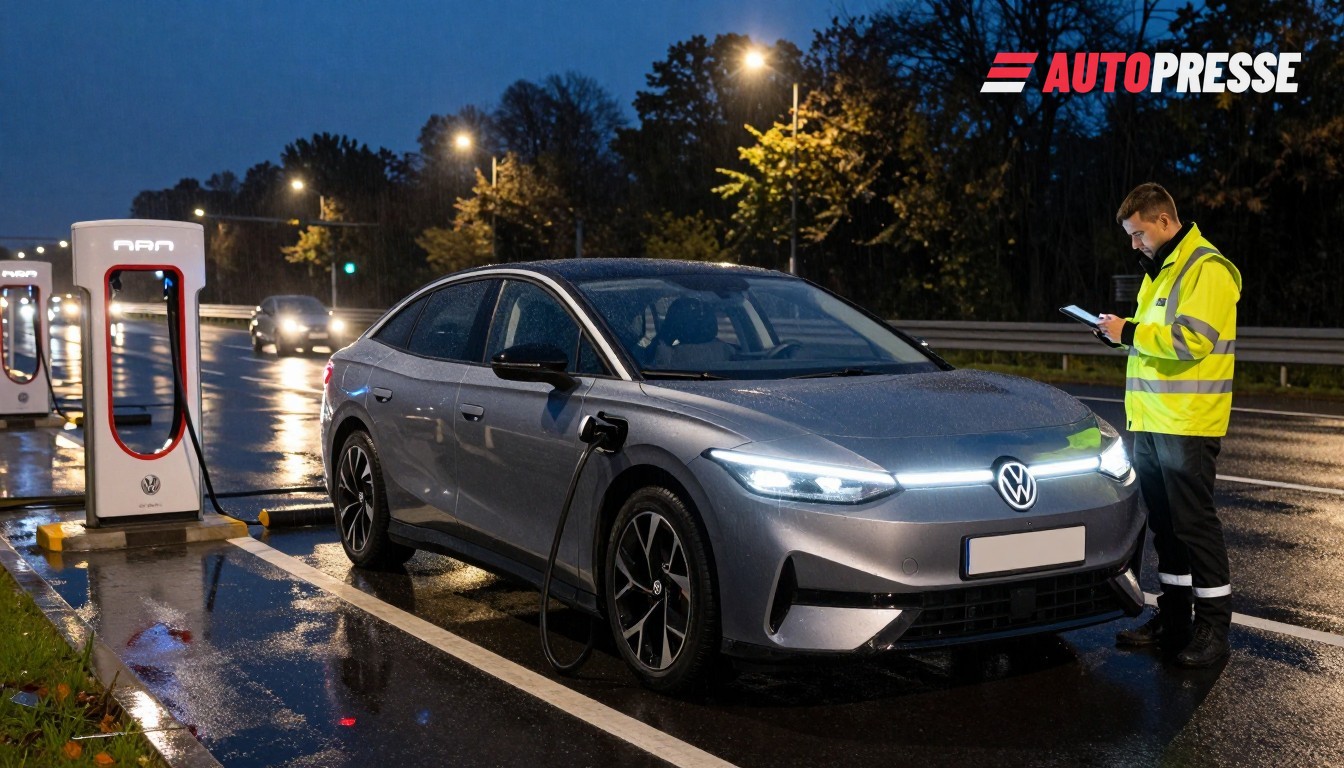
Germany’s record BEV share in October 2026 follows months of rapidly rising electric registrations across Europe. Independent monitors show Germany and Austria among the EU countries with BEV shares well above 25% year‑to‑date, while international manufacturers continue to increase their presence in both markets — pressuring incumbent OEMs to accelerate software and pricing strategies.
Austria’s fleet milestone came alongside a 12.1% increase in total new‑car registrations from January to September 2026, with BEVs among the fastest growing segments at a district‑level patchwork of adoption. That mix — dense urban BEV uptake versus slower rural electrification — is pushing software solutions that optimise charging, route planning and energy management to the front of product roadmaps.
What this means for the market
1) OEMs become software houses: The commercial model shifts. Hardware still sells cars, but recurring revenue and customer retention will increasingly come from software services and OTA features. The IEA’s findings imply OEMs must invest in secure update platforms and developer ecosystems now to avoid costly retrofits.
2) Dealers and independents must reskill fast: Workshops will need secure‑update procedures, software version control and cyber‑incident workflows. Those that adapt can monetise diagnostics, feature activation and data services; those that don’t risk being marginalised.
3) Policy and cybersecurity rise on the agenda: Governments and certification bodies in Germany and Austria must reconcile fast feature deployment with vehicle safety and cyber rules — a point stressed by European monitoring of the changing vehicle software landscape. Expect tighter audit requirements and clearer liability rules in the near term.
4) Energy and charging optimisation becomes a software play: With BEV shares above 25–30% in both countries, smart charging, grid‑aware scheduling and bundled energy services will be decisive for customer experience and grid stability. Software that ties vehicle, home and charger into a seamless service will become a differentiator for OEMs and charge‑point operators alike.
The shift from battery race to software race does not erase the need for more chargers, batteries and recycling — but it does mean the next big battleground for German and Austrian players will be platforms, security and recurring services rather than peak kWh or raw range alone.
Electric cars listings on WorldTrader24 →
Sources: Fahrzeugstatistik (KBA data), Austrian Federal Ministry (bmimi.gv.at), International Energy Agency, ICCT, Statistik Austria